About this artwork
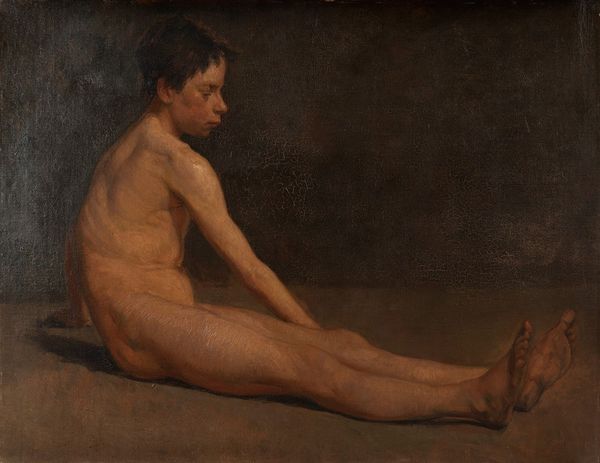
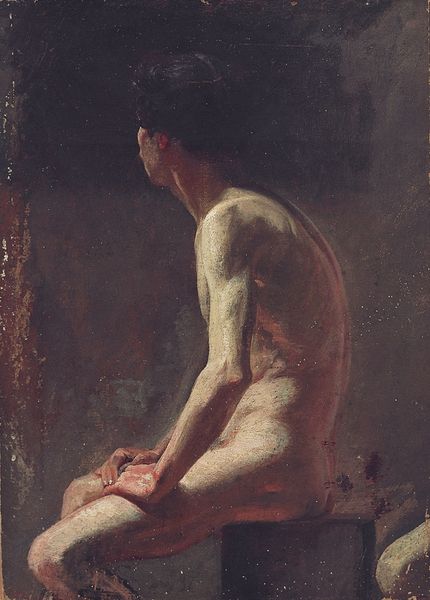
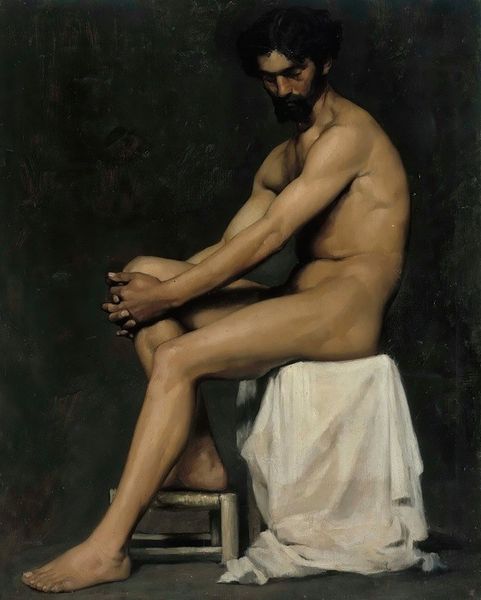
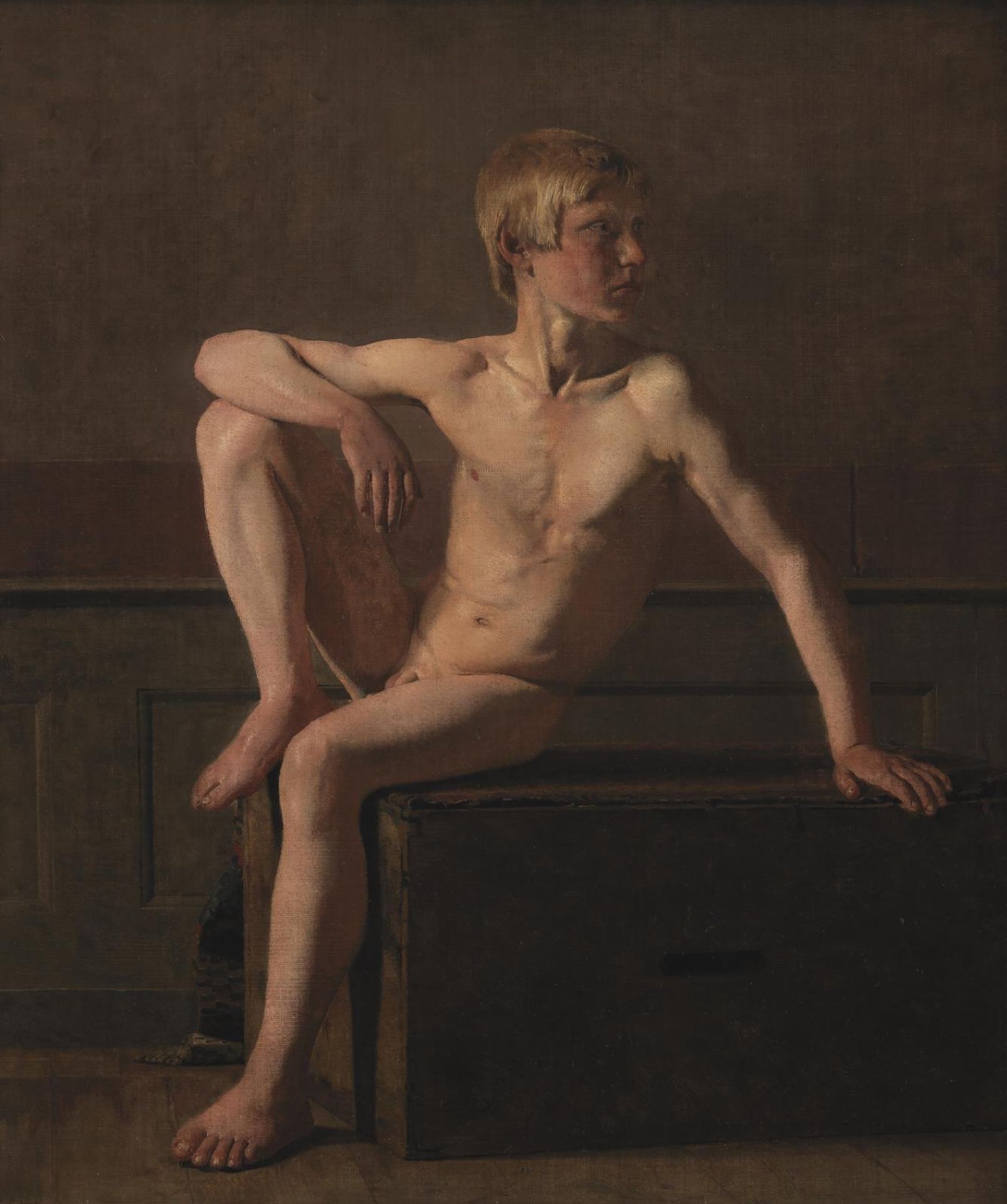
Christen Købke painted "Nude Figure. Sitting Boy" with oil on canvas. The artwork presents a study of a nude male figure seated on a wooden chest, rendered in a palette of muted tones. The composition, dominated by the subtle interplay of light and shadow, directs our attention to the textures of skin and wood. Købke's approach to realism here is striking. The figure's pose, with one leg drawn up and arms extended, creates a dynamic tension within the frame. This is not simply a portrait; it's an exploration of form, musculature and the subtle gradations of light across the human body. The simplicity of the background and the artist's close attention to detail invite us to consider the structure of the human form. The lack of idealization situates the work in a broader dialogue about representation and authenticity. The painting serves as an exercise in perception. It compels us to contemplate the relationship between seeing and knowing. It highlights the role of art in shaping our understanding of the human experience.
Nude Figure. Sitting Boy
1833


Artwork details
- Medium
- painting, oil-paint
- Dimensions
- 58.3 cm (height) x 48.7 cm (width) (Netto), 67.1 cm (height) x 57.6 cm (width) x 6.4 cm (depth) (Brutto)
- Location
- SMK - Statens Museum for Kunst
Tags
Comments
Share your thoughts
About this artwork
Christen Købke painted "Nude Figure. Sitting Boy" with oil on canvas. The artwork presents a study of a nude male figure seated on a wooden chest, rendered in a palette of muted tones. The composition, dominated by the subtle interplay of light and shadow, directs our attention to the textures of skin and wood. Købke's approach to realism here is striking. The figure's pose, with one leg drawn up and arms extended, creates a dynamic tension within the frame. This is not simply a portrait; it's an exploration of form, musculature and the subtle gradations of light across the human body. The simplicity of the background and the artist's close attention to detail invite us to consider the structure of the human form. The lack of idealization situates the work in a broader dialogue about representation and authenticity. The painting serves as an exercise in perception. It compels us to contemplate the relationship between seeing and knowing. It highlights the role of art in shaping our understanding of the human experience.
Comments
Share your thoughts