1634 - 1693
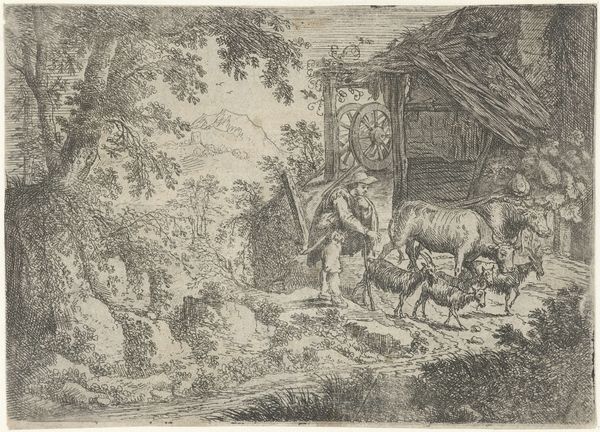
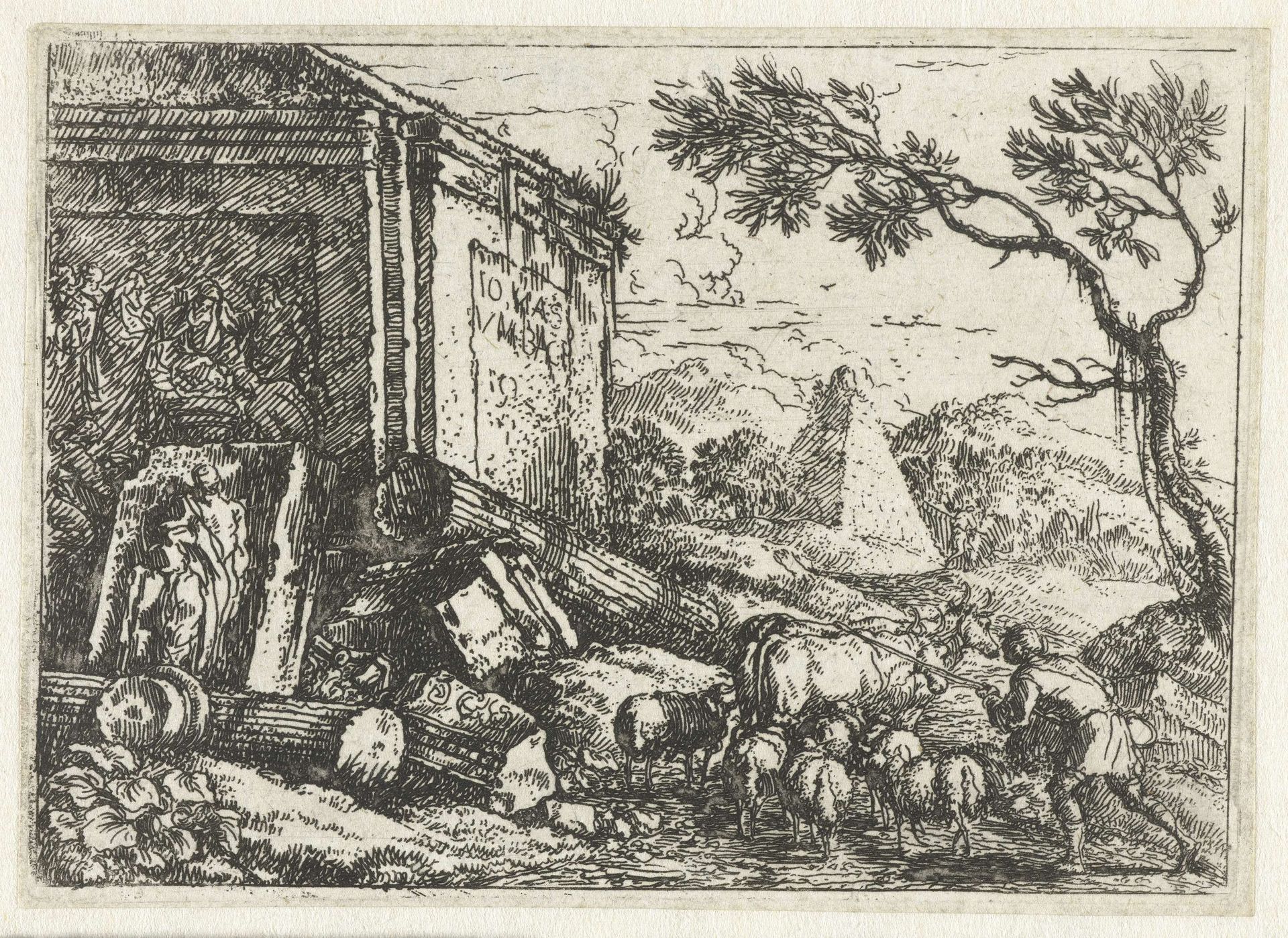
Ruïnelandschap met een herder en zijn kudde

Jonas Umbach
1624 - 1693Location
RijksmuseumListen to curator's interpretation
Curatorial notes
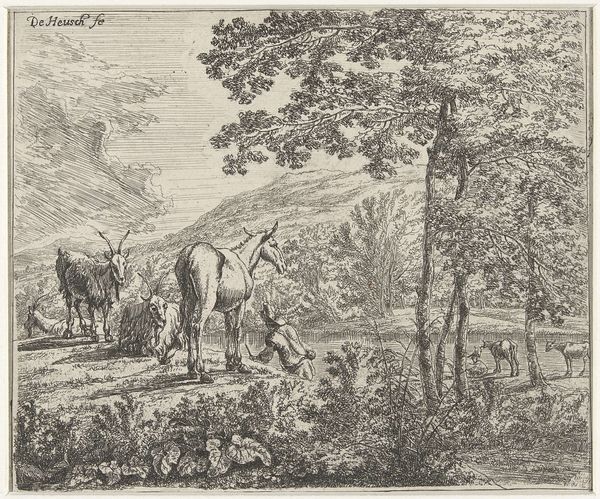
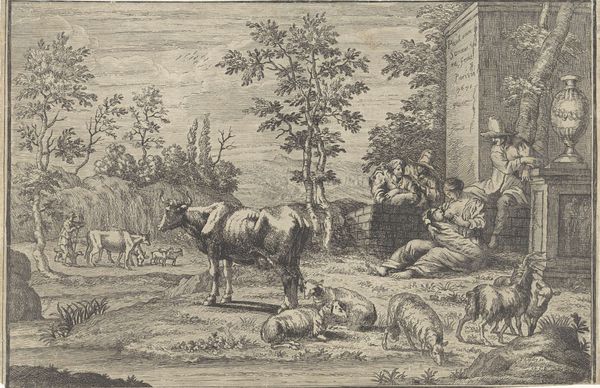
This is Jonas Umbach’s "Ruïnelandschap met een herder en zijn kudde", an etching made in the 17th century. The composition is dominated by a stark contrast between the decaying architecture on the left and the natural landscape to the right. Umbach creates a dynamic interplay of vertical and horizontal lines, from the rigid ruins to the flowing lines of the trees and distant mountains. The textures are rich, achieved through dense cross-hatching and fine lines that delineate the crumbling stone and foliage. The detailed rendering of the natural elements against the ruins blurs the distinction between decay and growth, suggesting a cycle of destruction and renewal. The ruin signifies the transience of human achievement and the power of nature. In contrast, the shepherd and his flock suggest timelessness and continuity. The etching uses binary oppositions to destabilize fixed meanings around civilization and nature, and the sublime experience of ruins reflects a broader philosophical interest of the time in how art can evoke feelings of awe and melancholy.