About this artwork
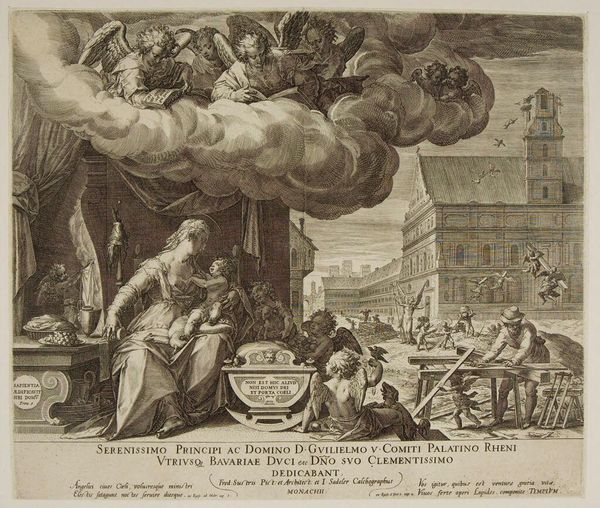
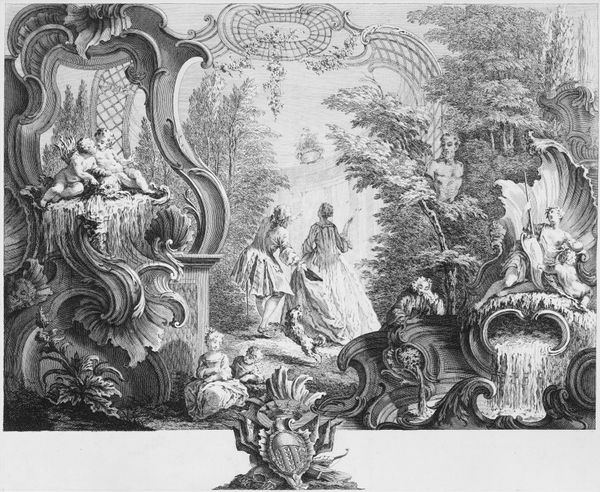
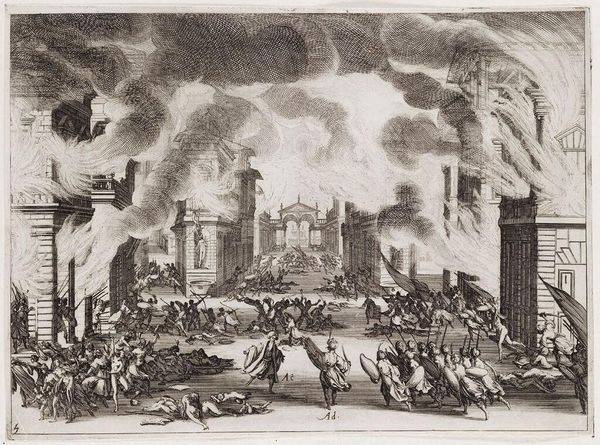
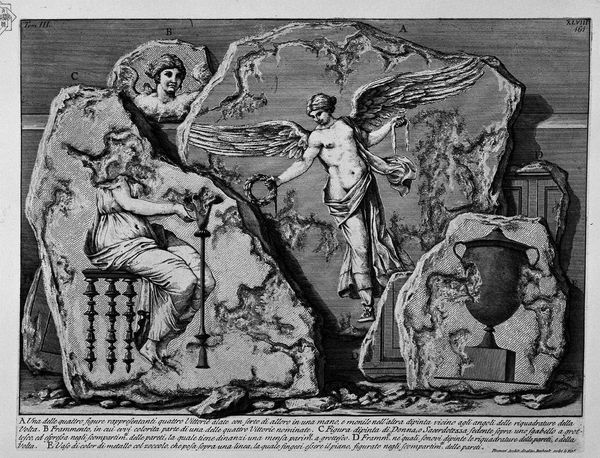
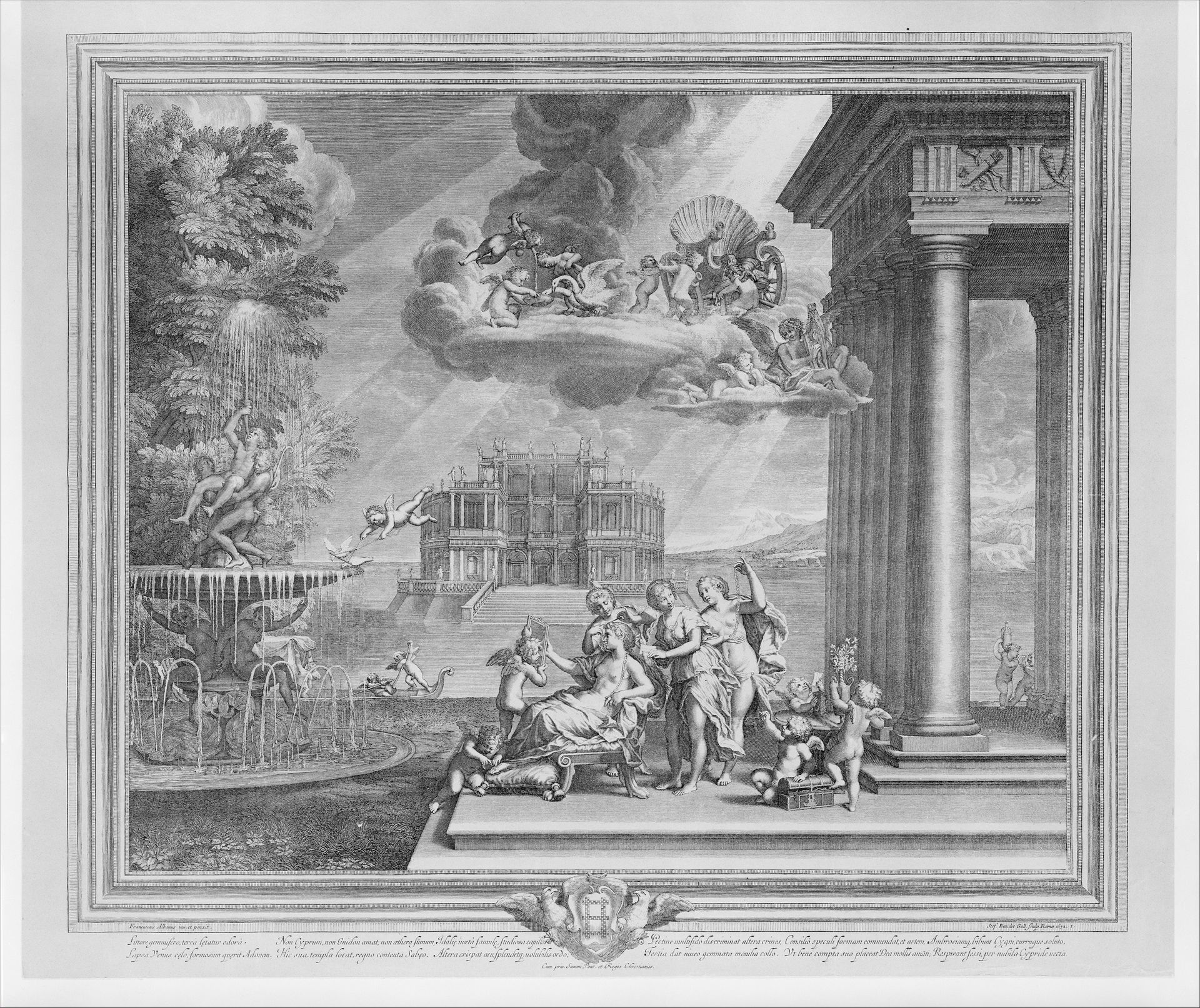
Etienne Baudet made this print, "The Toilette of Venus," in France in the late 17th or early 18th century. It’s an engraving on laid paper. The scene depicts Venus, the goddess of love, being attended to by her entourage. This image is steeped in the visual language of its time, recalling classical antiquity. The composition, the architectural details, and the mythological subject matter all speak to a culture deeply invested in the traditions of the past. It shows the prevailing academic tastes promoted by institutions like the Académie Royale de Peinture et de Sculpture. What does it tell us about the social function of art in that period? Royal patronage drove artistic production, and artists working in the court of Louis XIV, the Sun King, used classical themes to project power and legitimize the French monarchy. To understand this print better, we can delve into the art criticism of the time, the records of the Académie Royale, and the writings of court historians. We can understand the institutions which shaped the art and the social forces behind its creation.
Plate 1: The Toilette of Venus; Venus reclining at center, gazing into a mirror held by Cupid, attendants fix her hair while a putto ties her sandal, above her chariot appears on a cloud; from the series 'The Loves of Venus and Adonis'
1672


Artwork details
- Medium
- drawing, print, engraving
- Dimensions
- Sheet: 23 11/16 × 27 11/16 in. (60.2 × 70.4 cm)
- Location
- Metropolitan Museum of Art, New York, NY
- Copyright
- Public Domain
Tags
Comments
Share your thoughts
About this artwork
Etienne Baudet made this print, "The Toilette of Venus," in France in the late 17th or early 18th century. It’s an engraving on laid paper. The scene depicts Venus, the goddess of love, being attended to by her entourage. This image is steeped in the visual language of its time, recalling classical antiquity. The composition, the architectural details, and the mythological subject matter all speak to a culture deeply invested in the traditions of the past. It shows the prevailing academic tastes promoted by institutions like the Académie Royale de Peinture et de Sculpture. What does it tell us about the social function of art in that period? Royal patronage drove artistic production, and artists working in the court of Louis XIV, the Sun King, used classical themes to project power and legitimize the French monarchy. To understand this print better, we can delve into the art criticism of the time, the records of the Académie Royale, and the writings of court historians. We can understand the institutions which shaped the art and the social forces behind its creation.
Comments
Share your thoughts