print, engraving
#
portrait
#
baroque
# print
#
old engraving style
#
genre-painting
#
engraving
Dimensions: height 290 mm, width 210 mm
Copyright: Rijks Museum: Open Domain
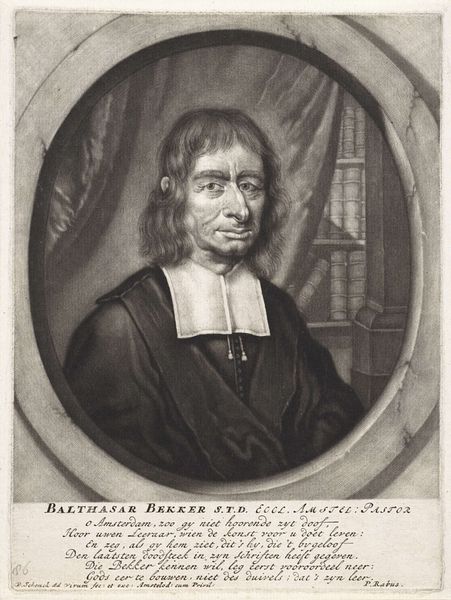
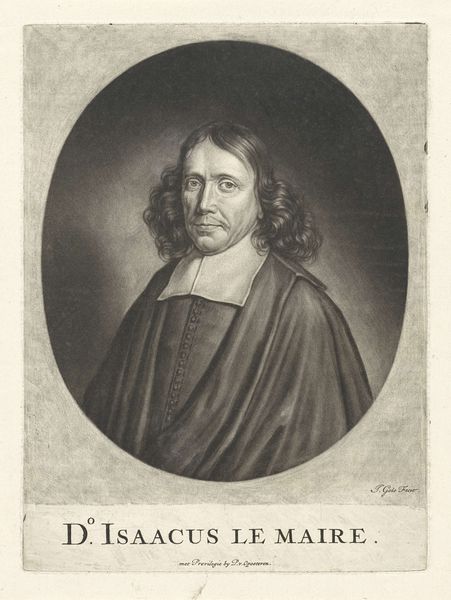
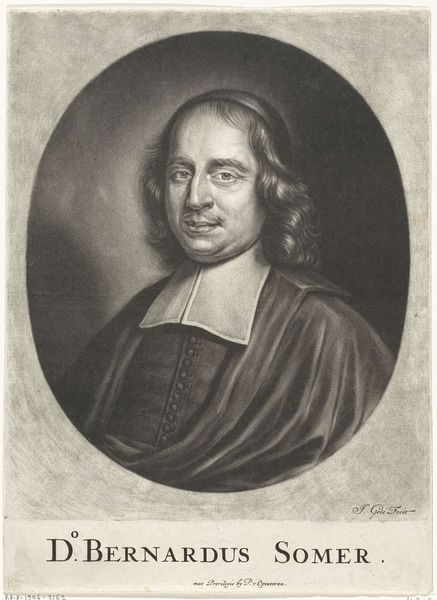
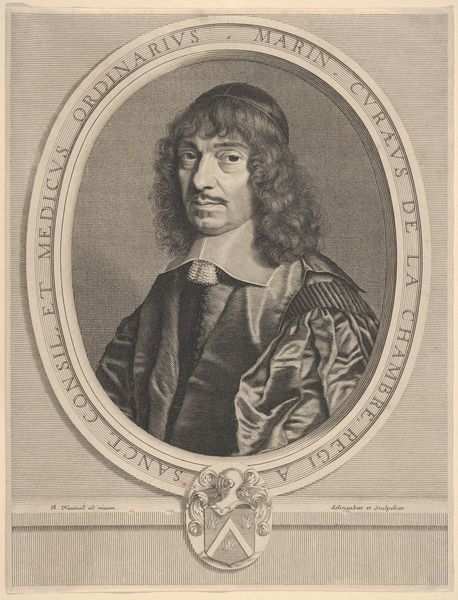
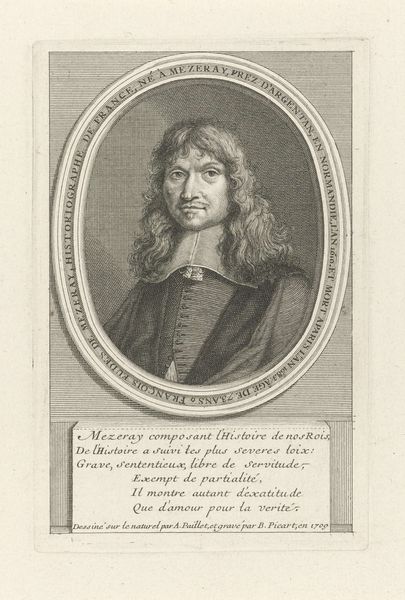
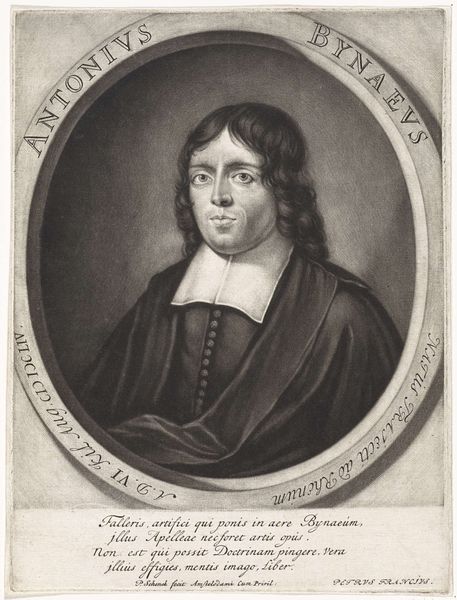
Curator: This print, housed here at the Rijksmuseum, is a portrait of Balthasar Bekker, dating back to between 1670 and 1724, created by Jacob Gole. The technique here is engraving, a detailed printmaking method, demanding a high level of craft skill. Editor: Immediately, I’m drawn to the somber mood. It’s as though I’m gazing across centuries into the watchful eyes of a contemplative scholar... or perhaps a man wrestling with the demons of doubt. What's fascinating to me is the quality of line work; you can see that in this example of Baroque portraiture. Curator: Well, engraving in itself necessitates a highly disciplined and specialized kind of labor. Lines are incised into a metal plate, the plate inked, and then the image transferred to paper under great pressure, which emphasizes that element. Prints like this made imagery much more accessible. Balthasar Bekker himself, of course, was a prominent figure, a theologian. Editor: Oh, yes, I almost forgot! Isn't he the guy who debunked the whole witch thing in the 17th century? What’s intriguing is how his intellectual challenges, which certainly unsettled society, are portrayed so... quietly. And in monochrome! Almost feels subdued, rather than rebellious. He almost looks, dare I say it, vulnerable. Curator: His expression could equally be interpreted as conveying quiet resolve in the face of controversy, and I suspect Gole, through skillful manipulation of line and tone, aimed to suggest intellect and gravitas appropriate to his status, because status influenced production. Printmaking afforded opportunities for distribution and visibility. Editor: So, you think the purpose here, within the material context, was not necessarily to express his individual spirit but really to solidify his societal standing? Curator: Absolutely. Think of it as an early form of accessible intellectual branding. It’s about shaping perceptions and disseminating influence within the context of social and intellectual movements of that time. It brings into question ideas about patronage and access. Editor: Fascinating. And seeing the portrait now, through that lens of production and influence, allows us to perhaps understand how the material making of this image, far from simply representing Bekker, played an active part in shaping his legacy. It's like a little material echo of an ideological earthquake. Curator: Precisely.
Comments
No comments
Be the first to comment and join the conversation on the ultimate creative platform.
 Collect
 React
React Comment
More like this