About this artwork
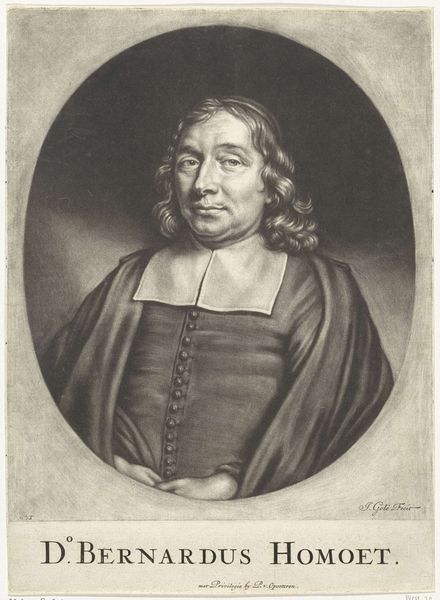
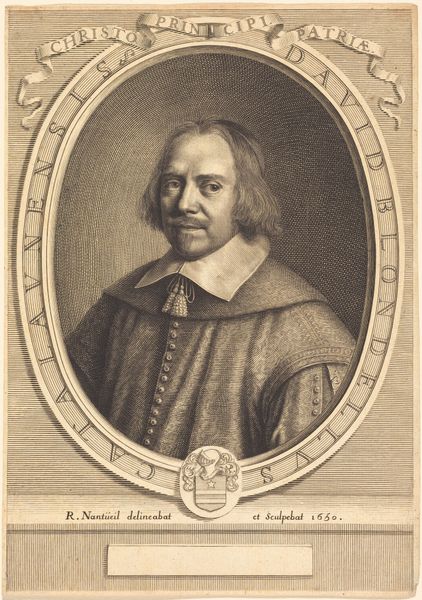
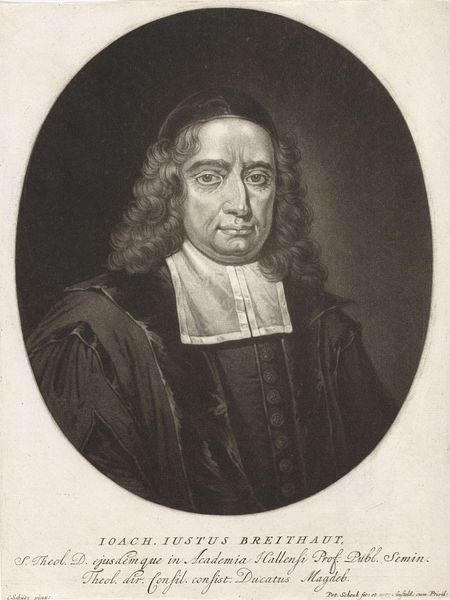
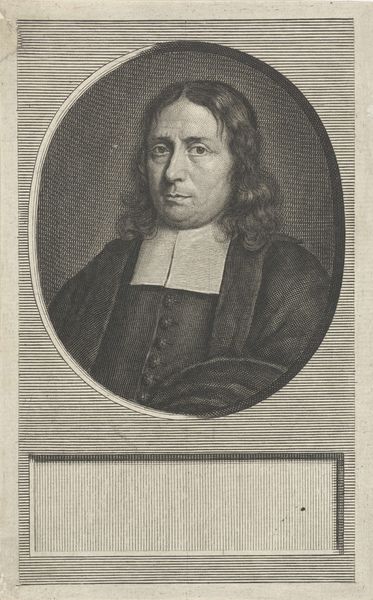
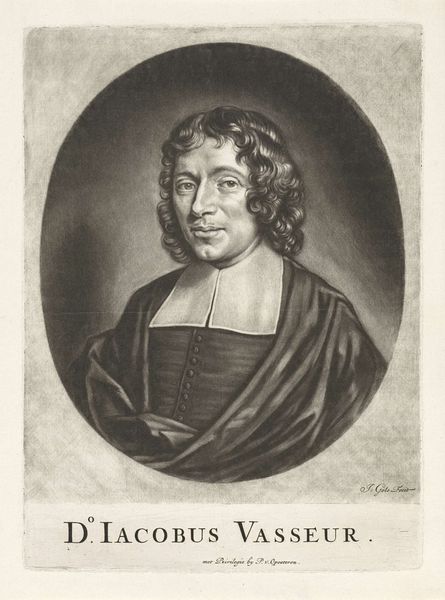
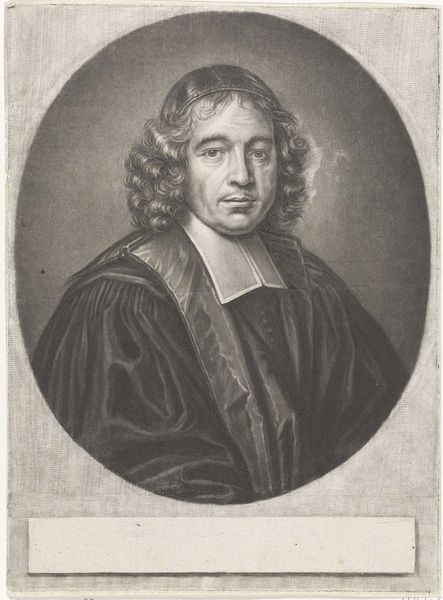
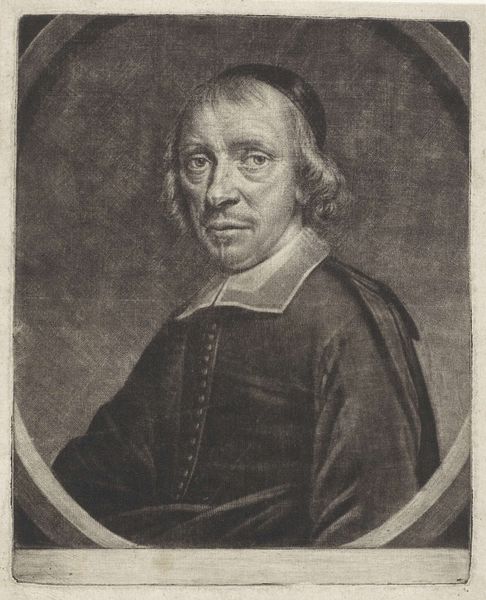
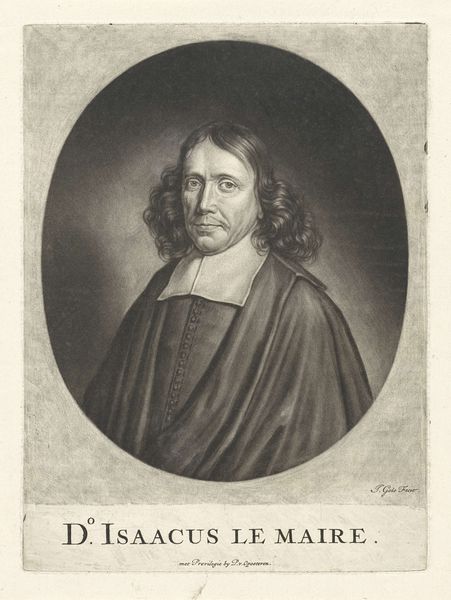
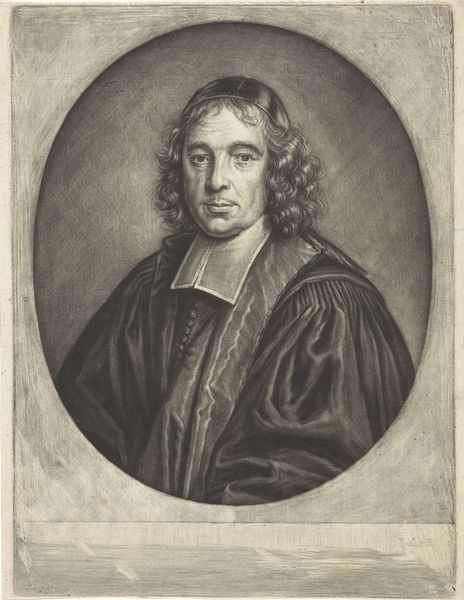
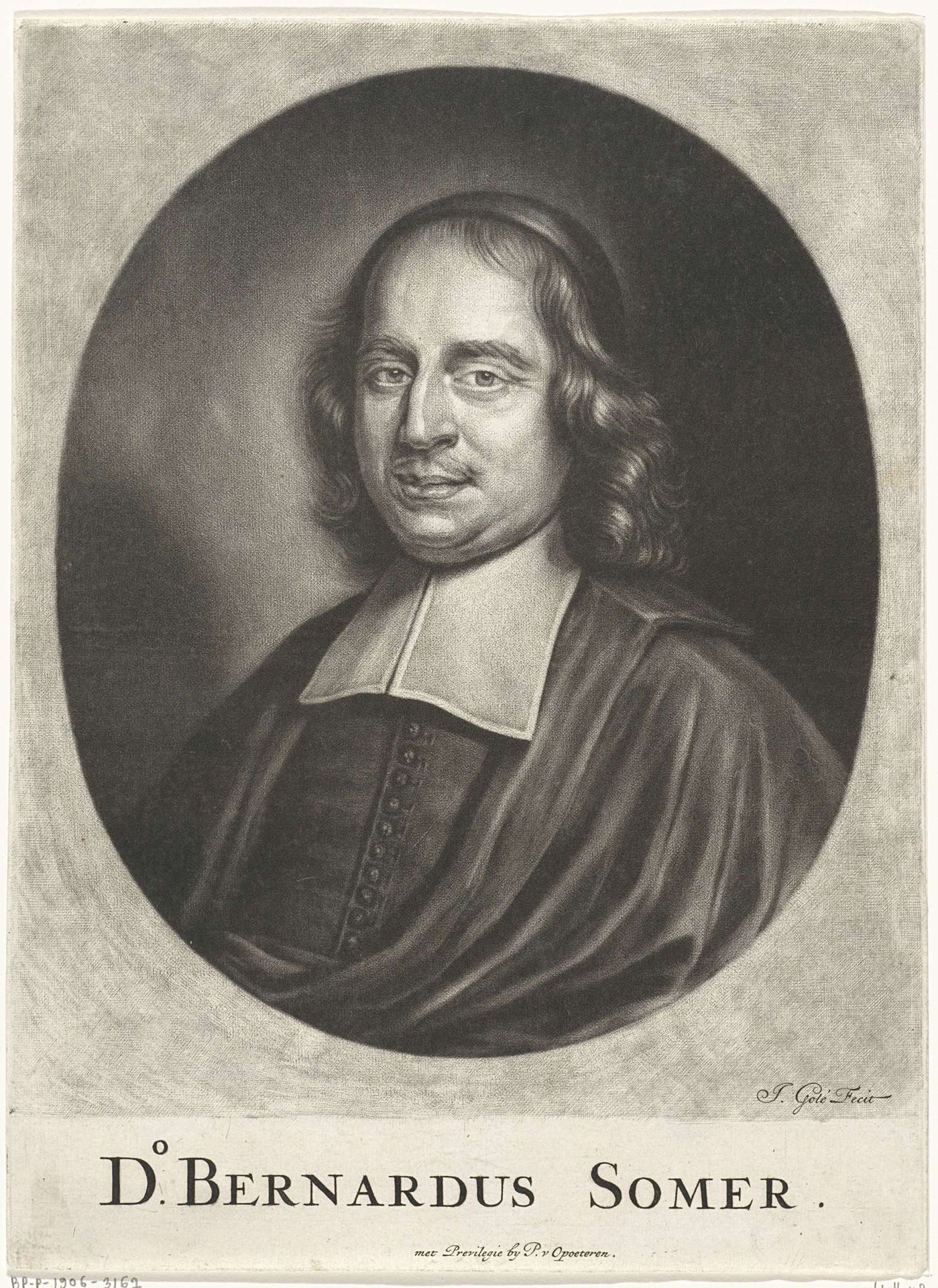
This is Jacob Gole’s portrait of Bernardus Somer, made sometime between 1660 and 1737. It's an engraving, meaning the image was incised into a metal plate, likely copper, then inked and printed. The quality of a print depends entirely on the engraver's skill. Here, Gole meticulously rendered Somer’s likeness, capturing the textures of his clothes and the soft gradations of light and shadow. Notice the fine lines that create the illusion of depth and volume. This wasn't just reproduction; it was a demanding craft requiring years of training. Engravings like this were luxury items, a form of early media. They circulated images and ideas, consolidating power for those, like Somer, who could afford to be portrayed. The print medium allowed for distribution and repetition of imagery, establishing not just an image of a man, but the importance of his position. Ultimately, understanding the labor and context behind this image allows us to see it not just as a portrait, but as a product of skilled craftsmanship and social aspiration.

Artwork details
- Medium
- print, metal, intaglio, paper, engraving
- Dimensions
- height 290 mm, width 211 mm
- Location
- Rijksmuseum
- Copyright
- Rijks Museum: Open Domain
Tags
portrait
baroque
metal
intaglio
old engraving style
paper
historical photography
19th century
history-painting
engraving
Comments
No comments
About this artwork
This is Jacob Gole’s portrait of Bernardus Somer, made sometime between 1660 and 1737. It's an engraving, meaning the image was incised into a metal plate, likely copper, then inked and printed. The quality of a print depends entirely on the engraver's skill. Here, Gole meticulously rendered Somer’s likeness, capturing the textures of his clothes and the soft gradations of light and shadow. Notice the fine lines that create the illusion of depth and volume. This wasn't just reproduction; it was a demanding craft requiring years of training. Engravings like this were luxury items, a form of early media. They circulated images and ideas, consolidating power for those, like Somer, who could afford to be portrayed. The print medium allowed for distribution and repetition of imagery, establishing not just an image of a man, but the importance of his position. Ultimately, understanding the labor and context behind this image allows us to see it not just as a portrait, but as a product of skilled craftsmanship and social aspiration.
Comments
No comments