About this artwork
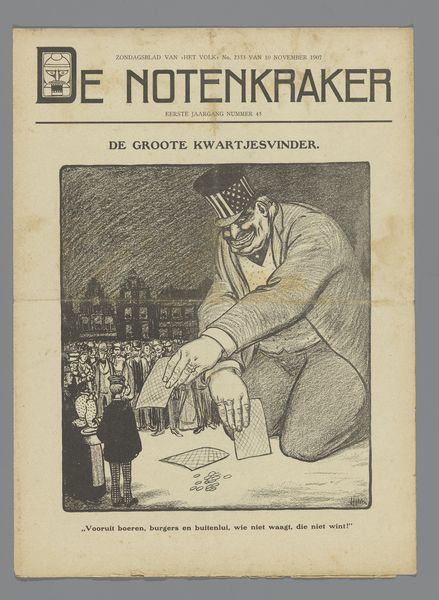
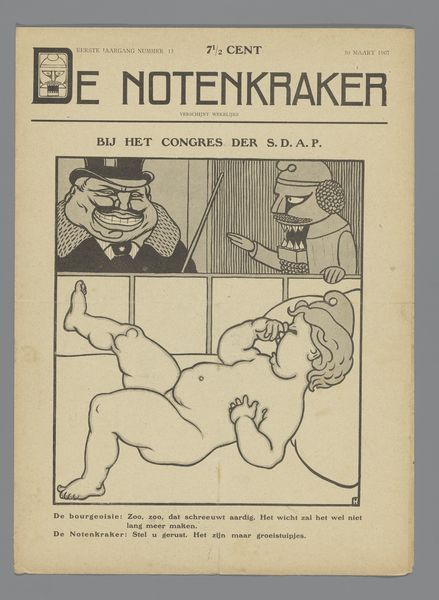
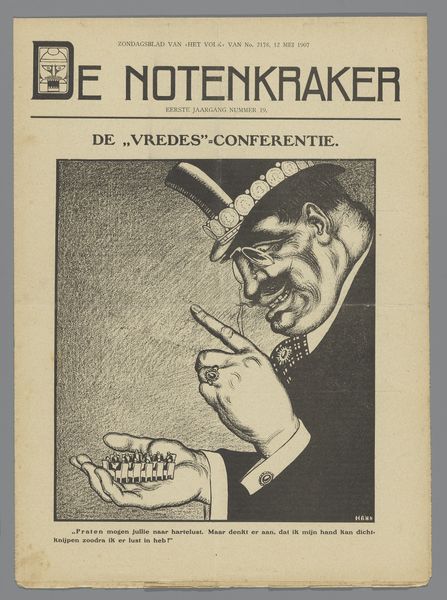
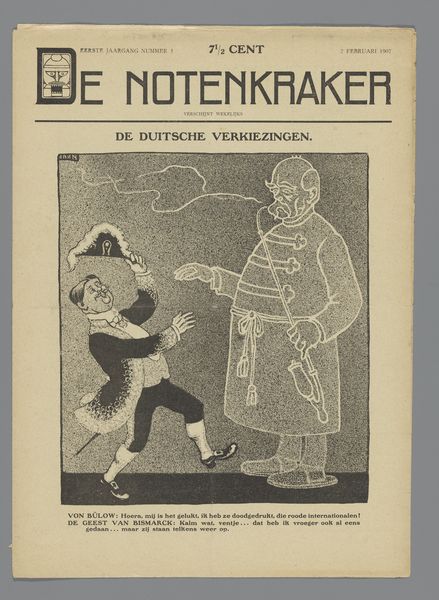
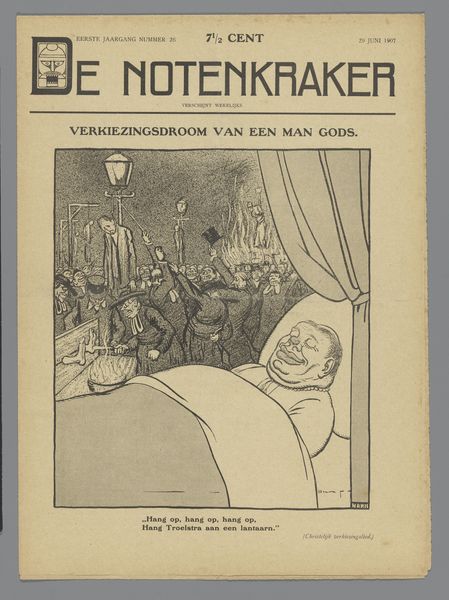
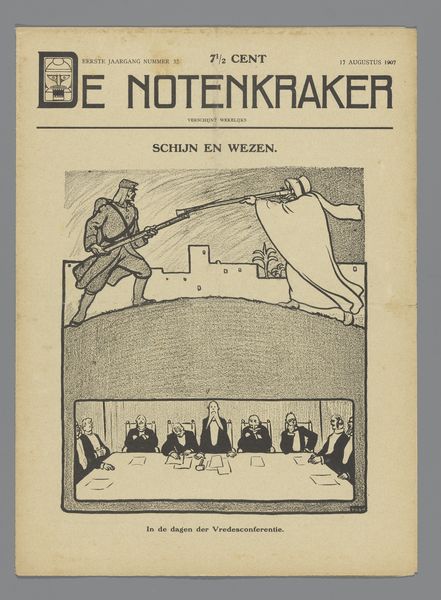
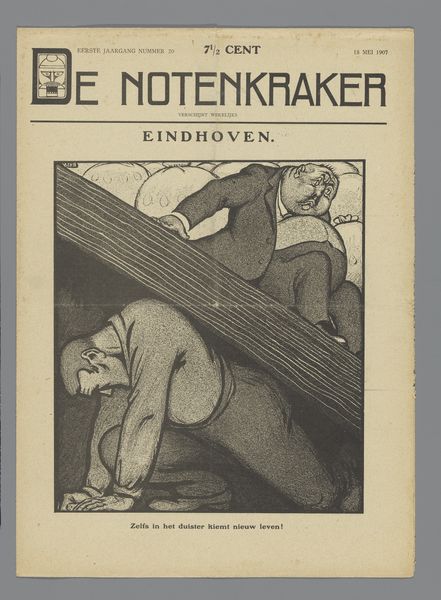
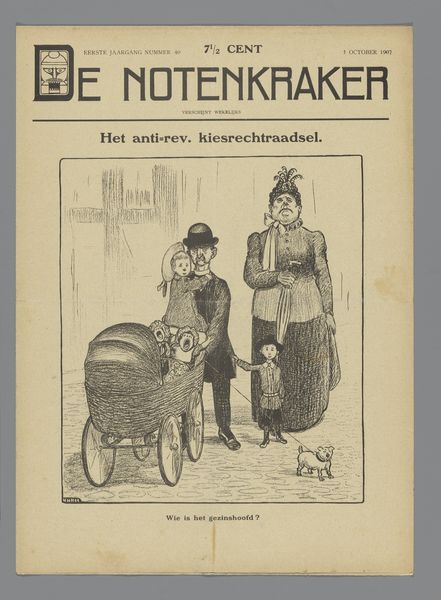
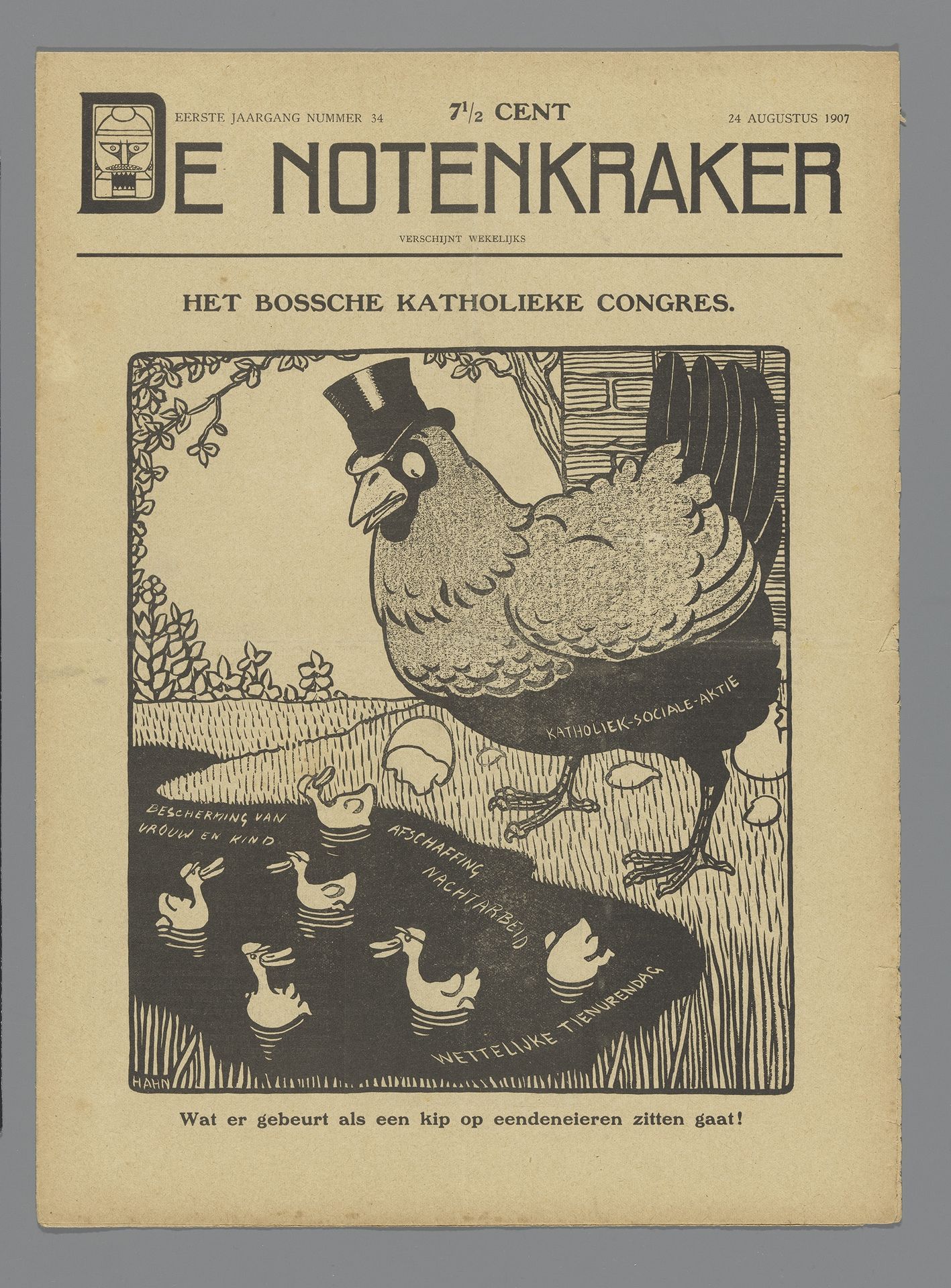
This illustration, from August 24, 1907, titled "De Notenkraker" by Albert Hahn, really lays bare how process can be front and center. It's all about the lines here – thick and thin, creating contrast. You can see the hand of the artist in every stroke. Looking closely, the way Hahn renders the feathers of the chicken, or the ripples in the water, it’s like following the movement of his hand. The marks are so clear. It’s not about perfection, but about the energy and intention behind each line. And the overall effect is a strong, graphic image that speaks volumes. It reminds me a little of Honoré Daumier, with his strong political views and his mastery of lithography. Like Daumier, Hahn isn't afraid to use his art to make a statement, and in doing so he embraces the power of art as a tool for dialogue and change.
De Notenkraker, 24 augustus 1907 / Het Bossche Katholieke Congres
Possibly 1907 - 1924

Artwork details
- Medium
- graphic-art, print, poster
- Dimensions
- height 348 mm, width 252 mm
- Copyright
- Rijks Museum: Open Domain
Tags
Comments
Share your thoughts
About this artwork
This illustration, from August 24, 1907, titled "De Notenkraker" by Albert Hahn, really lays bare how process can be front and center. It's all about the lines here – thick and thin, creating contrast. You can see the hand of the artist in every stroke. Looking closely, the way Hahn renders the feathers of the chicken, or the ripples in the water, it’s like following the movement of his hand. The marks are so clear. It’s not about perfection, but about the energy and intention behind each line. And the overall effect is a strong, graphic image that speaks volumes. It reminds me a little of Honoré Daumier, with his strong political views and his mastery of lithography. Like Daumier, Hahn isn't afraid to use his art to make a statement, and in doing so he embraces the power of art as a tool for dialogue and change.
Comments
Share your thoughts