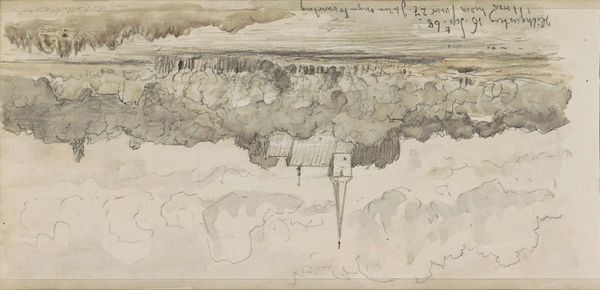
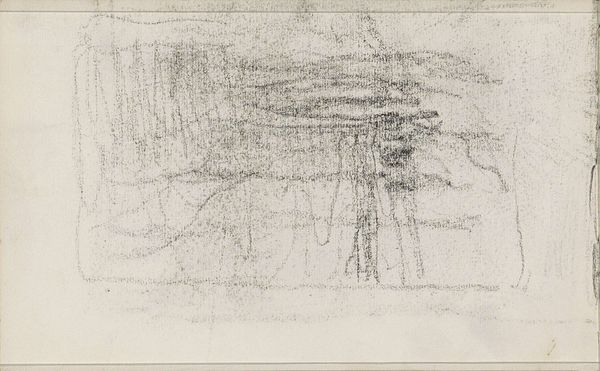
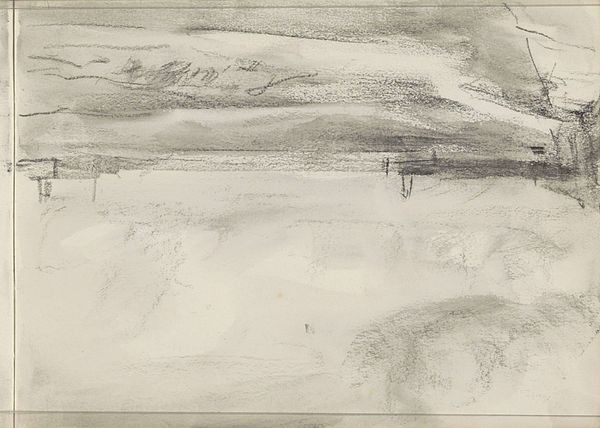
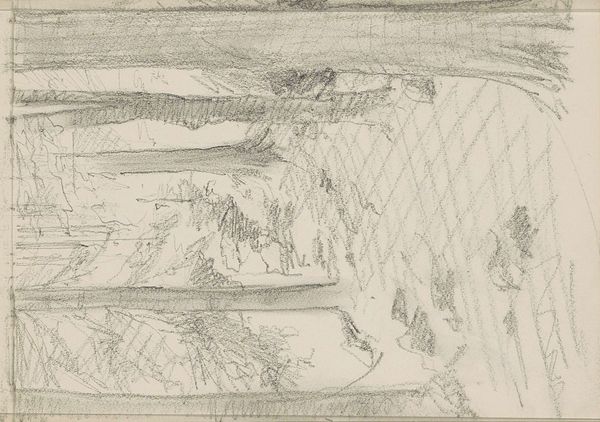
drawing, charcoal
#
pencil drawn
#
drawing
#
pencil sketch
#
landscape
#
charcoal drawing
#
pencil drawing
#
geometric
#
charcoal
Copyright: Richard Artschwager,Fair Use
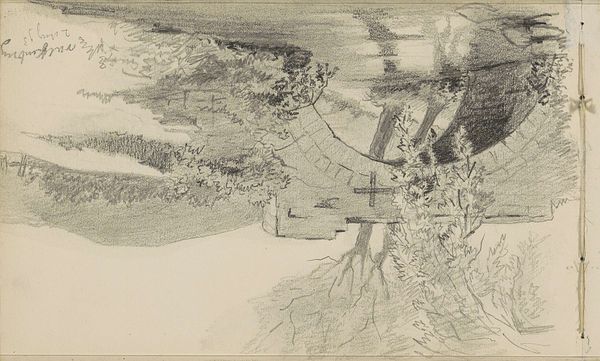
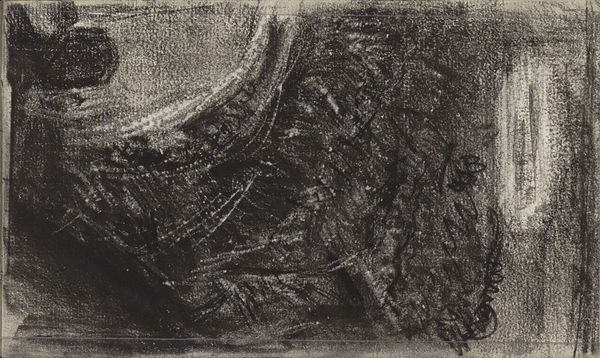
Editor: Here we have Richard Artschwager's "Volcano," created in 1986, using charcoal and pencil. The starkness of the monochrome really gives it a dramatic feel. What do you see in this piece? Curator: I'm drawn to the materiality of the drawing itself. The rough texture of the charcoal, the repetitive marks made to create the forms, the visible hand of the artist--these elements all point to the labor involved in its creation. It's not just a depiction of a volcano; it's a record of a specific physical act. Look at the repetitive strokes forming the landscape at the bottom, like rows of endless toil. Do you notice how the geometric shape of the arches contrasts with the free-flowing lines of the volcanic eruption? Editor: Yes, that's striking. The volcano feels organic, almost violent, while the arches below are very constructed. What could that mean? Curator: Think about the social and economic forces represented by those forms. The bridge, or aqueduct, a symbol of infrastructure and human control over nature, is contrasted against the raw power of the volcano, a force that inherently defies such control. The artwork invites us to consider our relationship with the natural world, one that has always involved both exploiting its resources and trying to tame its elemental power through engineering and industry. Consider also that Artschwager often blurred the line between art and furniture. Could this image of "Volcano" suggest both destructive and functional aspects, just like industrial processes? Editor: That's a fascinating idea. I hadn’t thought about how the artist’s overall practice might inform our reading of this seemingly straightforward landscape. Curator: Exactly. And it's through this focus on materiality and the means of production that we can really begin to unravel the work's layered meaning. It isn’t just a volcano; it's a comment on labor, materials, and our human relationship to a potentially hostile earth. Editor: Thanks for helping me consider these points! I am leaving with a lot more insights on art's social reflection than I had upon arriving.
Comments
No comments
Be the first to comment and join the conversation on the ultimate creative platform.
 Collect
 React
React Comment
More like this