About this artwork
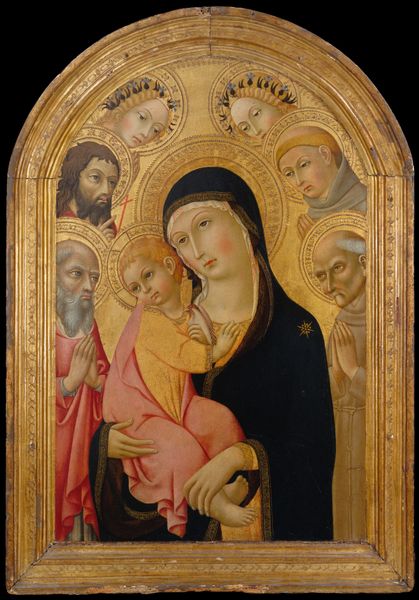
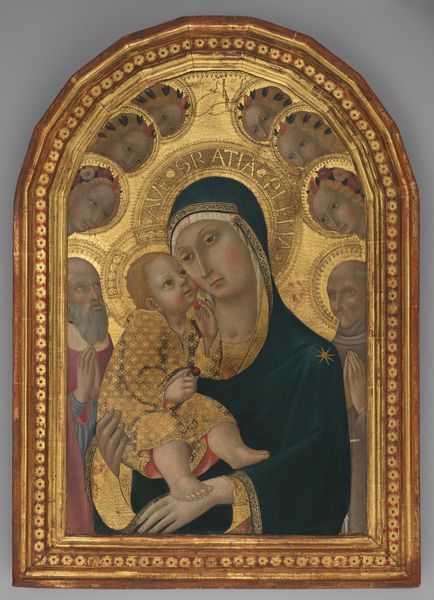
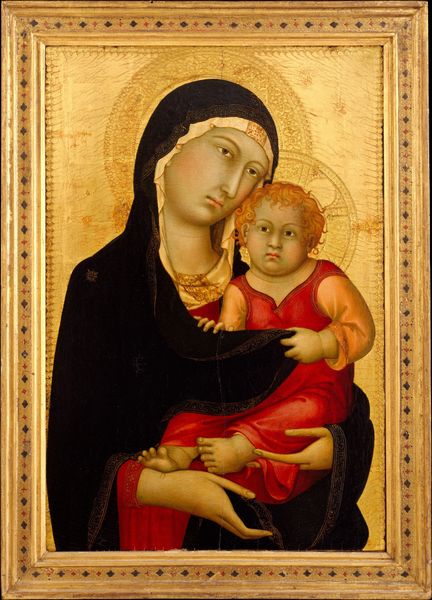
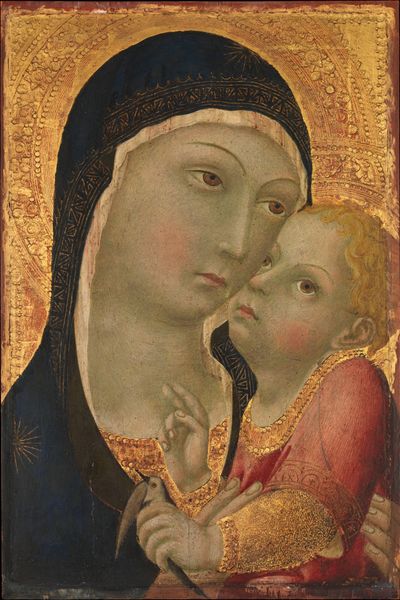
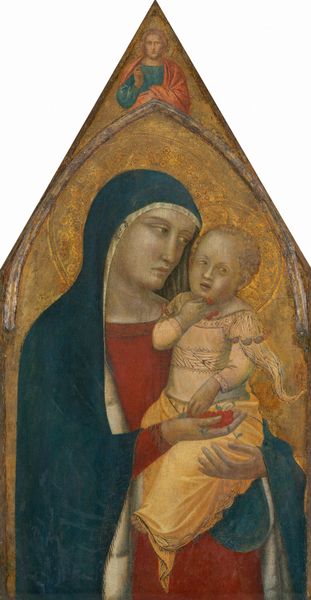
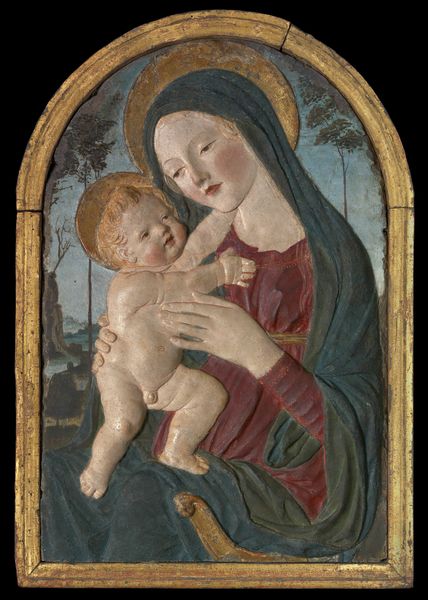
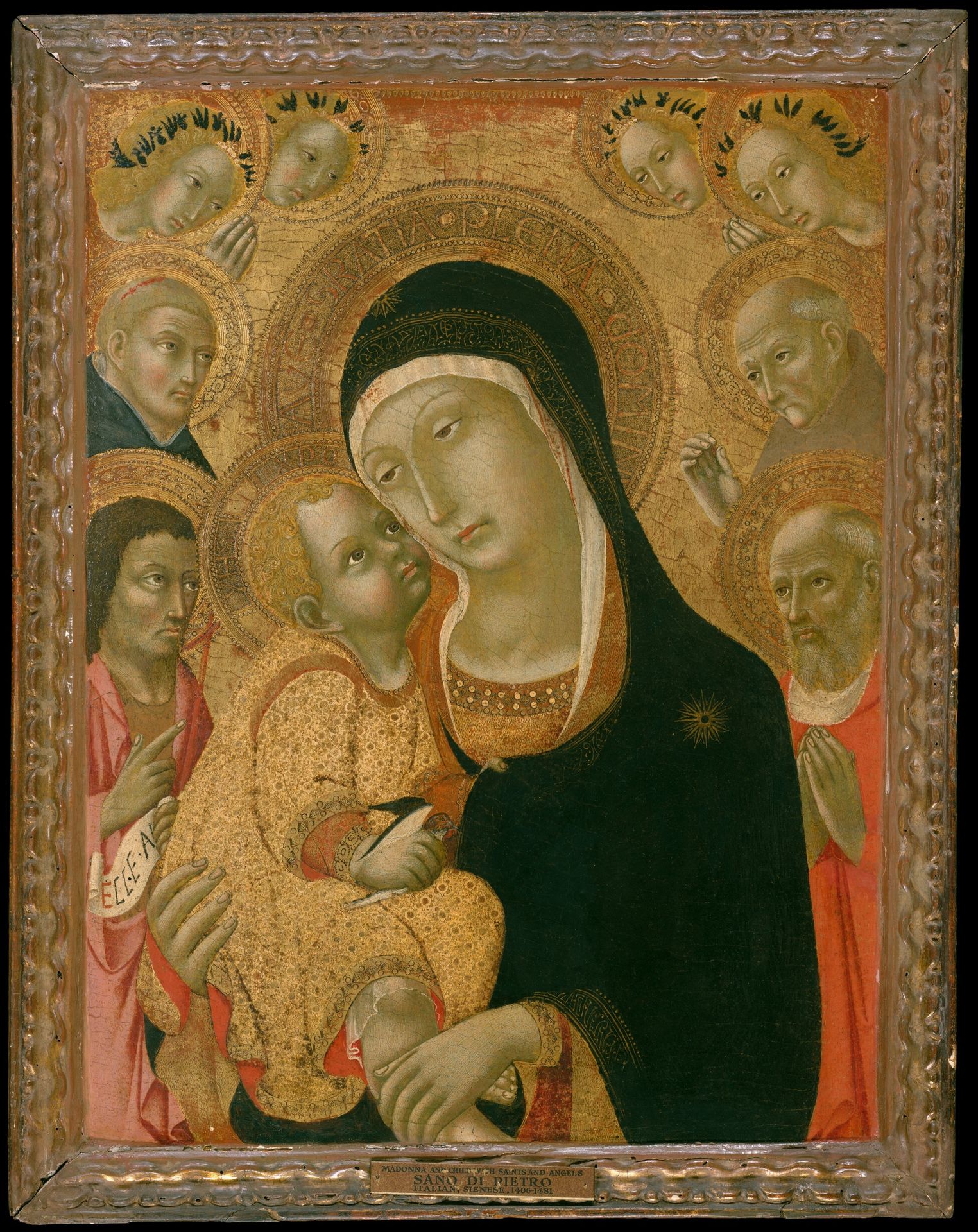
Sano di Pietro painted this 'Madonna and Child with Saints' in Siena, likely in the 1440s, using tempera on a wood panel. It presents us with a traditional image, but one that also reflects the social and political realities of its time. Sano di Pietro was a prolific artist in Siena, deeply embedded in the city's artistic institutions. His workshop produced numerous paintings for local churches and private patrons. This particular painting reflects the conservative artistic trends prevalent in Siena at the time, particularly its adherence to the traditions of the Sienese school of painting. The inclusion of specific saints, like Bernardino, a local Sienese saint, is a commentary on civic pride. The grouping of the saints and angels around the Madonna and Child can be interpreted as a reflection of the communal values upheld by Sienese society. To truly understand this painting, we need to delve into Sienese history, examining the city's political structures, religious institutions, and artistic traditions. By studying archival documents, religious texts, and artistic treatises, we can gain a deeper understanding of the painting's meaning and its place in the broader context of Sienese society.
Madonna and Child with Saints John the Baptist, Jerome, Peter Martyr, and Bernardino and Four Angels 1422 - 1470

Sano di Pietro (Ansano di Pietro di Mencio)
1405 - 1481
The Metropolitan Museum of Art
Metropolitan Museum of Art, New York, NYArtwork details
- Medium
- tempera, painting
- Dimensions
- Overall, with engaged (not original) frame: 28 1/8 × 22 1/8 in. (71.4 × 56.2 cm) Painted surface: 24 3/4 × 18 5/8 in. (62.9 × 47.3 cm)
- Location
- Metropolitan Museum of Art, New York, NY
- Copyright
- Public Domain
Tags
portrait
tempera
painting
madonna
oil painting
child
italian-renaissance
early-renaissance
portrait art
angel
Comments
No comments
About this artwork
Sano di Pietro painted this 'Madonna and Child with Saints' in Siena, likely in the 1440s, using tempera on a wood panel. It presents us with a traditional image, but one that also reflects the social and political realities of its time. Sano di Pietro was a prolific artist in Siena, deeply embedded in the city's artistic institutions. His workshop produced numerous paintings for local churches and private patrons. This particular painting reflects the conservative artistic trends prevalent in Siena at the time, particularly its adherence to the traditions of the Sienese school of painting. The inclusion of specific saints, like Bernardino, a local Sienese saint, is a commentary on civic pride. The grouping of the saints and angels around the Madonna and Child can be interpreted as a reflection of the communal values upheld by Sienese society. To truly understand this painting, we need to delve into Sienese history, examining the city's political structures, religious institutions, and artistic traditions. By studying archival documents, religious texts, and artistic treatises, we can gain a deeper understanding of the painting's meaning and its place in the broader context of Sienese society.
Comments
No comments