drawing, paper, ink
#
drawing
#
art-nouveau
#
figuration
#
paper
#
ink
#
geometric
#
line
#
decorative-art
Dimensions: height 28 mm, width 54 mm
Copyright: Rijks Museum: Open Domain
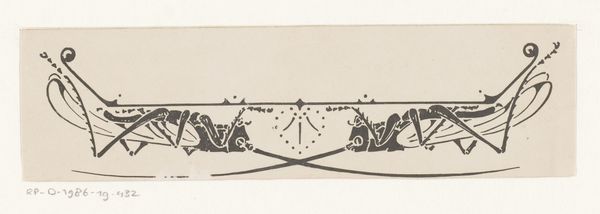
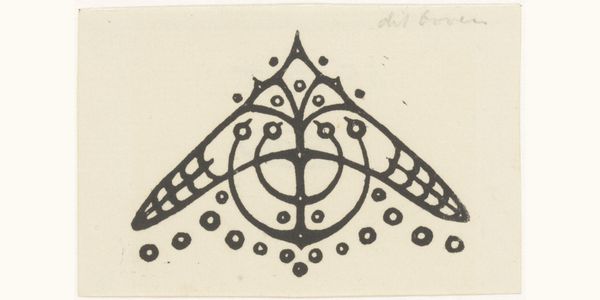
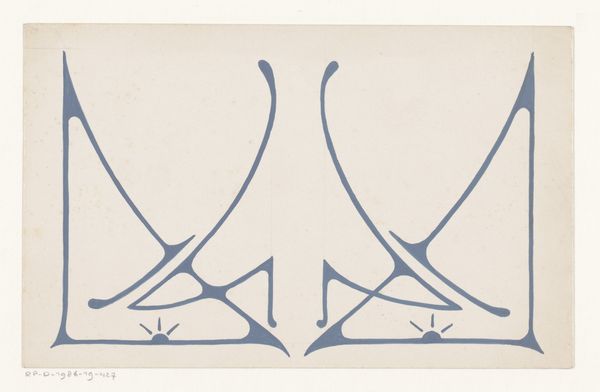
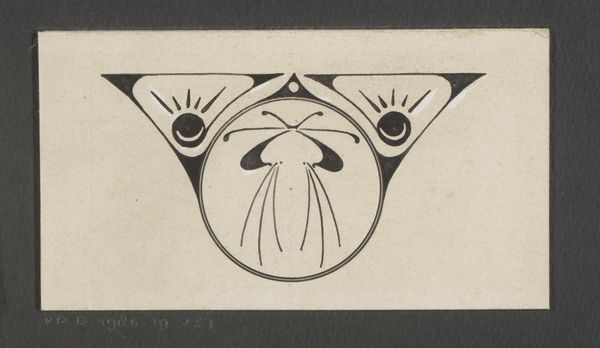
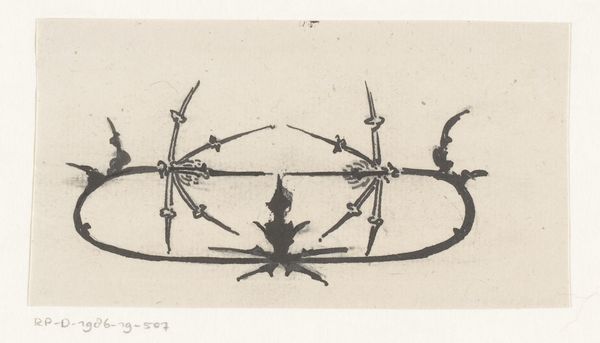
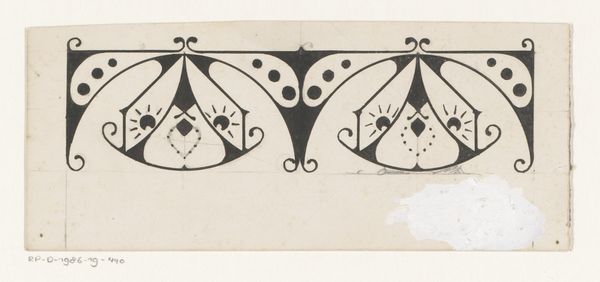
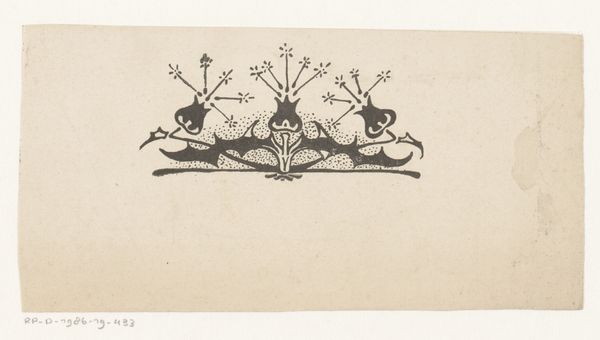
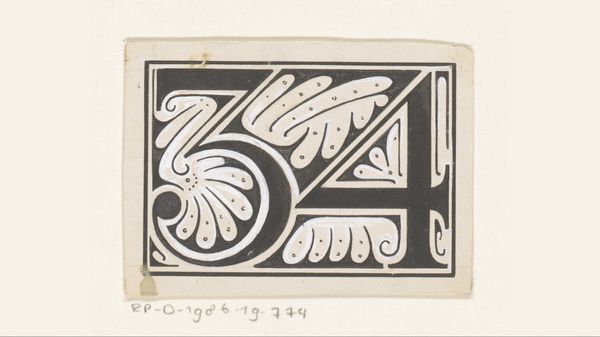
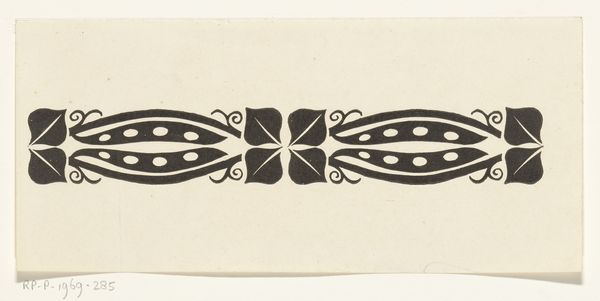
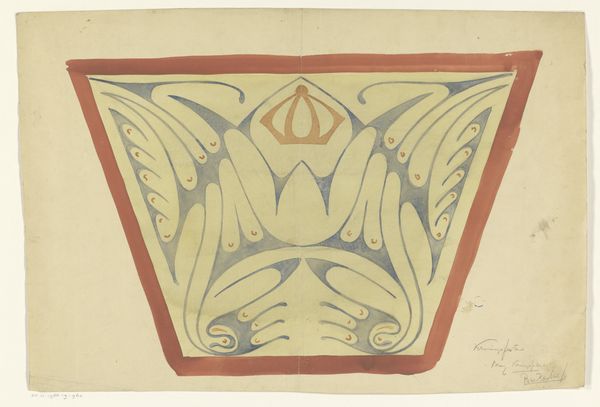
Editor: This is "Vignet met twee zwanen" or "Vignette with two swans," by Reinier Willem Petrus de Vries, likely made sometime between 1884 and 1952. It's an ink drawing on paper. The geometric, almost symmetrical, composition gives it a calm, decorative feel. What stands out to you about this work? Curator: Ah, yes, isn’t it lovely? It whispers to me of dreams spun from moonlight and still waters. The way de Vries uses line, it's as if the swans are born from the negative space itself. Do you see how the Art Nouveau influence softens what could be stark geometry? There's a yearning in it, isn't there? Like two halves of a heart seeking balance. Editor: I see what you mean. The symmetry does create that sense of balance, but there’s also a rigidity. The swans, while elegant, are also quite stylized. Is there a particular reason you feel this speaks of yearning? Curator: Perhaps because swans often represent grace and love, and the slight stylization hints at an idealized version of those things. De Vries has tamed their wildness into something refined, decorative. That taming, that reaching for an ideal, it speaks to the yearnings of the soul, doesn’t it? Or maybe I’m just projecting! What do you think of the overall composition? The positioning of the swans and the geometric shapes? Editor: I find the symmetry both comforting and a little restrictive, like a perfectly framed photograph. Curator: Exactly! A gilded cage, perhaps? Art Nouveau often dances between liberation and constraint. I'm so glad you noticed it. Editor: I hadn’t considered it that way before. Thanks for the insight. Curator: And thank *you* for bringing your fresh perspective. It makes all the difference.
Comments
No comments
Be the first to comment and join the conversation on the ultimate creative platform.
 Collect
 React
React Comment
More like this