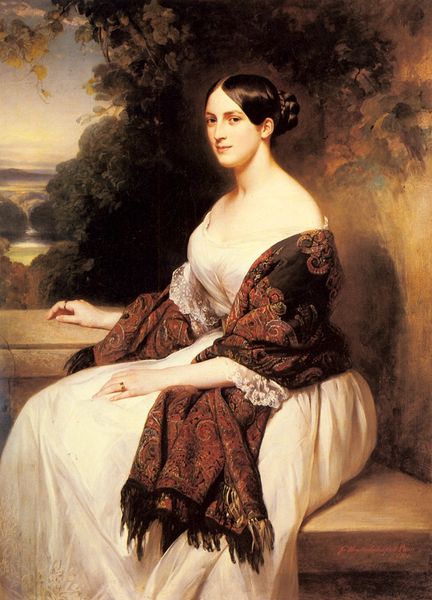
Dimensions: 226.1 x 165.1 cm
Copyright: Public domain
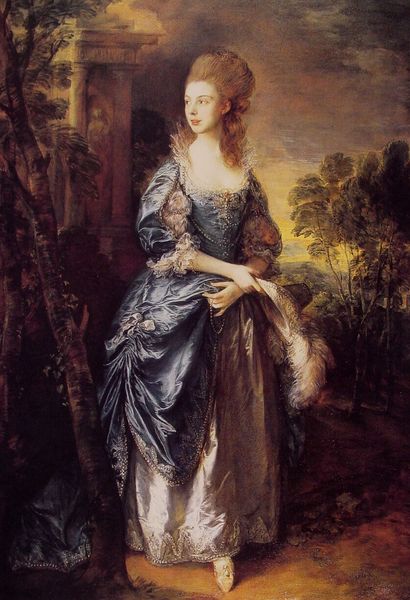
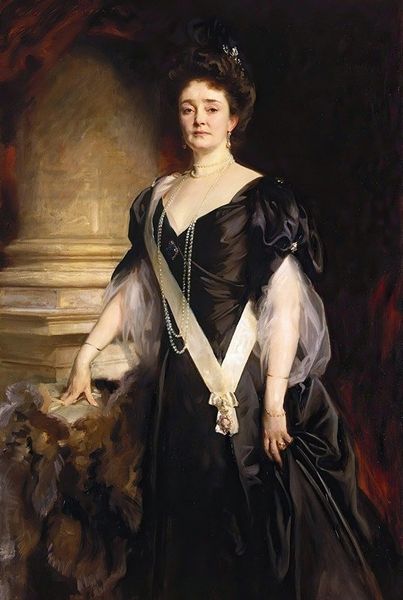
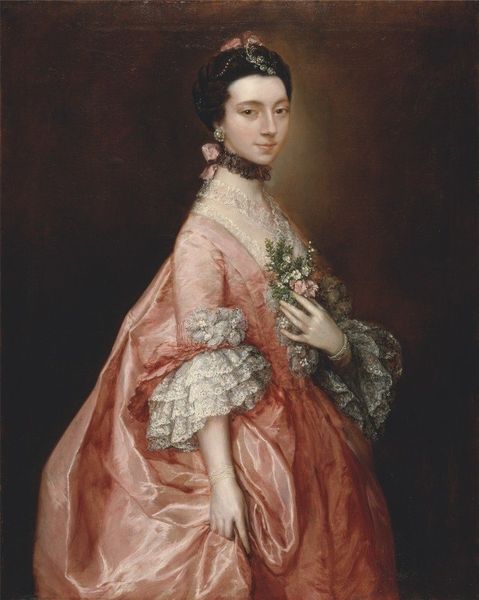
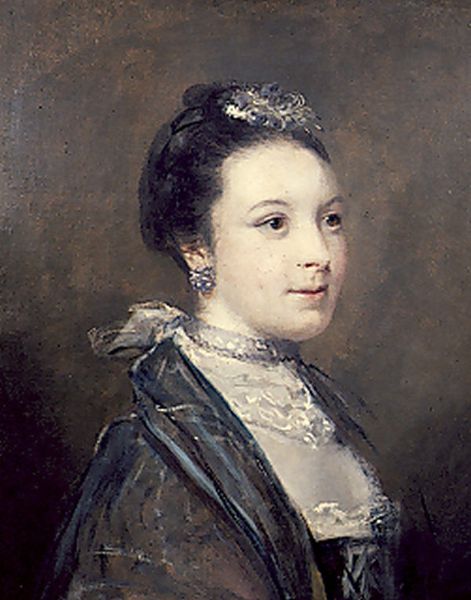
Curator: It strikes me immediately how the somber colors evoke such quiet melancholy. The texture of the fabric almost seems to absorb the light, creating a heavy stillness. Editor: That stillness certainly pervades Thomas Gainsborough’s portrait of Lady Alston, painted around 1762. Currently housed in the Louvre, this oil-on-canvas work encapsulates the evolving styles of the era, weaving together threads of Rococo and Romanticism. Curator: Yes, look at how the darkness of the background pushes forward that porcelain skin. That thin, black ribbon around her neck – almost like a fragile barrier between her head and body, and visually implying separation and fragility. Editor: And consider the socio-political landscape! The British aristocracy were solidifying their power through portraiture, controlling and distributing their likeness as a measure of their power and control. How does Gainsborough represent that through Lady Alston? Curator: In her direct gaze there is a lack of obvious symbolism – there's no grand coat of arms or family crest vying for our attention, and yet her dark gown contrasts to that opulent shawl that looks deliberately posed; but maybe it subtly hints to a certain status and lineage nonetheless? I wonder how it spoke to her contemporaries... Editor: Indeed. Though Gainsborough often sought to break free from rigid conventions, he was inevitably shaped by the demands and expectations of his clientele and his era, while his use of darker colors were a signal for more psychological engagement for the audience. I feel these tensions make this portrait truly fascinating. The aristocracy still wanted flattering images, which limited him creatively. Curator: I see a tension between the aesthetic ideals of her era and what might be some inner thoughts - there's a heavy heart behind that careful portrait that is hard to miss! Editor: It gives one pause for reflection indeed on the socio-political and creative struggles embedded within. Thanks for highlighting the symbolism, it gives an extra layer to unpack the art’s enduring qualities and history.
Comments
No comments
Be the first to comment and join the conversation on the ultimate creative platform.
 Collect
 React
React Comment
More like this