About this artwork
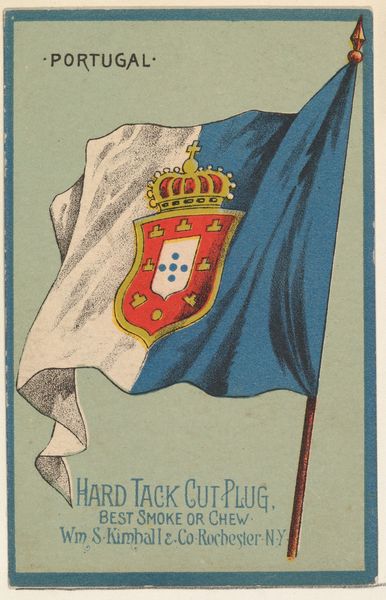
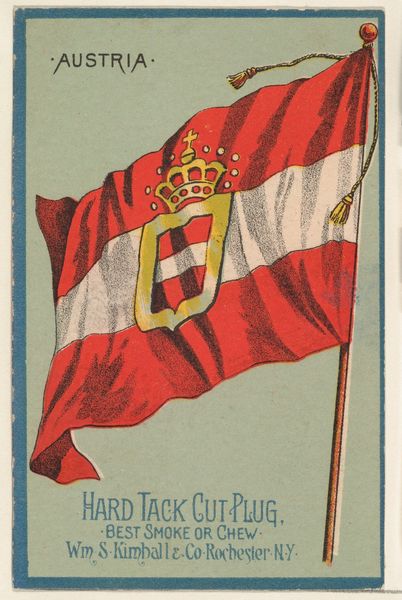
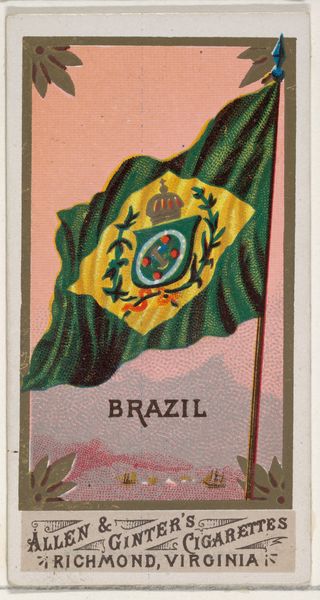
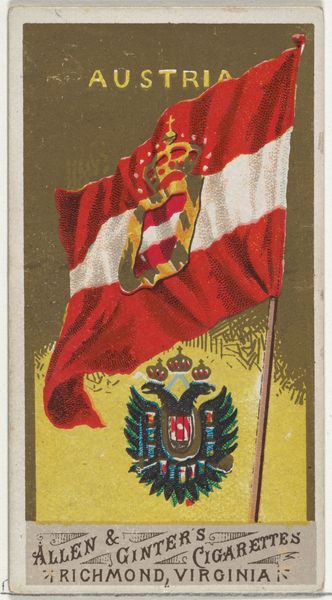
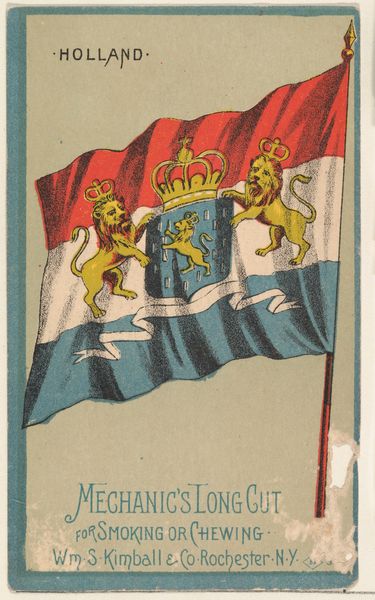
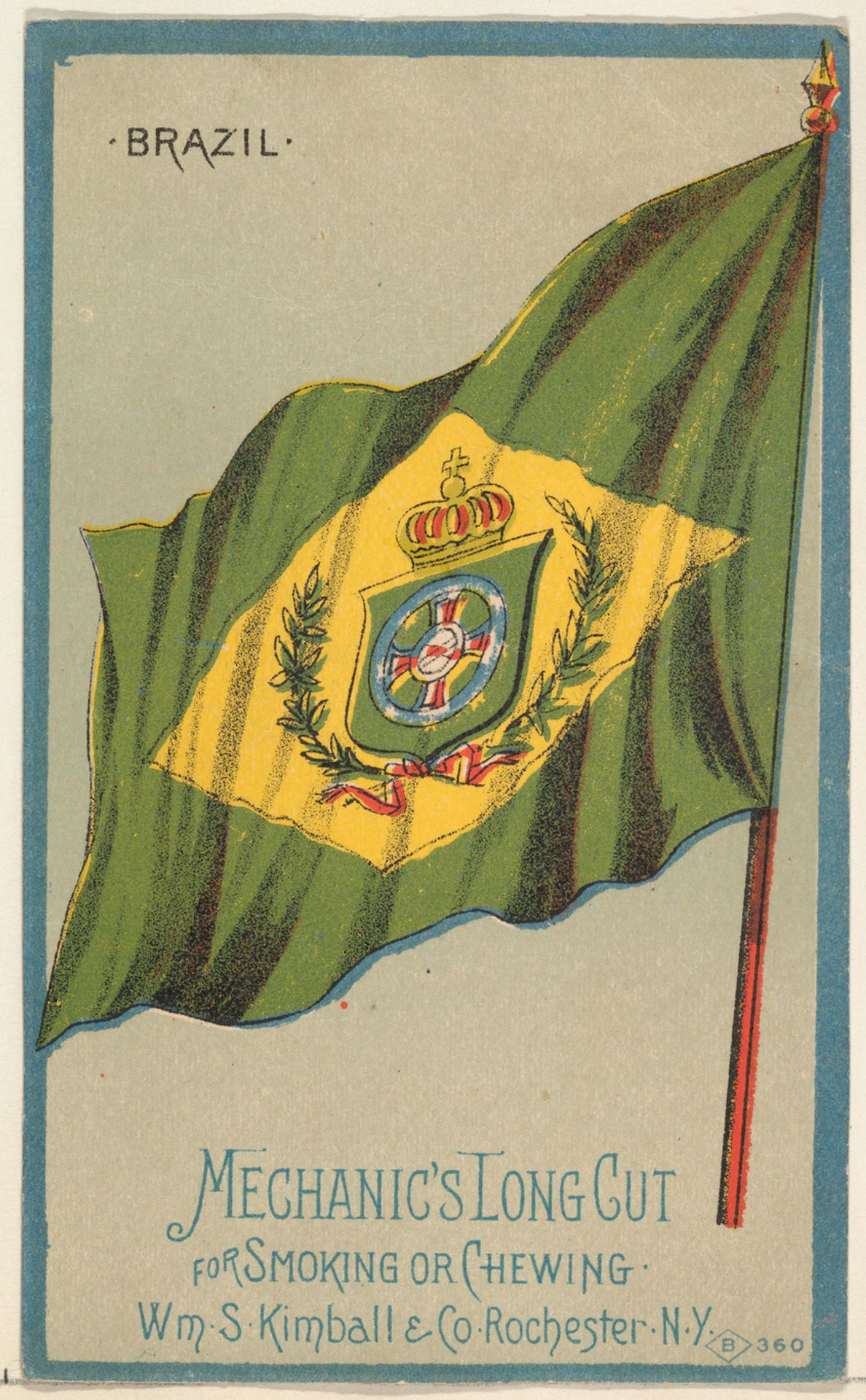
Editor: Here we have "Brazil, from the National Flags series," printed in 1891 by Wm. S. Kimball & Co. It's a lithograph, likely intended as a decorative print, perhaps even a poster. What strikes me is the overt commercial aspect—the flag intertwined with an advertisement. What's your perspective on this work? Curator: Well, this piece isn’t simply decorative; it's a prime example of how national identity becomes intertwined with consumption. The lithographic process itself – a relatively inexpensive method of mass production at the time – highlights the commodification of national symbols. How does the presence of "Mechanic's Long Cut" for smoking or chewing affect the message of patriotism displayed in the image? Editor: I see what you mean. It's almost like patriotism is being sold alongside tobacco. So, the materials and the means of production – the lithograph, the printing press – directly inform our understanding of its purpose and meaning. Do you see any elements that support such interpretation? Curator: Precisely. The mass production of these cards collapses the traditional hierarchy between art and commercial good. Also, think about *who* is consuming this image. The text indicates it is 'Mechanics’ Long Cut,' thus targeting a very specific, working-class demographic. What does this reveal about the relationship between national identity and social class? Editor: That's a fascinating point. It suggests a conscious effort to tie the working class to the Brazilian flag, perhaps fostering a sense of national unity through a shared habit. I had considered this merely an appealing image; it’s quite revealing now realizing how layered with social commentary it is, especially when viewing the artwork as more than just the image. Curator: Exactly. By focusing on the material conditions of its production and reception, we begin to unravel the complex ways in which national identity is manufactured, consumed, and negotiated across different social strata.
Brazil, from the National Flags series (N195) issued by Wm. S. Kimball & Co.
1891

William S. Kimball & Company
@williamskimballcompany
The Metropolitan Museum of Art
Metropolitan Museum of Art, New York, NYArtwork details
- Medium
- drawing, graphic-art, lithograph, print, poster
- Dimensions
- Sheet: 4 1/4 × 2 9/16 in. (10.8 × 6.5 cm)
- Location
- Metropolitan Museum of Art, New York, NY
- Copyright
- Public Domain
Tags
Comments
Share your thoughts
About this artwork
Editor: Here we have "Brazil, from the National Flags series," printed in 1891 by Wm. S. Kimball & Co. It's a lithograph, likely intended as a decorative print, perhaps even a poster. What strikes me is the overt commercial aspect—the flag intertwined with an advertisement. What's your perspective on this work? Curator: Well, this piece isn’t simply decorative; it's a prime example of how national identity becomes intertwined with consumption. The lithographic process itself – a relatively inexpensive method of mass production at the time – highlights the commodification of national symbols. How does the presence of "Mechanic's Long Cut" for smoking or chewing affect the message of patriotism displayed in the image? Editor: I see what you mean. It's almost like patriotism is being sold alongside tobacco. So, the materials and the means of production – the lithograph, the printing press – directly inform our understanding of its purpose and meaning. Do you see any elements that support such interpretation? Curator: Precisely. The mass production of these cards collapses the traditional hierarchy between art and commercial good. Also, think about *who* is consuming this image. The text indicates it is 'Mechanics’ Long Cut,' thus targeting a very specific, working-class demographic. What does this reveal about the relationship between national identity and social class? Editor: That's a fascinating point. It suggests a conscious effort to tie the working class to the Brazilian flag, perhaps fostering a sense of national unity through a shared habit. I had considered this merely an appealing image; it’s quite revealing now realizing how layered with social commentary it is, especially when viewing the artwork as more than just the image. Curator: Exactly. By focusing on the material conditions of its production and reception, we begin to unravel the complex ways in which national identity is manufactured, consumed, and negotiated across different social strata.
Comments
Share your thoughts