1887
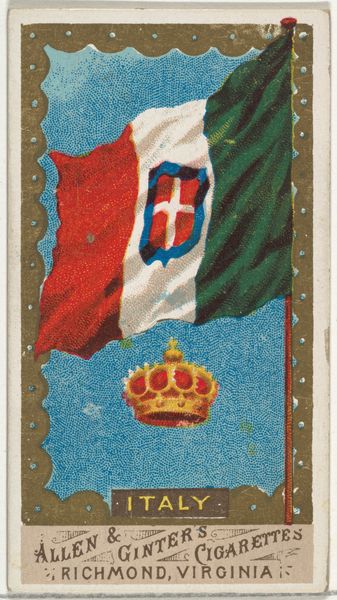
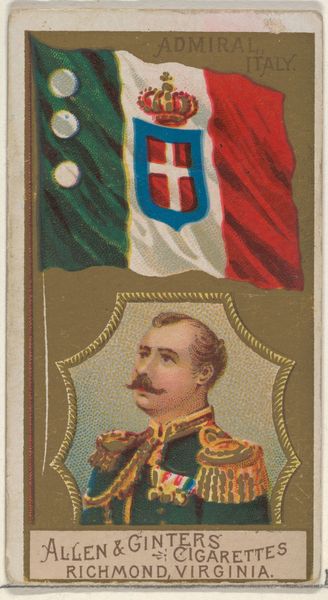
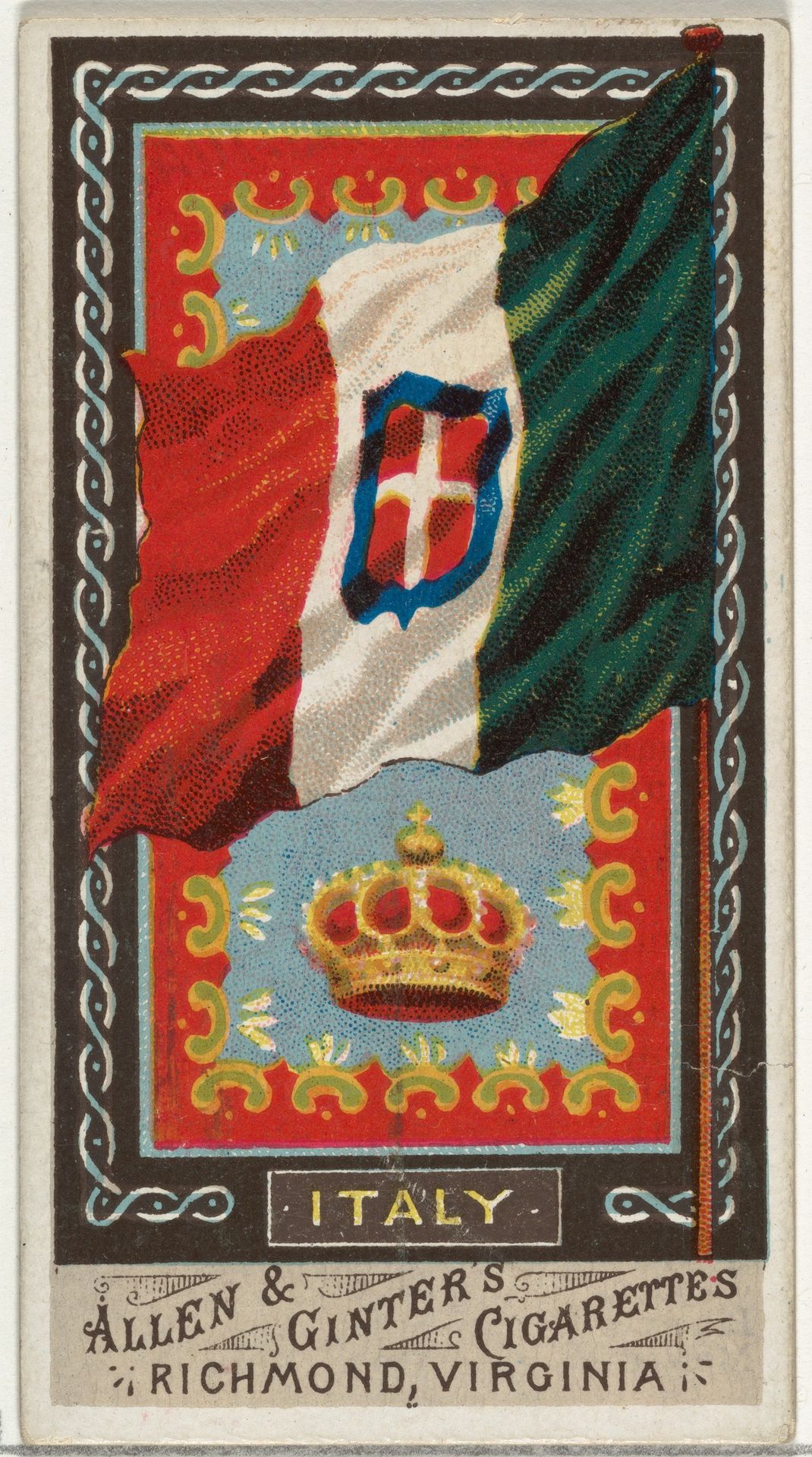
Italy, from Flags of All Nations, Series 1 (N9) for Allen & Ginter Cigarettes Brands


Listen to curator's interpretation
Curatorial notes
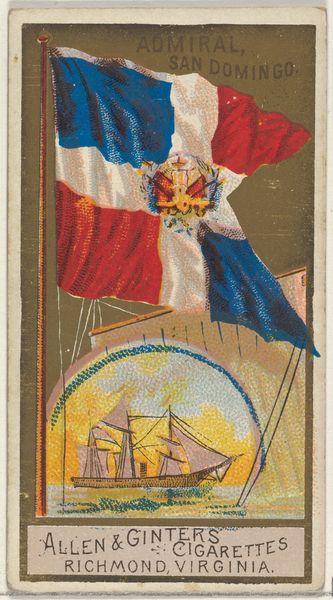
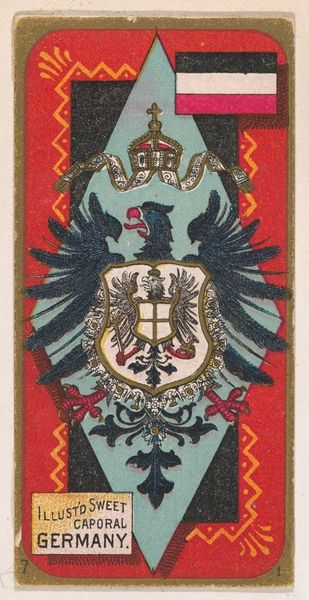
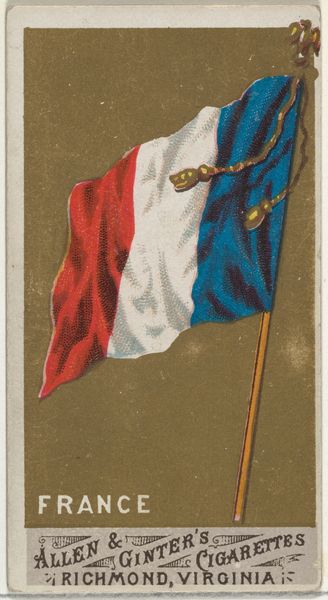
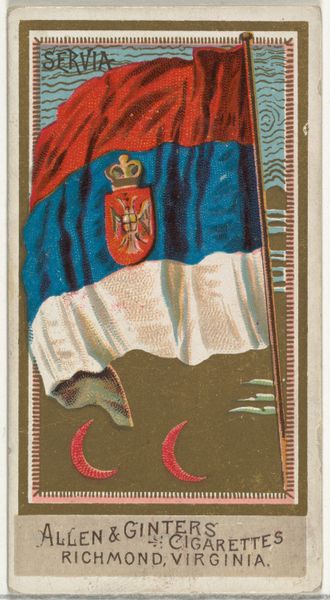
Curator: This vibrant little card, dating from 1887, is entitled "Italy, from Flags of All Nations, Series 1 (N9) for Allen & Ginter Cigarettes Brands." Editor: It’s strikingly graphic. My first impression is that the chromatic quality, a juxtaposition between regality and manufactured pleasure, feels deliberately conflicting. Curator: Absolutely. These cards were printed as collectibles inserted into cigarette packs. Think about that material reality: a delicate, meticulously designed piece of graphic art created solely to market mass-produced tobacco. The image becomes intrinsically tied to consumer culture and its evolving relationship to nationhood. Editor: Let’s unpack the production then. Cigarette cards were cheaply mass produced using chromolithography. In comparison to individual artworks, the printing techniques here enable quick, almost limitless reproductions for distribution across a range of consumers, disrupting traditional models of consumption by embedding collectability with everyday goods. Curator: Precisely, and look at the Italian flag juxtaposed with the crown. It begs the question, what idea of "Italy" is being sold here? Is it a celebration of a unified nation, or simply an exotic branding element used to peddle cigarettes in the American market? Think about the layers: an American company appropriating another nation's symbol. Editor: That symbol too: a vibrant crest over the striking national tricolour with a luminous crown hovering centrally against the backdrop, it appears at once authoritative and celebratory but cheapened with gaudy coloration and commercial deployment. Curator: It really is. It highlights the tension inherent in late 19th-century cultural exchange, especially the complex relationship between nations and consumerism. The act of collecting these cards then becomes part of the social fabric: the rituals, the trade networks, and shared experiences shaped by a burgeoning advertising industry. Editor: It’s amazing how much one small printed card can reveal about social structures, the hierarchies between production and high art, not to mention shifting economies of scale! Curator: Indeed. It serves as a reminder that objects, no matter how trivial they seem, can become powerful transmitters of identity, culture, and political ideology.