drawing, print, engraving
drawing
baroque
old engraving style
traditional media
landscape
figuration
genre-painting
engraving
Dimensions: height 196 mm, width 235 mm
Copyright: Rijks Museum: Open Domain
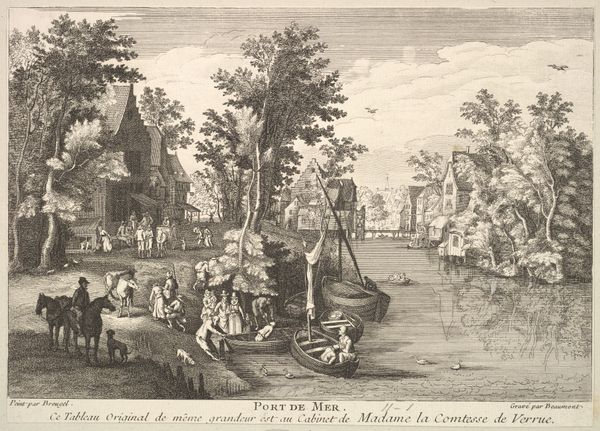
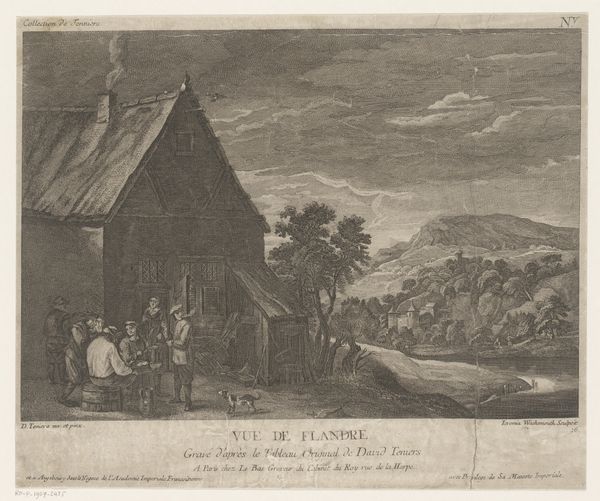
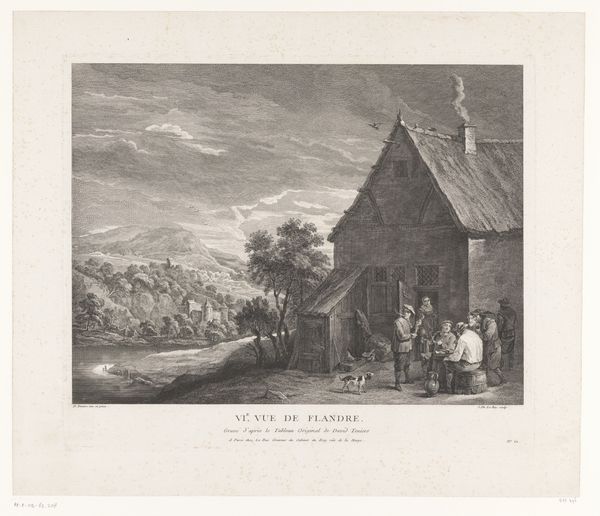
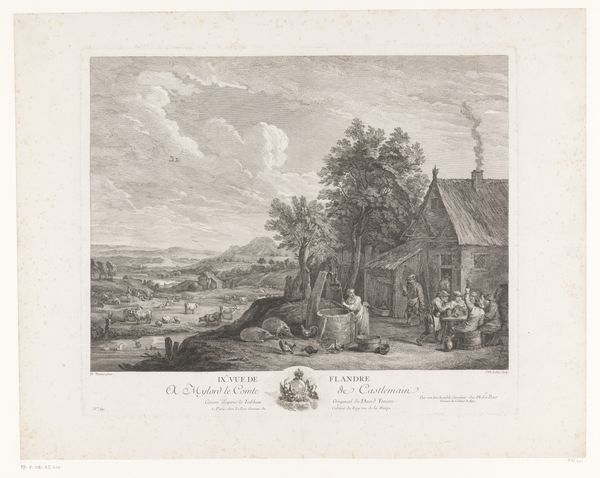
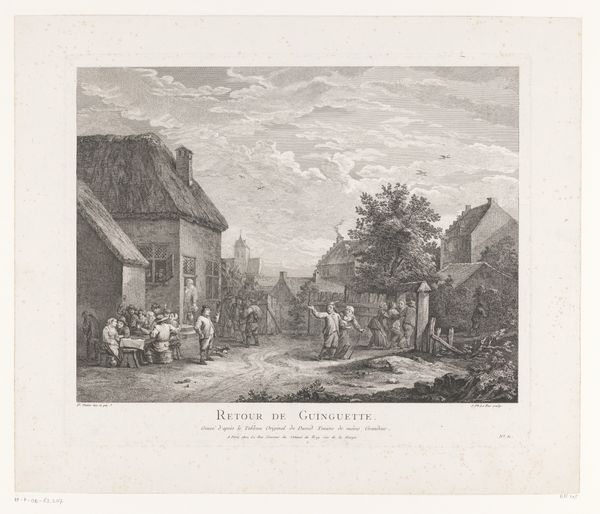
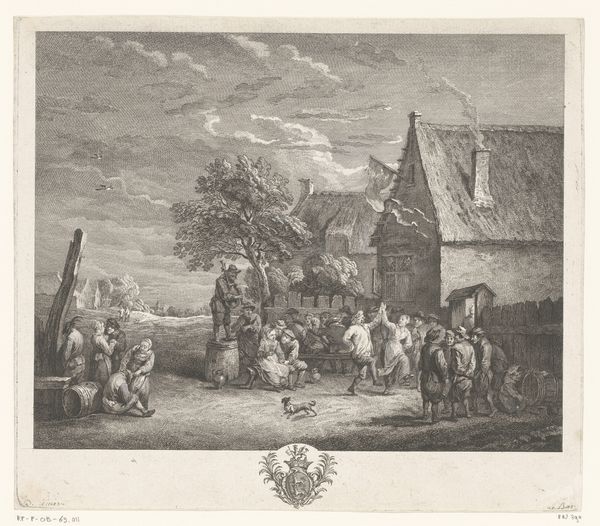
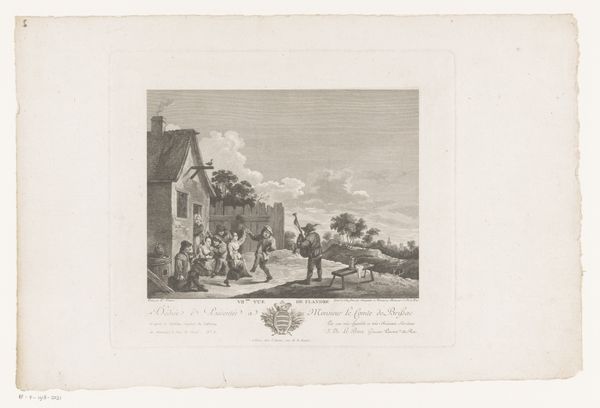
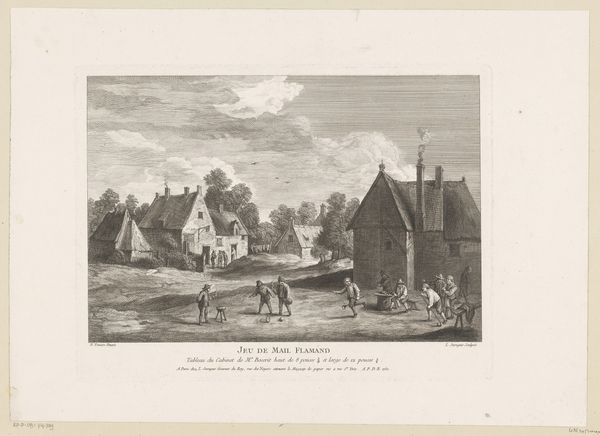
This print, made by Louis Surugue after David Teniers, shows a boisterous village scene with people celebrating outside an inn. The central motif, a group of figures dancing in a circle, has a lineage stretching back to ancient fertility rites. These communal dances echo through art history. From the ancient Greek chorus to medieval Maypole dances, the circle symbolizes unity, renewal, and the cyclical nature of life. Think of the Hora, a traditional dance found in the Balkans and Middle East, where linked arms signify community strength and shared destiny. The gestures and movements within these dances—the raised arms, the rhythmic steps—tap into a primal, collective memory. Perhaps it’s an echo of our ancestors' rituals, a subconscious connection to the turning of the seasons and the rhythms of the earth. The figures' movements embody a universal human desire for connection, joy, and communal expression. We see this desire re-emerging across time.
Comments
No comments
Be the first to comment and join the conversation on the ultimate creative platform.
 React
React Comment