About this artwork
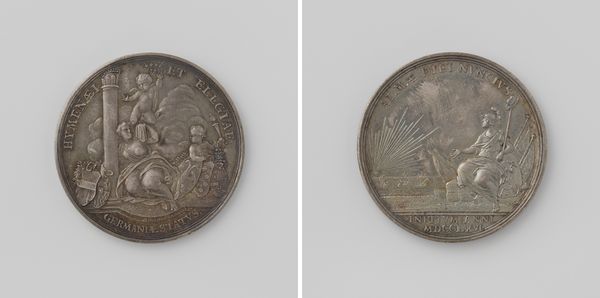
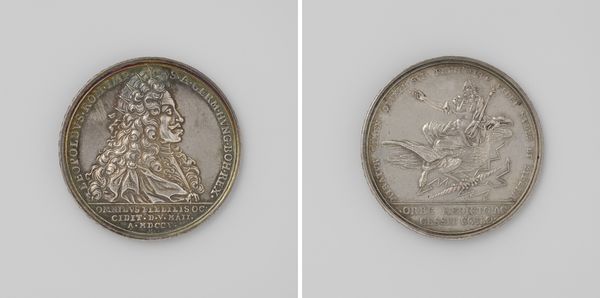
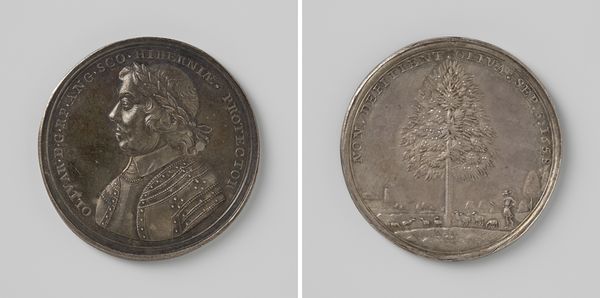
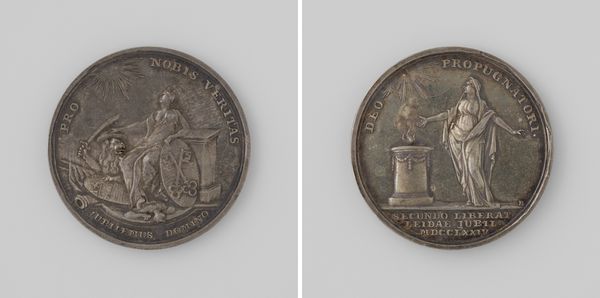
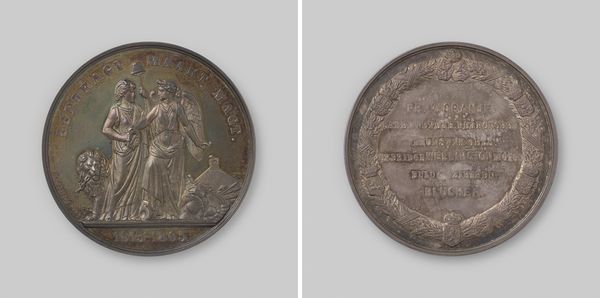
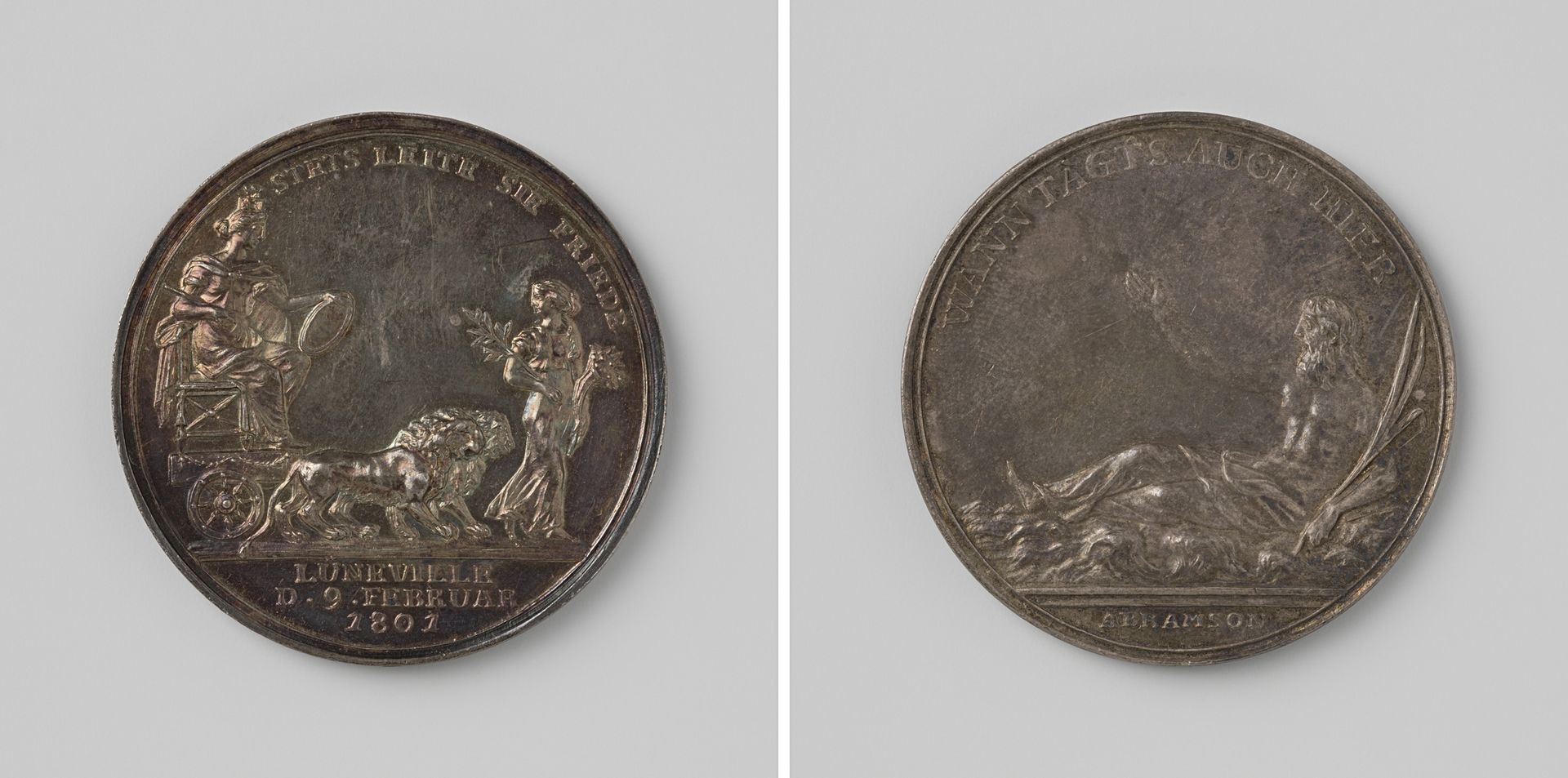
This silver medal, "Vrede van Luneville," was crafted by Abraham Abramson in 1801. It commemorates the Treaty of Lunéville, which marked a brief moment of peace during the Napoleonic Wars. Consider the power dynamics at play during this era of conflict. Abramson, a Jewish artist living in Prussia, navigates a complex landscape of national identity and artistic expression. Here, classical imagery is used to convey political messages, but what did peace mean for marginalized communities? The treaty brought respite from war, yet underlying social inequalities persisted. Notice the symbolic lion, the allegorical figures, and the inscriptions in German – all carefully chosen to communicate specific ideas about peace and power. How do these symbols resonate differently depending on one’s position within society? It is a reminder that peace is not a universal experience but one shaped by individual and collective histories.

Artwork details
- Medium
- metal, relief, sculpture
- Dimensions
- diameter 4.2 cm, weight 27.88 gr
- Copyright
- Rijks Museum: Open Domain
Tags
Comments
Share your thoughts
About this artwork
This silver medal, "Vrede van Luneville," was crafted by Abraham Abramson in 1801. It commemorates the Treaty of Lunéville, which marked a brief moment of peace during the Napoleonic Wars. Consider the power dynamics at play during this era of conflict. Abramson, a Jewish artist living in Prussia, navigates a complex landscape of national identity and artistic expression. Here, classical imagery is used to convey political messages, but what did peace mean for marginalized communities? The treaty brought respite from war, yet underlying social inequalities persisted. Notice the symbolic lion, the allegorical figures, and the inscriptions in German – all carefully chosen to communicate specific ideas about peace and power. How do these symbols resonate differently depending on one’s position within society? It is a reminder that peace is not a universal experience but one shaped by individual and collective histories.
Comments
Share your thoughts