1695
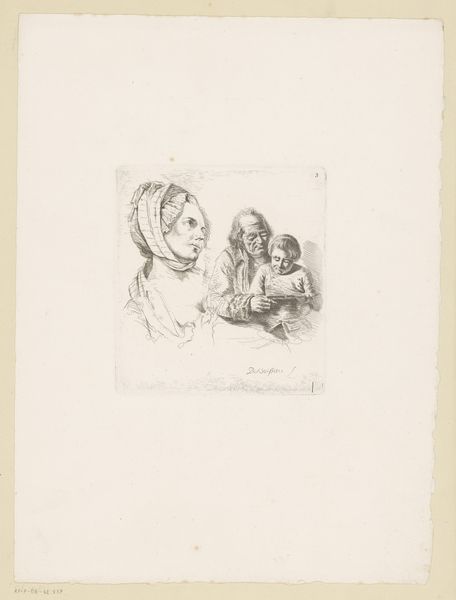
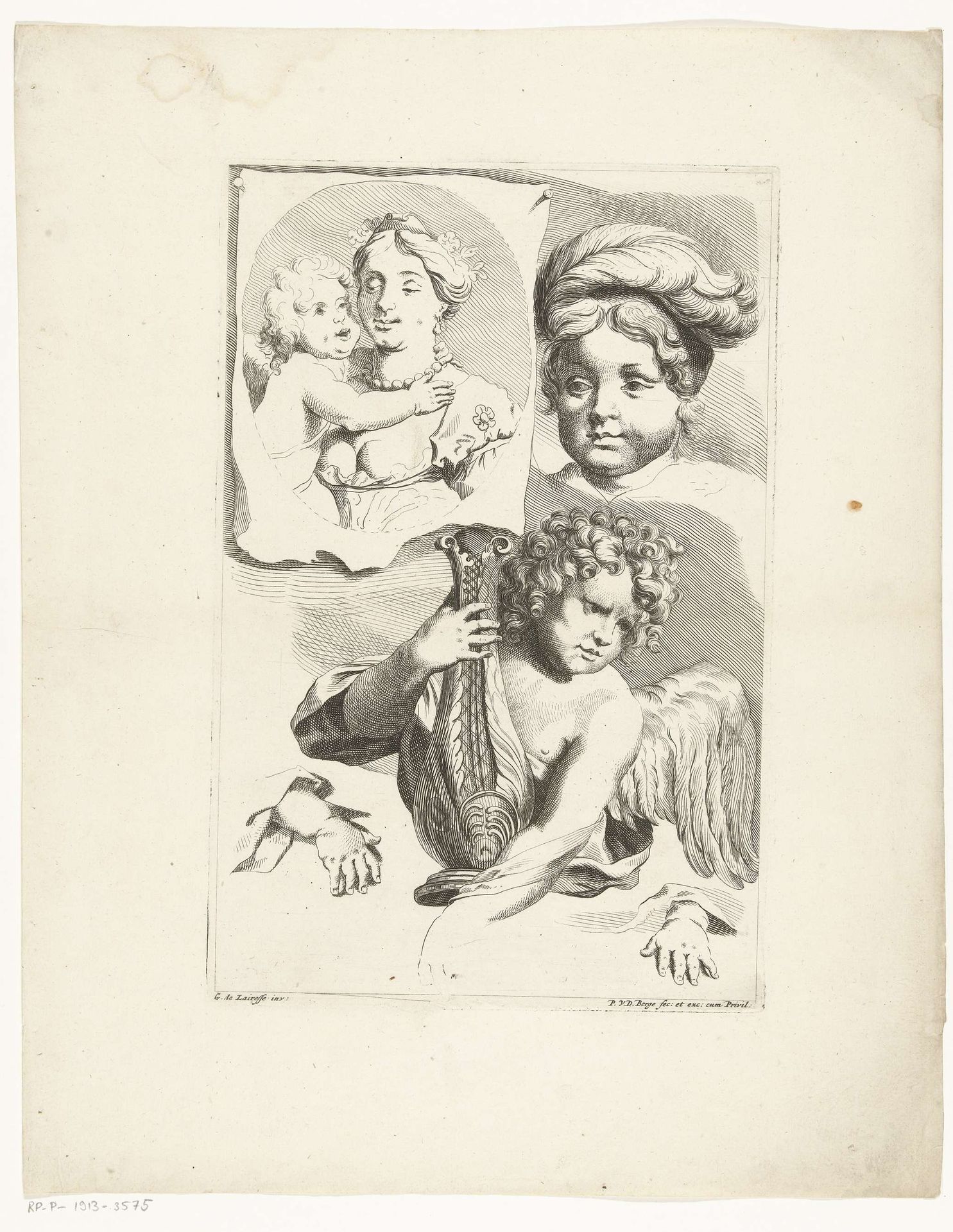
Studieblad met drie hoofden en twee handen

Pieter van den Berge
1659 - 1737Location
RijksmuseumListen to curator's interpretation
Curatorial notes
Pieter van den Berge created this study sheet with pen in the late 17th or early 18th century. The composition presents an intriguing interplay of forms, with three heads and two hands arranged in a seemingly casual manner. The artist’s graphic precision is evident in the delicate lines and shading that define each figure, creating a dynamic tension between positive and negative space. The heads, each with a distinct expression, suggest a range of human emotions and states, while the disembodied hands add an element of surreal detachment. Van den Berge’s work invites a structuralist reading of its components and an examination of its semiotic potential, which questions conventional modes of representation. The study challenges fixed meanings, prompting viewers to reflect on the nature of portraiture and the representation of the human form. The arrangement destabilizes established notions of wholeness. This functions not just aesthetically but also as part of a larger cultural and philosophical discourse.