painting, acrylic-paint
#
abstract-expressionism
#
abstract expressionism
#
abstract painting
#
painting
#
acrylic-paint
#
neo expressionist
#
acrylic on canvas
#
abstraction
#
surrealism
#
modernism
Copyright: Roberto Matta,Fair Use
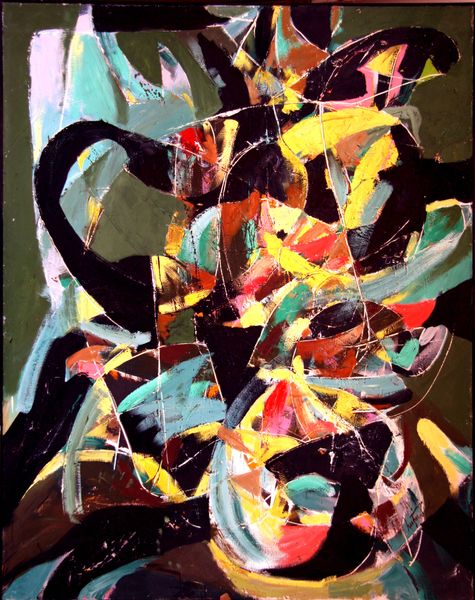
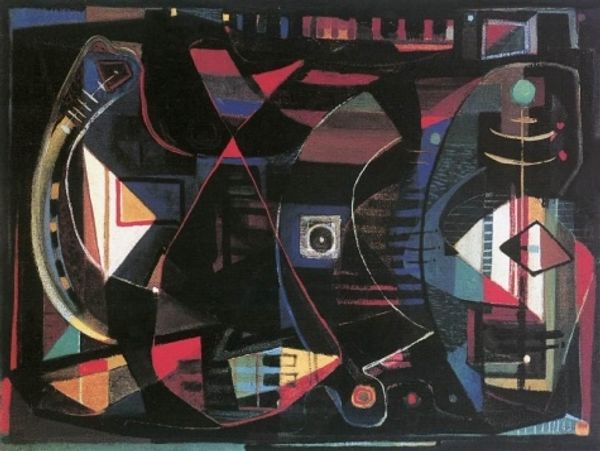
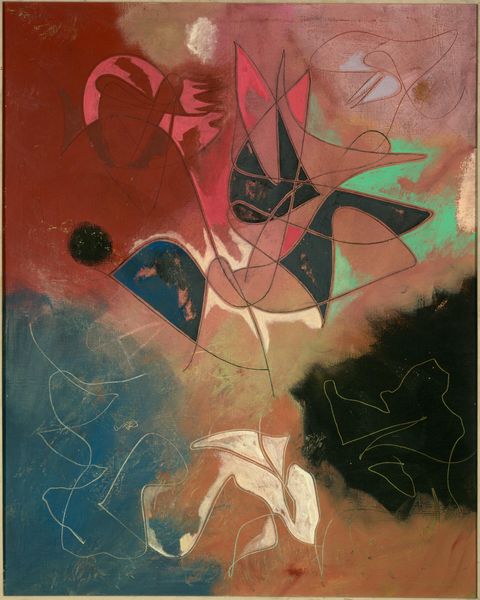
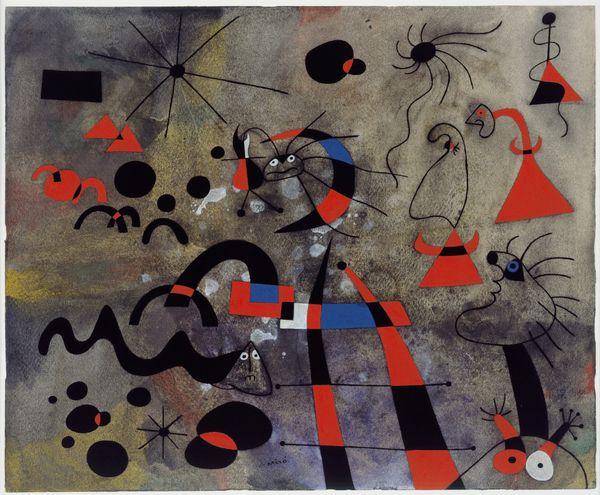
Curator: What a powerful canvas this is. We're looking at "Black Virtue," created in 1943 by Roberto Matta. You can find it here at the Tate Modern in London. What's your initial take on this dramatic composition? Editor: It feels turbulent, almost like looking into a storm. The severe blacks against these fiery reds and fractured planes evoke a sense of impending chaos or perhaps, even cosmic collapse. Curator: Yes, that sense of drama aligns with Matta's focus during that period. As a Chilean artist working amidst the upheaval of World War II, his art became increasingly concerned with themes of psychic turmoil and societal fracture. Look at how the fractured geometric forms seem to pierce the picture plane. They don't exist in a clear perspectival space. Editor: Indeed. The geometric shards feel like ideological splinters of modernity itself. He almost depicts psychological pain and trauma through fractured visuality. Do you agree this piece transcends simple abstraction? Curator: I concur entirely. It's less about pure form and more about embodying emotional and intellectual upheaval. Consider how abstraction, historically a search for the universal, transforms here. It becomes highly personalized, representing internal experience in this difficult era. Note, for example, the persistent symbol of a flame in multiple areas on the work; flame is tied historically to rebirth and destruction. Editor: Right. And seeing "virtue" associated with darkness makes me think of the internal struggles of individuals during wartime; a virtue found perhaps only in facing brutal realities directly. Curator: A vital point! Think of the social and political contexts: abstract expressionism was, in many ways, fostered by the political turmoil of the early twentieth century and especially World War II. Artists like Matta saw themselves in opposition to totalitarian aesthetics, thus advocating freedom through abstraction. "Black Virtue" as an internal and personal, albeit challenging ethical stance in this kind of moment? Editor: It could be seen in that light. Thank you; now "Black Virtue" speaks far more intensely. The fragmented shapes no longer convey simply chaos but resolute contemplation in spite of everything falling apart. Curator: Precisely. Hopefully, experiencing the complex and vital nature of "Black Virtue" has stayed with our audience.
Comments
No comments
Be the first to comment and join the conversation on the ultimate creative platform.
 Collect
 React
React Comment
More like this