hanging-scroll, ink
#
ink painting
#
asian-art
#
ukiyo-e
#
japan
#
hanging-scroll
#
ink
#
line
#
calligraphy
Dimensions: 38 1/2 x 10 1/2 in. (97.79 x 26.67 cm)
Copyright: Public Domain
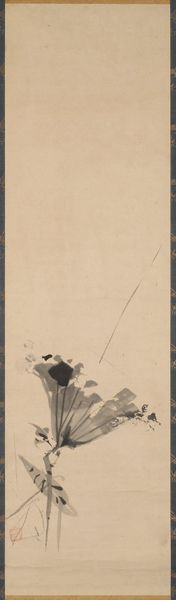
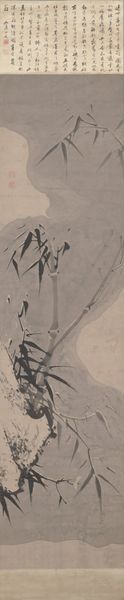
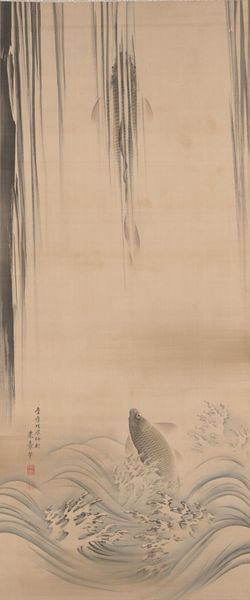
Tenryū Dōjin created this hanging scroll of ink on paper, titled "Grapevine," sometime in the 18th century. During this Edo period, Japan was largely closed off from the West, and artistic styles developed independently. Here, the loose, expressive brushwork suggests the influence of Zen Buddhism, which valued spontaneity and intuition. The grapevine itself may be symbolic. Grapes, introduced to Japan by Portuguese traders, were associated with wealth and luxury. But Dōjin’s simple, unadorned depiction seems to reject such associations. As art historians, we can look at the cultural context in which "Grapevine" was made by researching the history of Zen Buddhism, the role of merchants in Japanese society, and the influence of Chinese art. By doing so, we can gain a deeper understanding of the artist’s intentions and the social meanings of his work.
Comments
No comments
Be the first to comment and join the conversation on the ultimate creative platform.
 Collect
 React
React Comment
More like this