fibre-art, textile
#
tribal design
#
natural stone pattern
#
fibre-art
#
fashion mockup
#
textile
#
fashion and textile design
#
hand-embroidered
#
embroidery
#
fabric design
#
textile design
#
decorative-art
#
imprinted textile
#
layered pattern
Copyright: Public Domain
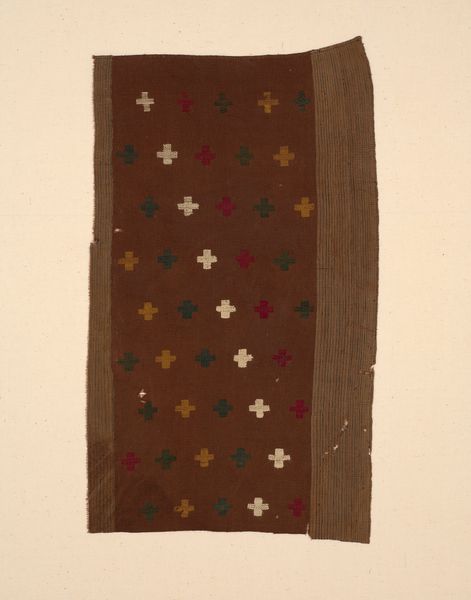
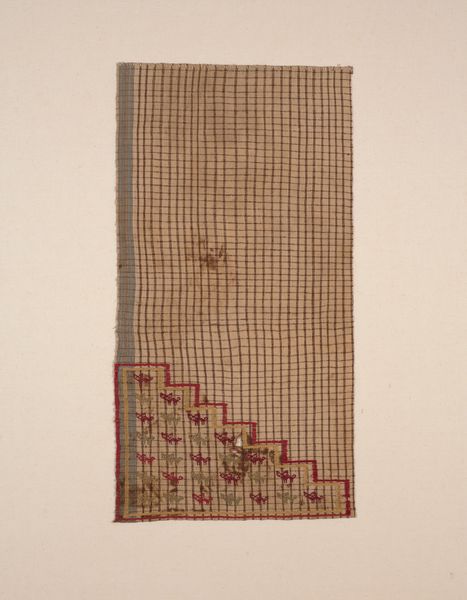
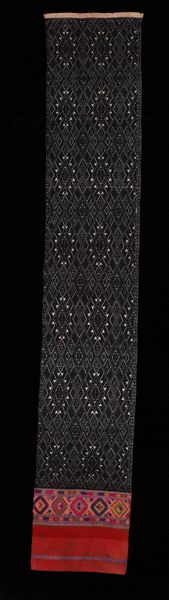
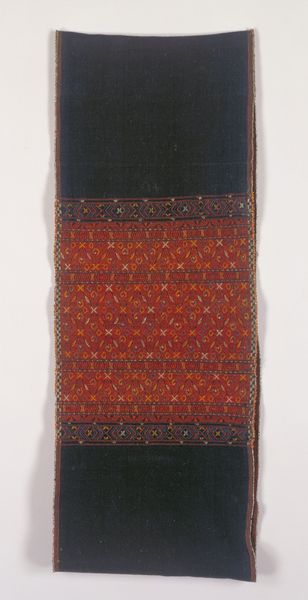
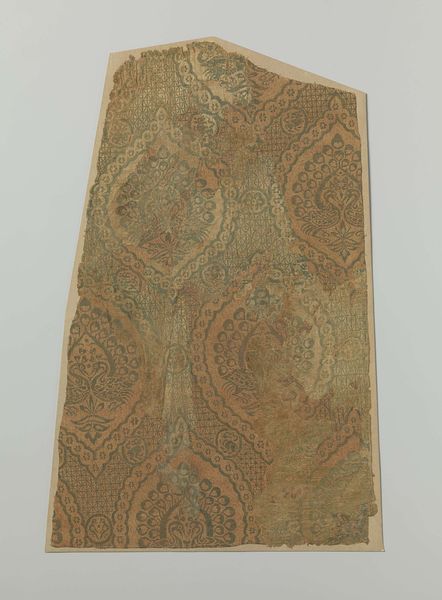
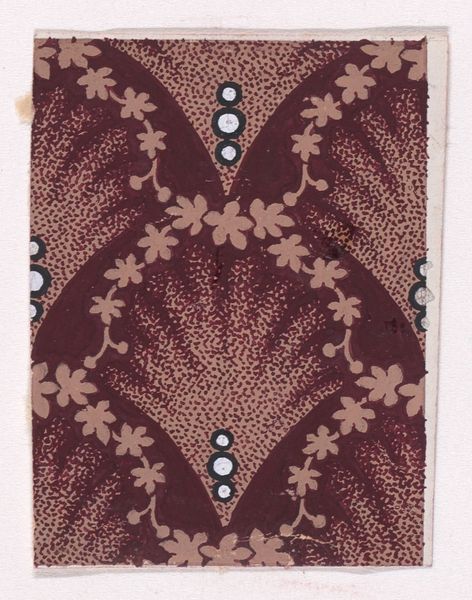
Curator: Look at this 'Head Shawl' from around 1920, held here at the Minneapolis Institute of Art. The mixed-media piece incorporating silk and other textiles is an excellent example of decorative art. Editor: It’s strikingly simple. Almost severe in its color palette, a deep umber patterned with…are those small crosses, diamonds? It looks very contemporary despite its age. Curator: Those are interesting observations. Considering it’s categorized as decorative art and involves embroidery and fibre-art techniques, it reflects a specific type of labor. It pushes against the notion of "fine art," being both functional and aesthetically driven. Editor: Precisely, and it appears to draw upon orientalism aesthetics popular during its time. Considering that, the 'Head Shawl' takes on another layer as a cultural artifact, indicating not just fashion, but potential socio-political influences prevalent in early 20th-century textile production. Curator: Agreed. The layering effect in the patterns also indicates a deep engagement with materials. You have the base fabric, the imprinted textile design and, it appears, some hand-embroidered accents adding textural contrast and subtle variation. How the materials are worked adds to the story. Editor: Seeing it like this prompts considerations of value - how certain textiles, particularly those associated with particular regions or production methods, were, and are still perceived. Also, who was consuming these? Was it a signifier of a certain class, an adoption of design? Curator: It leaves a lot to be speculated, for sure. The anonymity of the maker is particularly salient here. Whose hands crafted this labor-intensive object, and under what conditions? It calls to question notions of authorship and the complex intersection of gender, labor, and artistic expression inherent in textile work. Editor: Absolutely. Viewing 'Head Shawl,' even through its simplicity, offers a wealth of social, cultural, and art historical understanding that encourages the expansion of assumptions. Curator: Indeed, the textile here acts as a potent reminder of the narratives embedded within everyday objects, highlighting how material culture profoundly shapes our perception.
Comments
No comments
Be the first to comment and join the conversation on the ultimate creative platform.
 Collect
 React
React Comment
More like this