1910 - 1920
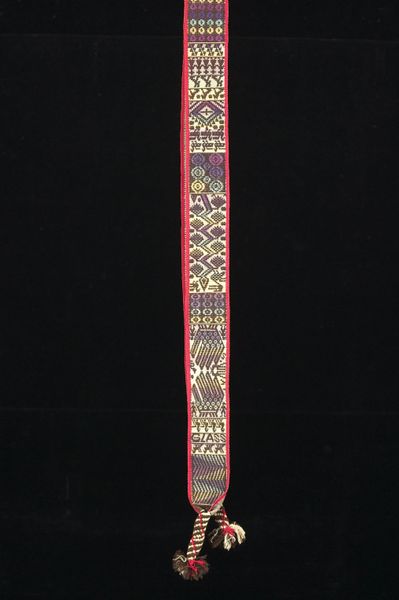
Tent Band


Listen to curator's interpretation
Curatorial notes
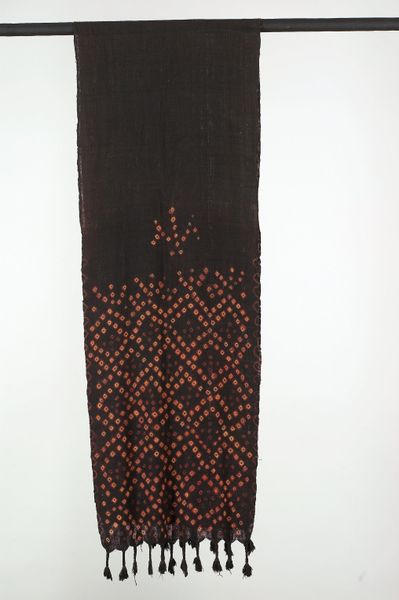
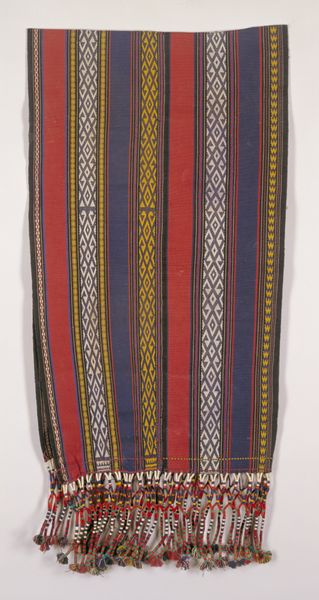
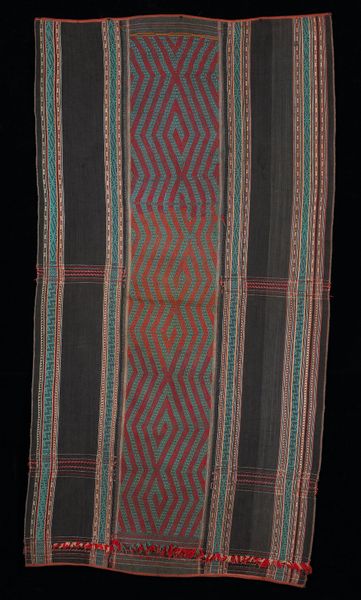
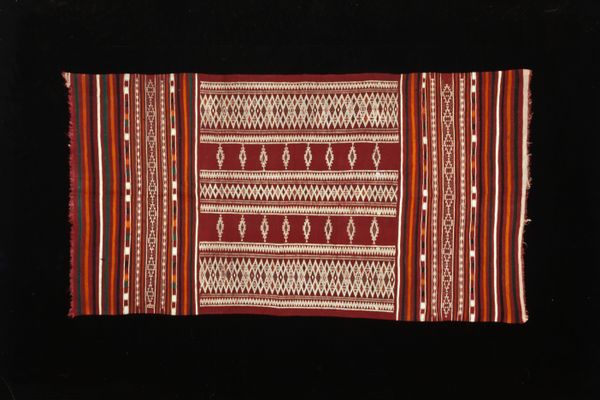
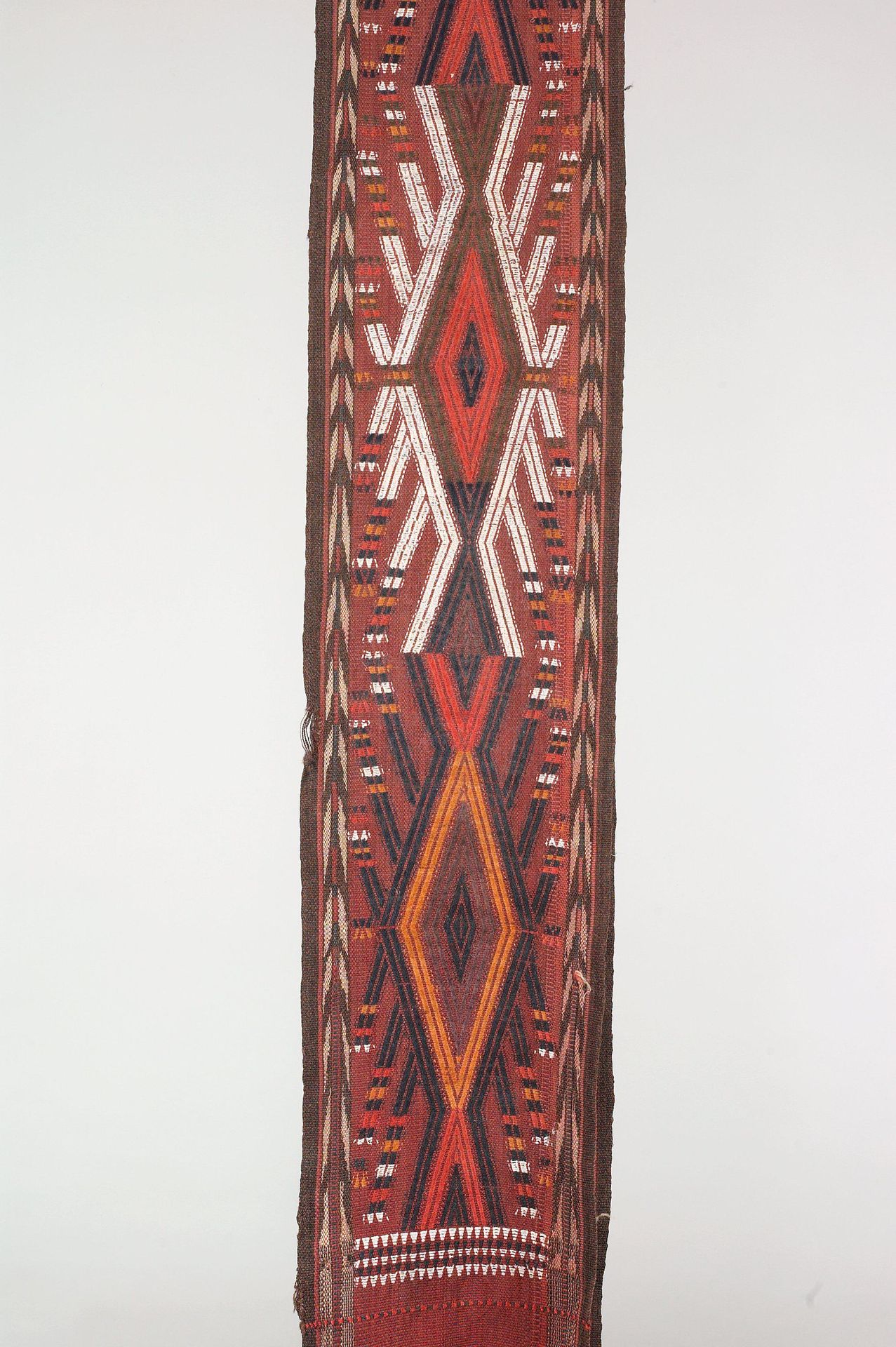
Editor: Here we have a Tent Band, made sometime between 1910 and 1920 by an anonymous artist. It’s a wool textile weaving. I am immediately struck by how these vibrant geometric shapes give such a strong sense of order. What do you see in this piece? Curator: Indeed, the power lies precisely in the meticulous arrangement. We see a strict adherence to geometric forms, primarily diamonds and linear elements, creating a highly structured visual field. The limited color palette—primarily reds, browns, and whites—further emphasizes this structural integrity, preventing any single hue from dominating the composition. Note how each diamond acts as a self-contained unit, yet interlocks to form a cohesive, unified whole. How do these repeated motifs contribute to the piece's overall effect? Editor: I guess they give it rhythm, a kind of visual beat that makes it appealing. I am just wondering, beyond the geometry and colors, is there any deeper interpretation? Curator: Ascribing specific meanings can be speculative without knowing the cultural context. However, from a formalist perspective, the very act of creating such a structured and balanced composition suggests a desire for order and control. The repeated motifs can be interpreted as a visual manifestation of rhythm, as you say. What interests me further is the tension between the regularity of the geometric patterns and the inherent texture of the woven wool. Editor: I see what you mean. It’s almost like a dialogue between control and chance. I didn't catch that. Curator: Precisely. These nuanced relationships are what make textile art so engaging from a formalist viewpoint. We’ve really focused on the interplay between structure and texture, balance and rhythm. It goes to show, there’s always something new to discover.