painting, oil-paint
#
portrait
#
figurative
#
painting
#
oil-paint
#
oil painting
#
modernism
#
watercolor
#
fine art portrait
Copyright: Public Domain: Artvee
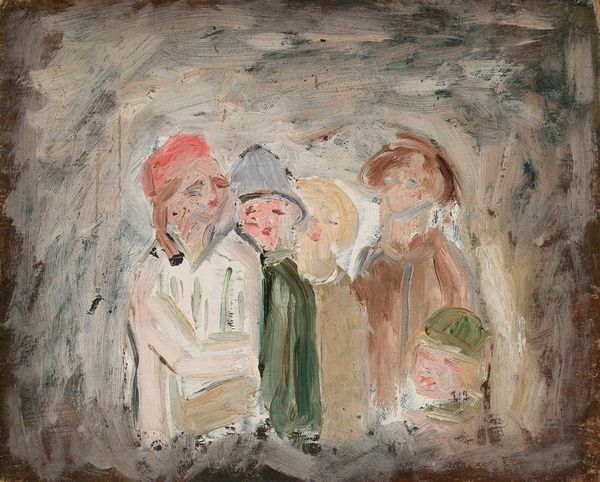
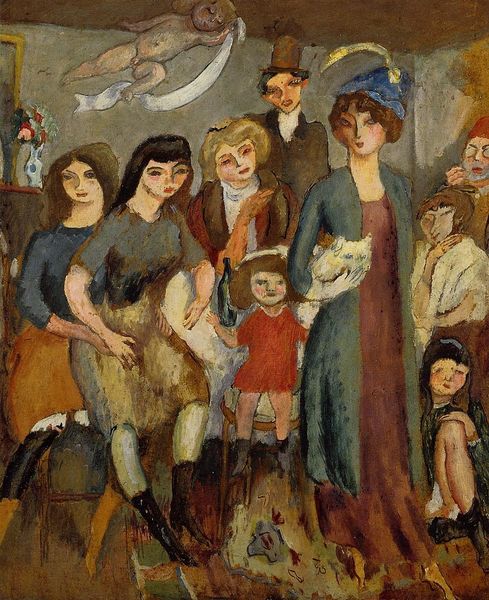
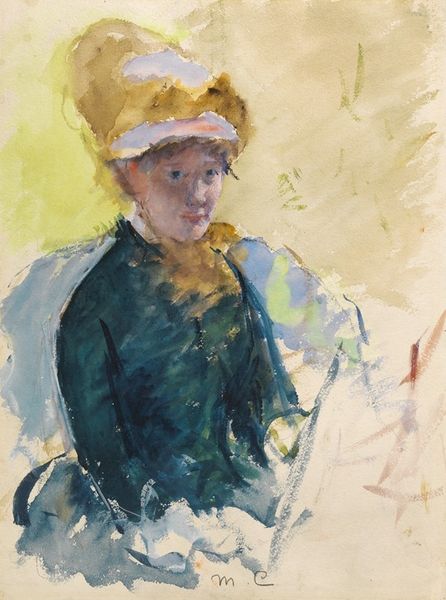
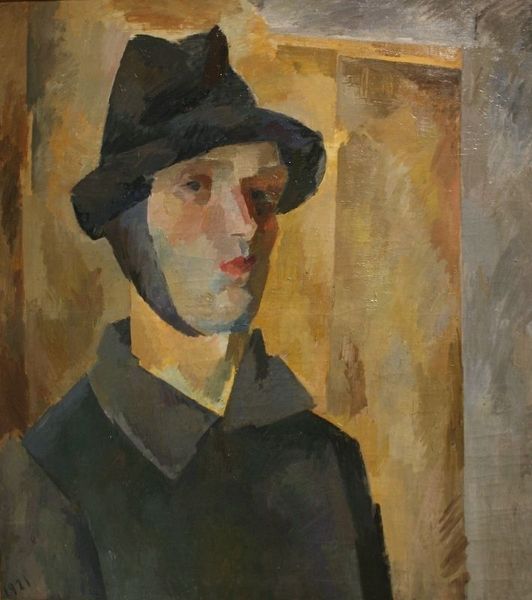
Curator: This is Tadeusz Makowski’s "Portrait of a Painter and his Family," painted around 1925. It’s rendered in oil paint and very much indicative of the Modernist period. Editor: It strikes me immediately as both tender and somewhat unsettling. The hazy application of color, almost like a watercolor, lends it a fragile air. Curator: Precisely! Consider the artist's choice to include his palette hovering above his shoulder—it's as if painting is part of the very air they breathe, intrinsic to their family identity. Editor: The visible brushstrokes and the blurring of edges betray the handmade quality, foregrounding the labour, especially in contrast with the soft domestic scene. I wonder about the status of artists’ labor and the idea of family wage under nascent modernism… Curator: The circular forms keep recurring here: in the spectacles, the pipe, the palette… They are all motifs relating to the intellect and creative pursuit. And don't forget that vibrant blue hat; it acts like a halo, drawing the eye upwards. Editor: Yes, and I wonder about the production context of these garments as well as painting supplies—the paint, the canvas itself… these material objects are embedded in a dense social world and system of making! The pale tones might even point to shortages after the war. Curator: Perhaps. But it also adds to that pervasive sense of dreamy otherworldliness. Consider too how the faces appear, almost mask-like, and evoke certain traditions in ritual performance and iconography. Editor: A potent image of familial and artistic identity, revealed in layers. Curator: Indeed, this painting offers us not just a portrait, but a symbolic landscape of creation and domesticity, where visual motifs intertwine to create an unforgettable experience. Editor: Yes, there’s an honest quality in these exposed processes. It’s not just the end product that matters, but the entire ecology of material practices which go into this singular moment.
Comments
No comments
Be the first to comment and join the conversation on the ultimate creative platform.
 Collect
 React
React Comment
More like this