c. 1855 - 1865
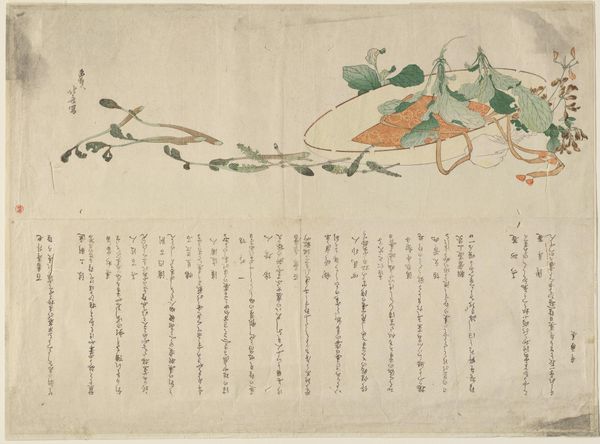
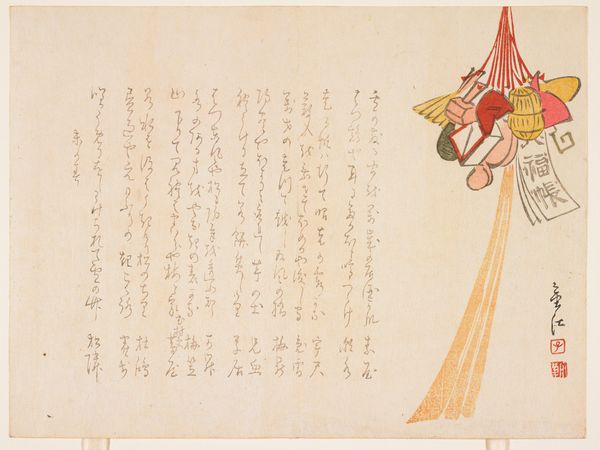
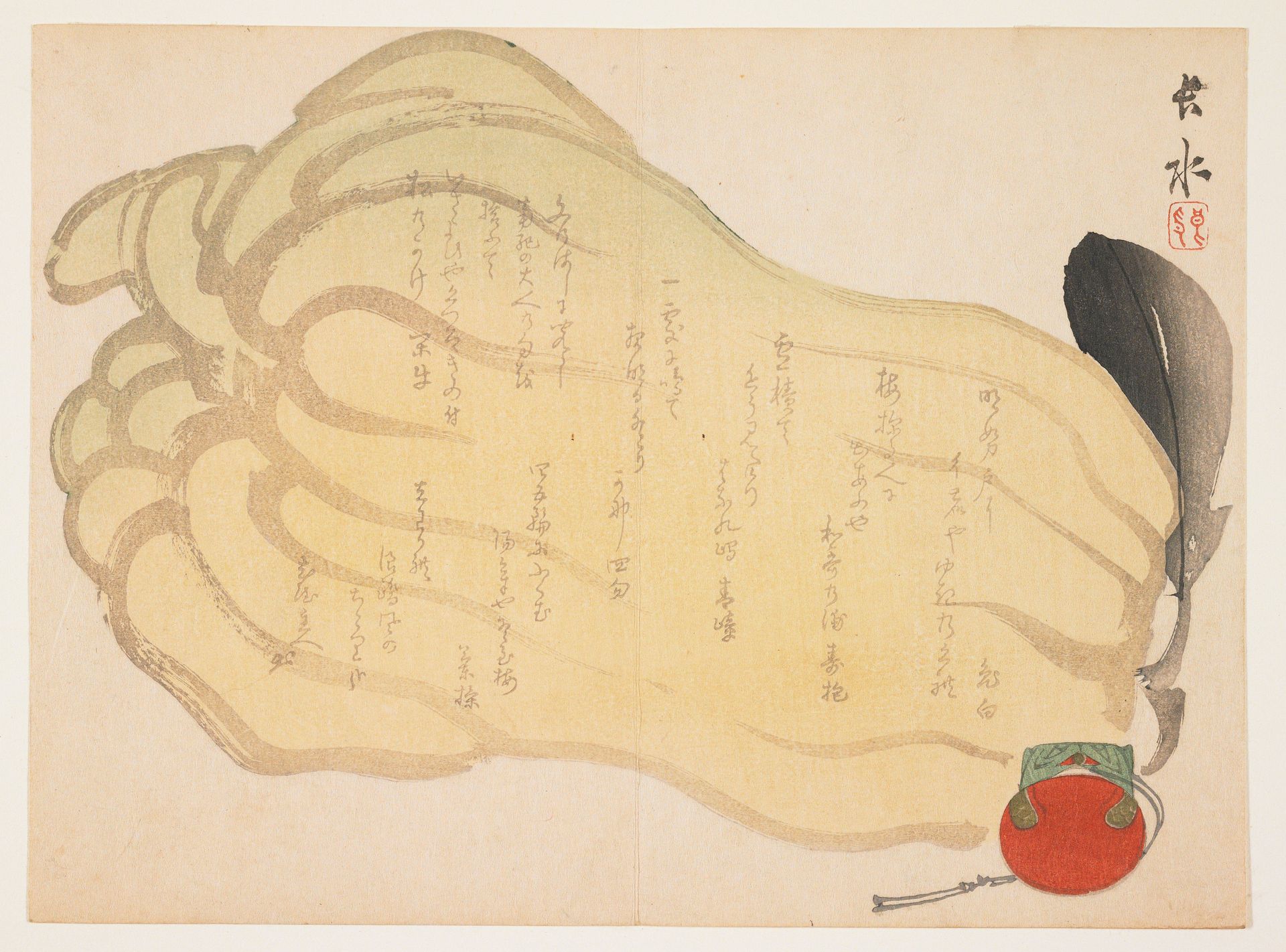
(Gourd and a toy bell)


Listen to curator's interpretation
Curatorial notes
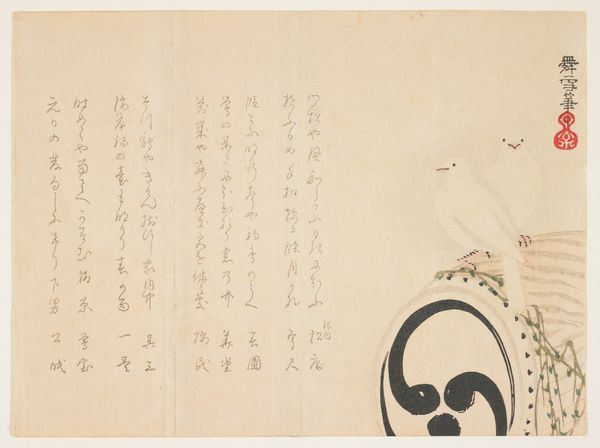
Yabu Chosui made this print, featuring a gourd and toy bell, in 19th century Japan. In this period, the Edo or Tokugawa shogunate enforced a rigid social hierarchy. Artists like Chosui occupied a precarious space, often challenging social norms through their work. Notice the gourd's prominence, almost obscuring the bell. Gourds in Japanese culture symbolize health and longevity, while toys represent the carefree nature of childhood. Could Chosui be commenting on the fleeting nature of youth amidst the weight of societal expectations? The calligraphy further complicates the image. Is it a commentary, a poem, or perhaps a critique hidden in plain sight? Understanding this print requires delving into the social history of Japan. Researching the Edo period's art institutions, sumptuary laws, and intellectual movements can provide a richer context. Art becomes a mirror reflecting the complexities of its time, inviting us to question the forces that shaped both the artwork and the society it represents.