About this artwork
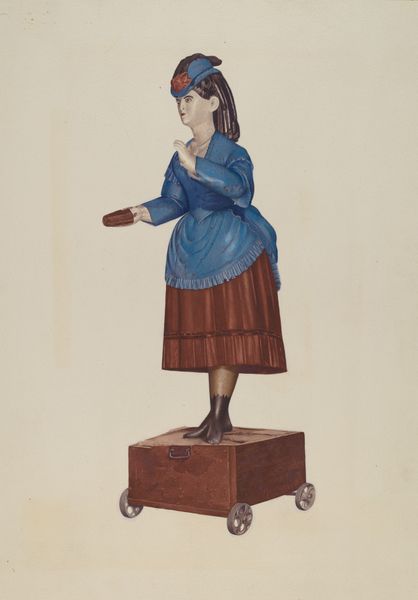
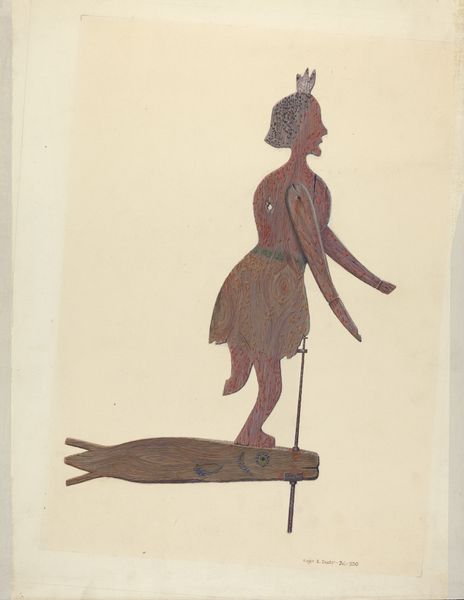
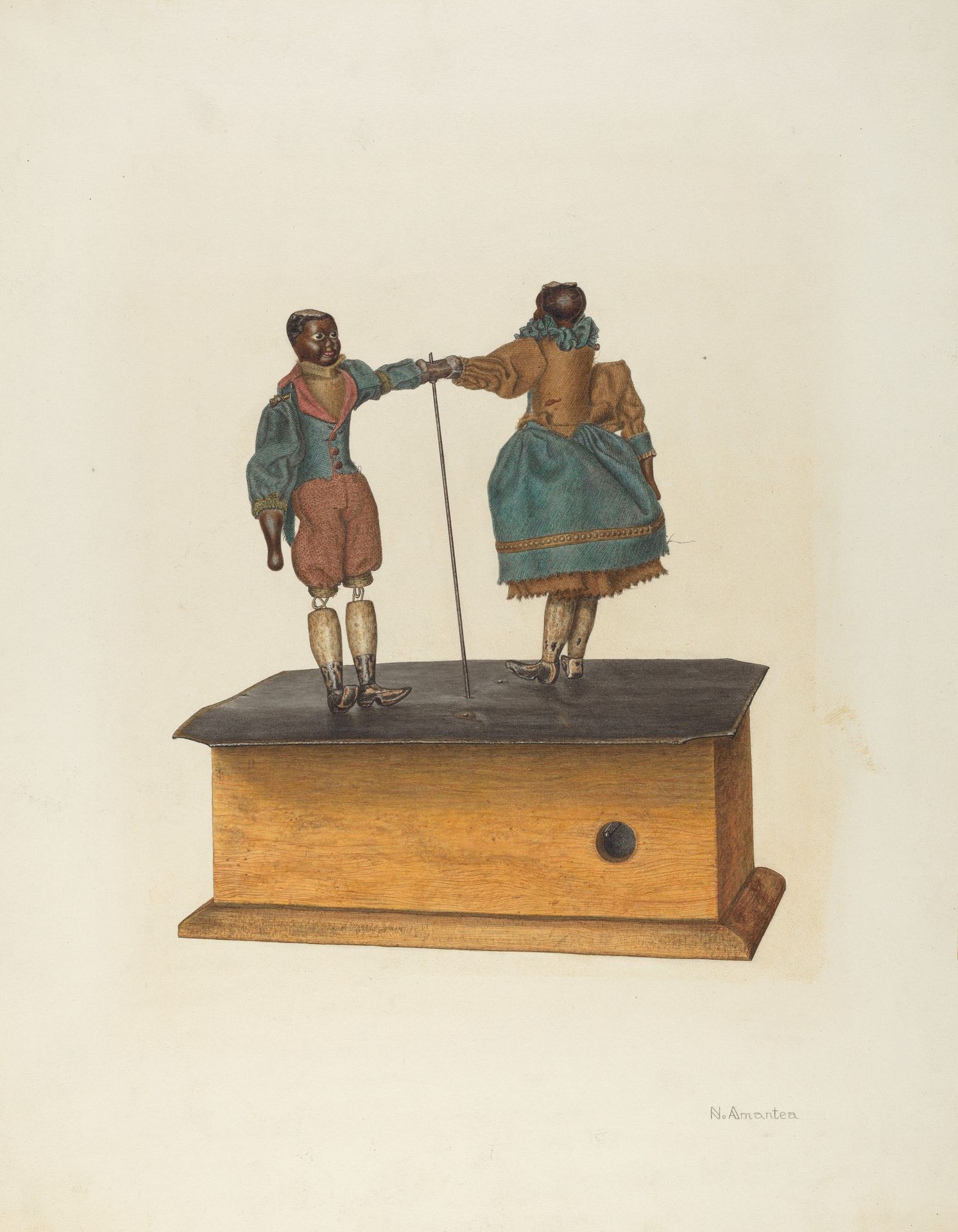
Nicholas Amantea made this intriguing drawing of a mechanically operated toy, probably some time in the mid-20th century, though the exact date is unknown, and it seems to be made from watercolor on paper. What strikes me here is the beautiful balance between precision and looseness. There’s a real clarity in the depiction of the toy’s structure, but also a softness in the way the colors blend and bleed into each other. Look at the woman's skirt, for example. The color is concentrated in some areas, while elsewhere it is barely there at all. You can almost feel Amantea coaxing these puppets to life. It’s as if you can see the process of painting laid bare. This reminds me a bit of Red Grooms, another artist who found endless inspiration in everyday life, though Amantea's approach is more subtle. Ultimately, this drawing reminds us that art isn’t just about the final product, but the journey of making itself.
Mechanically Operated Toy
c. 1940


Artwork details
- Medium
- drawing, watercolor
- Dimensions
- overall: 44.5 x 35.3 cm (17 1/2 x 13 7/8 in.) Original IAD Object: 7 1/2" wide; 7 1/2" deep; 9 1/8" wide
- Copyright
- National Gallery of Art: CC0 1.0
Tags
Comments
Share your thoughts
About this artwork
Nicholas Amantea made this intriguing drawing of a mechanically operated toy, probably some time in the mid-20th century, though the exact date is unknown, and it seems to be made from watercolor on paper. What strikes me here is the beautiful balance between precision and looseness. There’s a real clarity in the depiction of the toy’s structure, but also a softness in the way the colors blend and bleed into each other. Look at the woman's skirt, for example. The color is concentrated in some areas, while elsewhere it is barely there at all. You can almost feel Amantea coaxing these puppets to life. It’s as if you can see the process of painting laid bare. This reminds me a bit of Red Grooms, another artist who found endless inspiration in everyday life, though Amantea's approach is more subtle. Ultimately, this drawing reminds us that art isn’t just about the final product, but the journey of making itself.
Comments
Share your thoughts