About this artwork
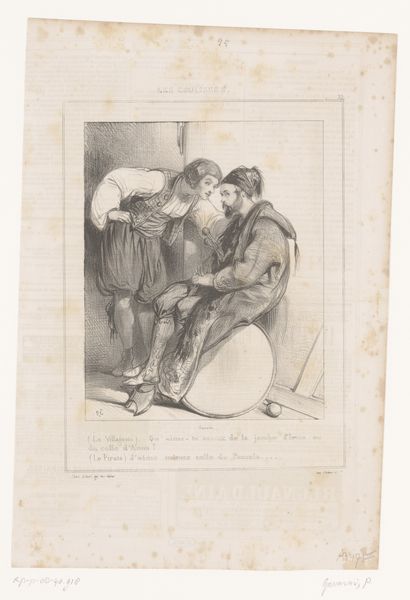
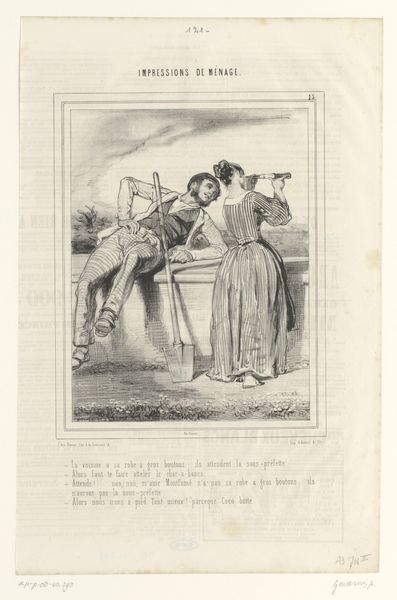
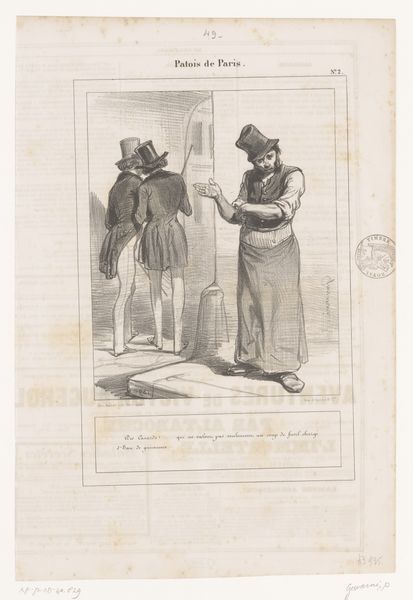
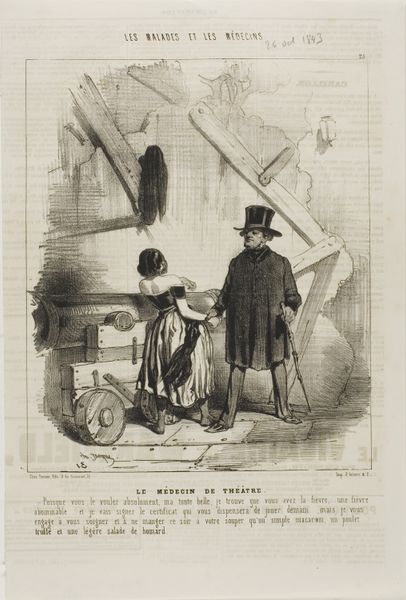
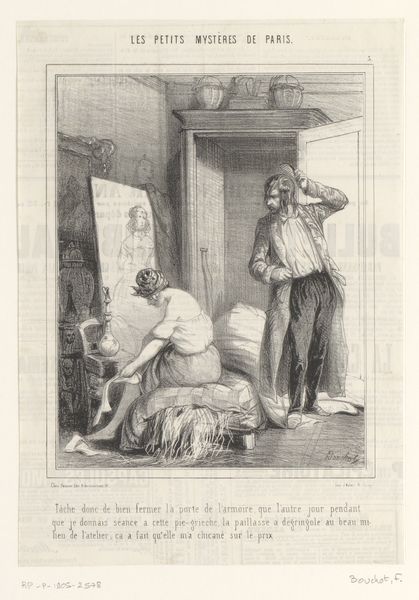
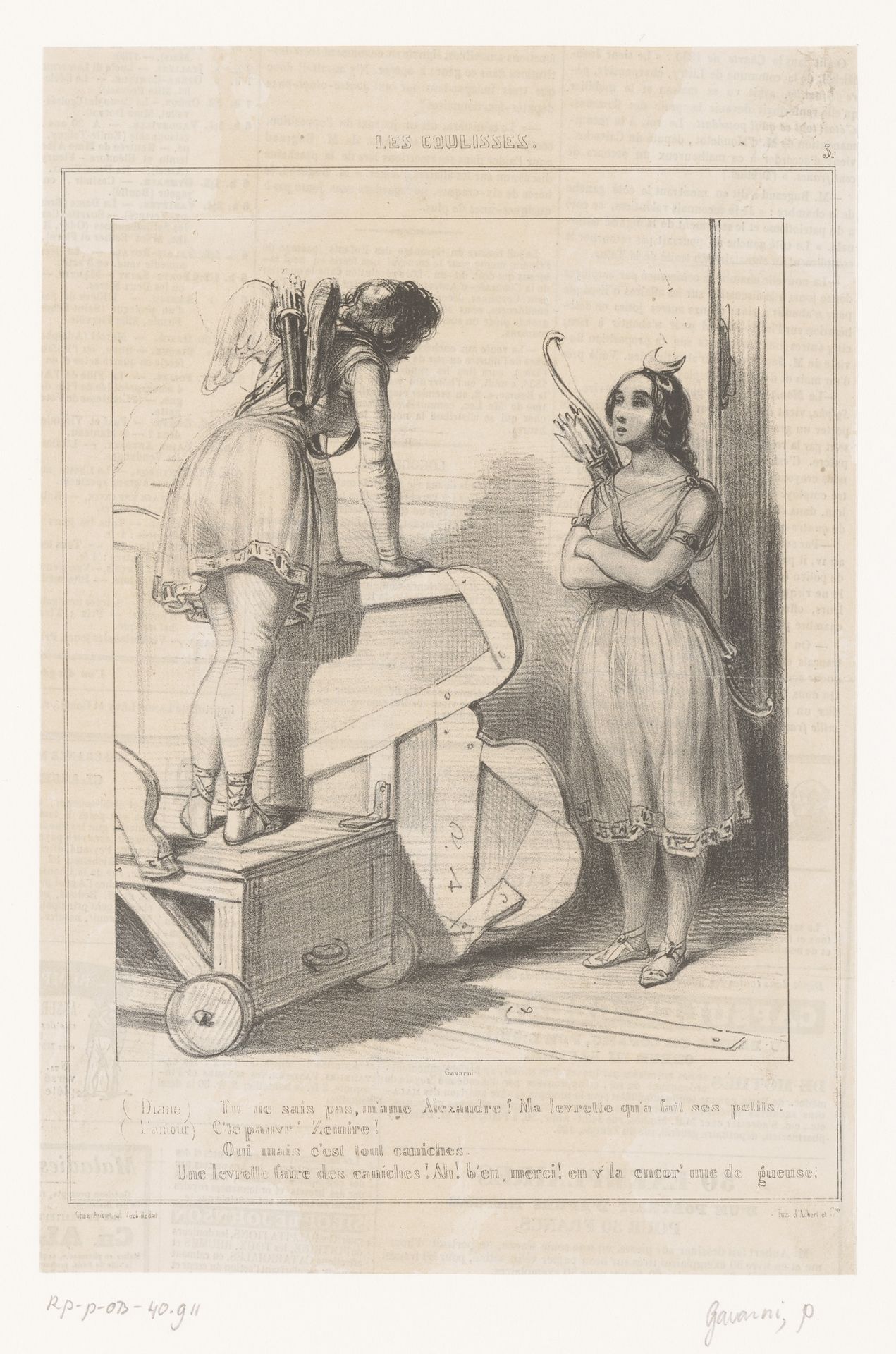
Editor: Here we have Paul Gavarni's 1838 lithograph, "Two Actresses Talking in the Wings," currently held at the Rijksmuseum. It seems like a playful scene, almost a caricature of backstage life. What stands out to you? Curator: I’m interested in the lithographic process itself. Think about the labour involved: grinding stones, preparing the greasy inks, the repetitive printing process to disseminate these images. It makes what we see less a rarefied "artwork" and more a manufactured commodity, consumed by a wide audience. Editor: So, you're focusing on its mass-produced nature? Curator: Precisely. The "high art" of Romanticism, as tagged here, often obscures the economic realities of artistic production. Gavarni’s work became popular precisely because these prints were relatively inexpensive and accessible to a burgeoning middle class interested in theatre and satire. Consider the consumption of theatrical imagery: who bought these prints, and what did they *do* with them? Were they collected, pasted into scrapbooks, or displayed in public spaces? These aspects materially shift our perception of Romanticism. Editor: That’s a really interesting point. I hadn't considered how accessible prints like these changed art consumption. The "genre painting" aspect of the tagging feels different when framed this way, more a matter of consumer goods. Curator: Exactly! The print highlights how class anxieties were manufactured, consumed, and satirized through the medium of print. Editor: I’m starting to think differently about art of this period. Looking past the surface image towards how it was actually made and consumed. Curator: Precisely. Materiality reveals a lot about the culture of the period, moving past aesthetic appreciation toward understanding the real conditions of production.

Artwork details
- Medium
- lithograph, print
- Dimensions
- height 285 mm, width 189 mm
- Location
- Rijksmuseum
- Copyright
- Rijks Museum: Open Domain
Tags
Comments
Share your thoughts
About this artwork
Editor: Here we have Paul Gavarni's 1838 lithograph, "Two Actresses Talking in the Wings," currently held at the Rijksmuseum. It seems like a playful scene, almost a caricature of backstage life. What stands out to you? Curator: I’m interested in the lithographic process itself. Think about the labour involved: grinding stones, preparing the greasy inks, the repetitive printing process to disseminate these images. It makes what we see less a rarefied "artwork" and more a manufactured commodity, consumed by a wide audience. Editor: So, you're focusing on its mass-produced nature? Curator: Precisely. The "high art" of Romanticism, as tagged here, often obscures the economic realities of artistic production. Gavarni’s work became popular precisely because these prints were relatively inexpensive and accessible to a burgeoning middle class interested in theatre and satire. Consider the consumption of theatrical imagery: who bought these prints, and what did they *do* with them? Were they collected, pasted into scrapbooks, or displayed in public spaces? These aspects materially shift our perception of Romanticism. Editor: That’s a really interesting point. I hadn't considered how accessible prints like these changed art consumption. The "genre painting" aspect of the tagging feels different when framed this way, more a matter of consumer goods. Curator: Exactly! The print highlights how class anxieties were manufactured, consumed, and satirized through the medium of print. Editor: I’m starting to think differently about art of this period. Looking past the surface image towards how it was actually made and consumed. Curator: Precisely. Materiality reveals a lot about the culture of the period, moving past aesthetic appreciation toward understanding the real conditions of production.
Comments
Share your thoughts