1649 - 1659
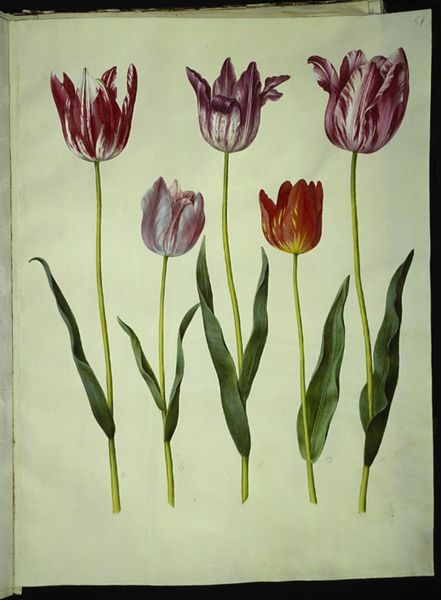
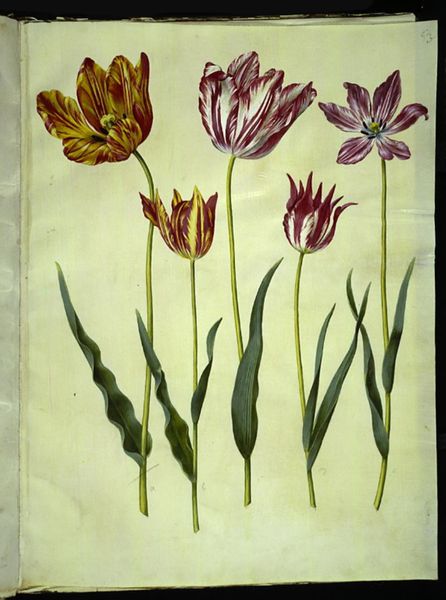
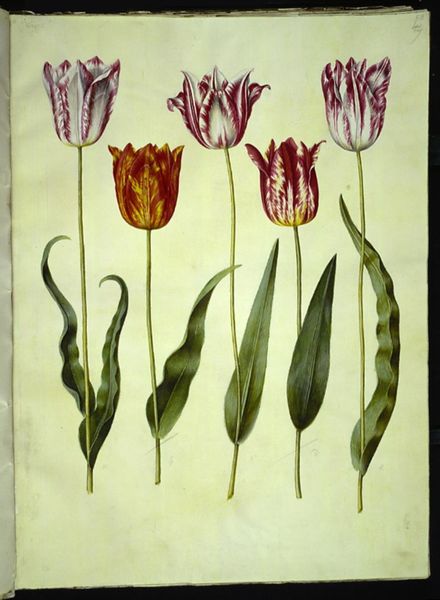
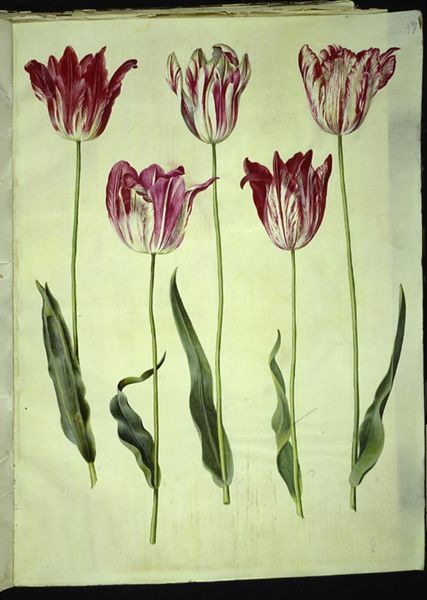
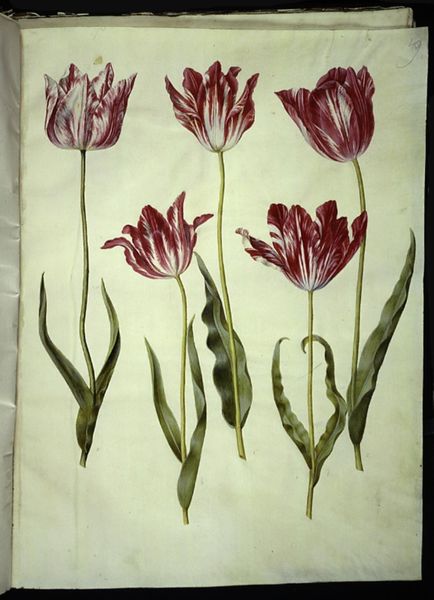
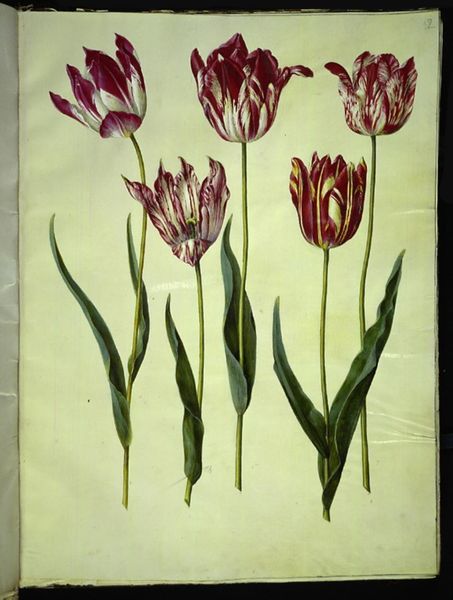
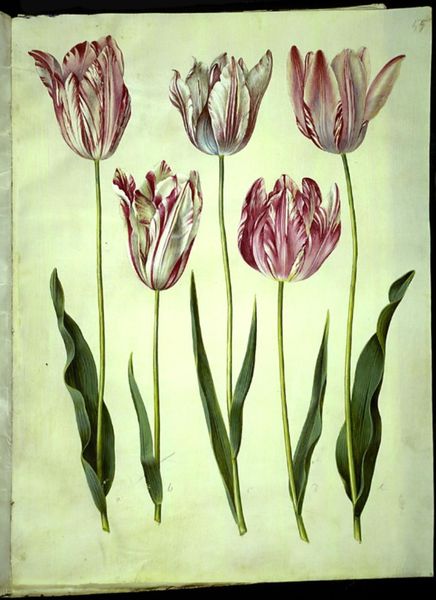
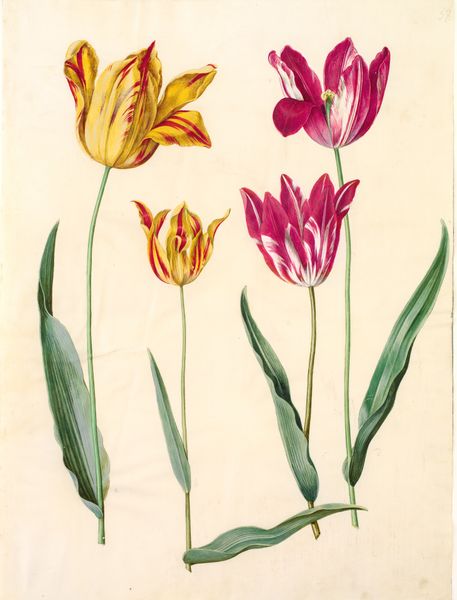
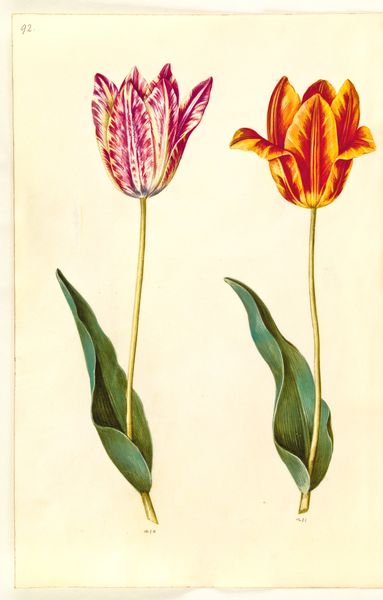
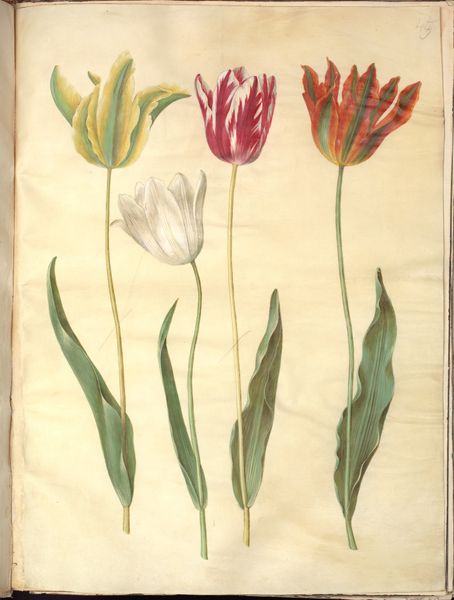
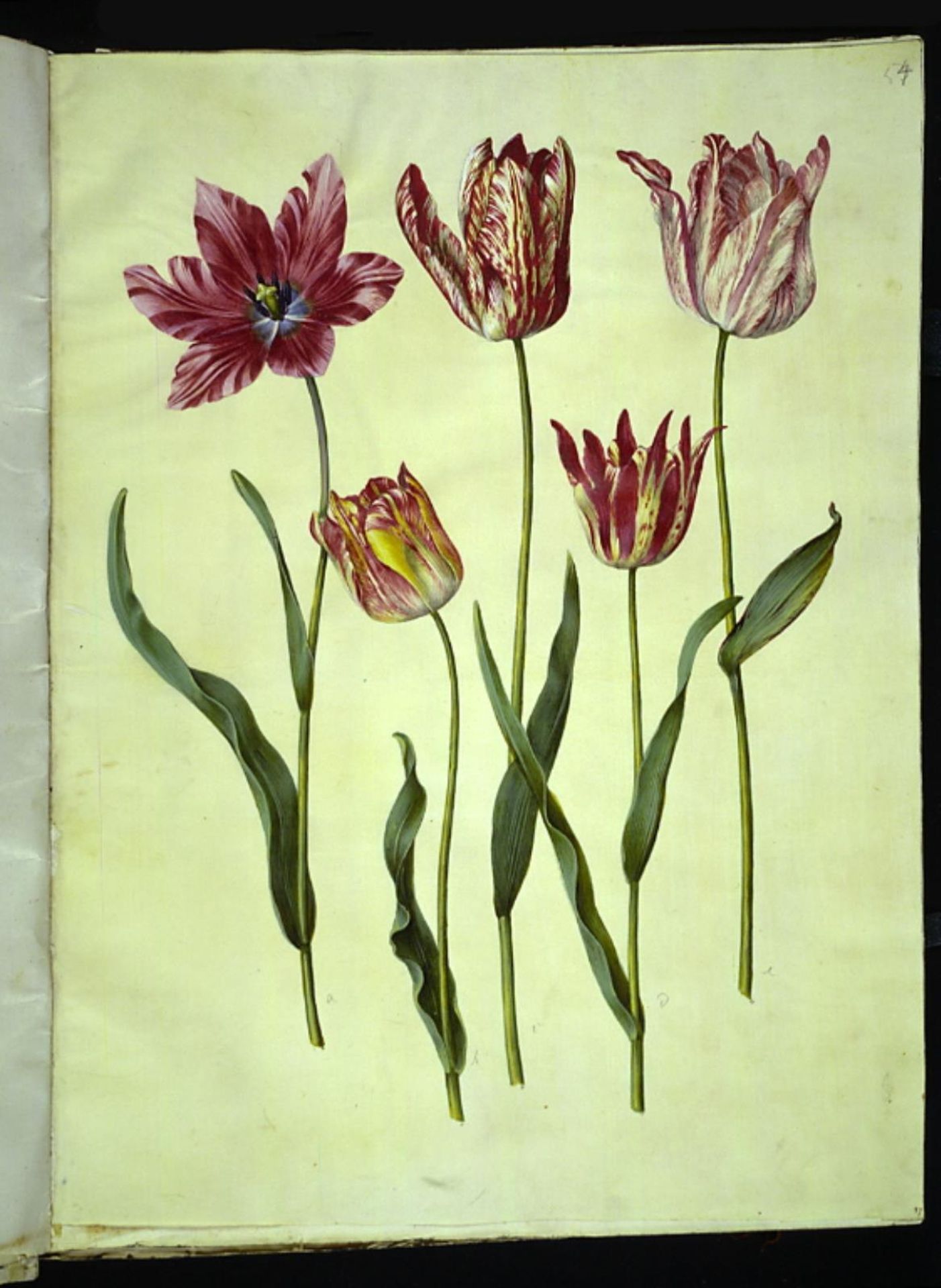
Tulipa gesneriana (have-tulipan)


Listen to curator's interpretation
Curatorial notes
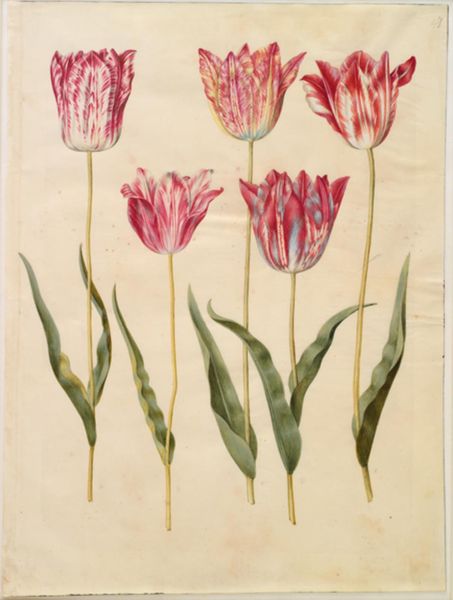
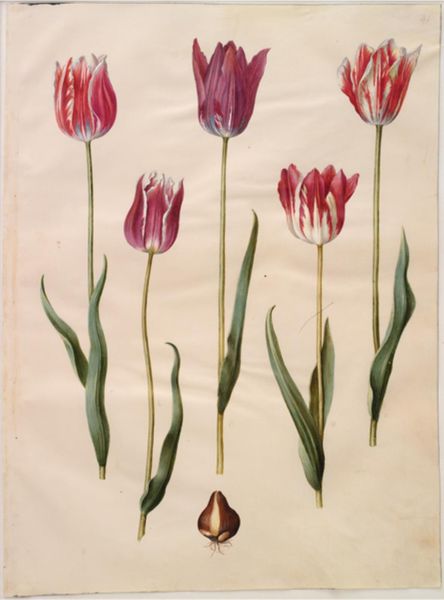
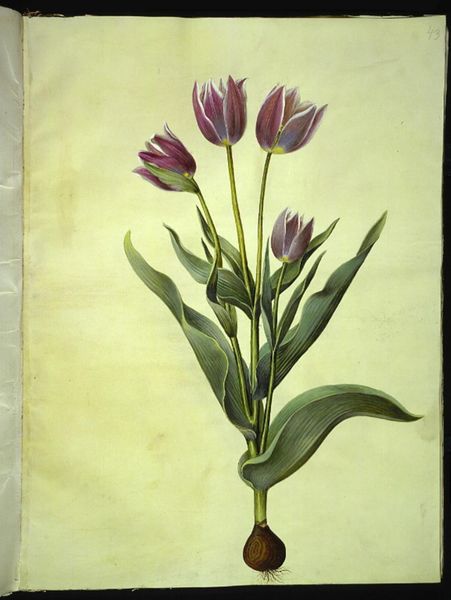
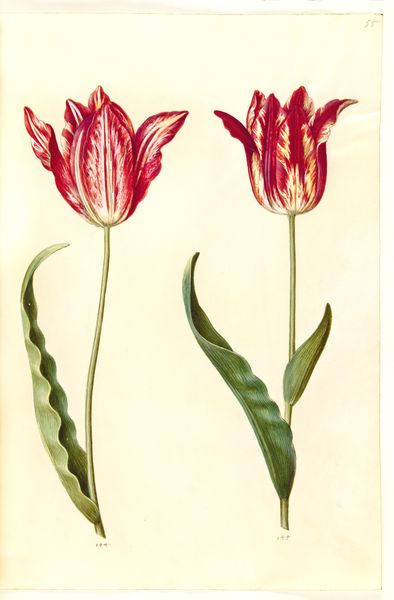
Editor: This watercolor and gouache drawing from between 1649 and 1659, titled "Tulipa gesneriana (have-tulipan)" by Hans Simon Holtzbecker, is strikingly elegant! I’m fascinated by how these tulips almost seem to float on the page. What catches your eye? Curator: Holtzbecker’s work really highlights the peculiar role that flower illustrations played, particularly during periods like Tulip Mania in the 17th century. It wasn’t just about botany, was it? Editor: Not at all! I can almost feel that this image could’ve had financial implications given the market at the time. What do you think someone from that era would take away from this? Curator: They would have appreciated the rendering for its precision and seen in it an accurate reflection of the sought-after blooms but would be acutely aware of the intense financial speculation that made tulips so desirable at the time. These paintings were not just records; they were, in a sense, part of the market itself. Have you considered the implications of botanical art beyond scientific record? Editor: Only superficially, really! But that is an important question. In creating these beautifully precise representations, does Holtzbecker play a part in building, or even critiquing, the speculative frenzy around tulips? Curator: Precisely! This brings a layer of intrigue. The artistry here doesn’t just capture the tulips; it actively participates in shaping their cultural and economic significance. Holtzbecker's art shows how deeply art can become enmeshed with socio-economic phenomena. Editor: I see. It’s fascinating to think of this drawing as not just an artwork but as a kind of historical document deeply intertwined with the economic and social currents of its time. Thanks for broadening my perspective! Curator: Indeed! Understanding art within its socio-economic framework often reveals surprising insights. Always consider the broader forces at play when approaching any piece of art.