About this artwork
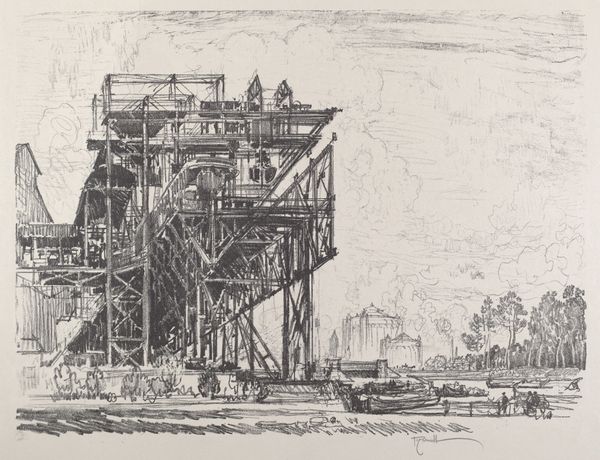
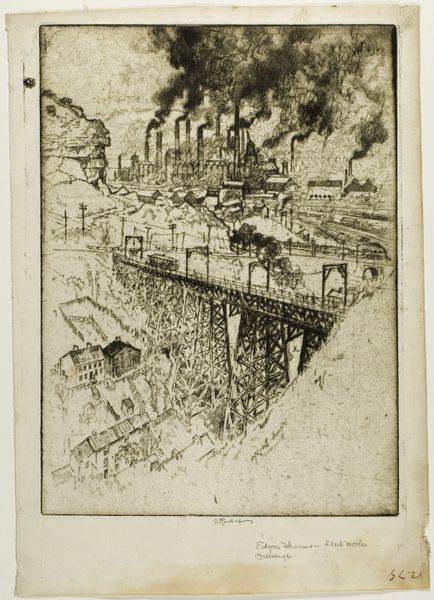
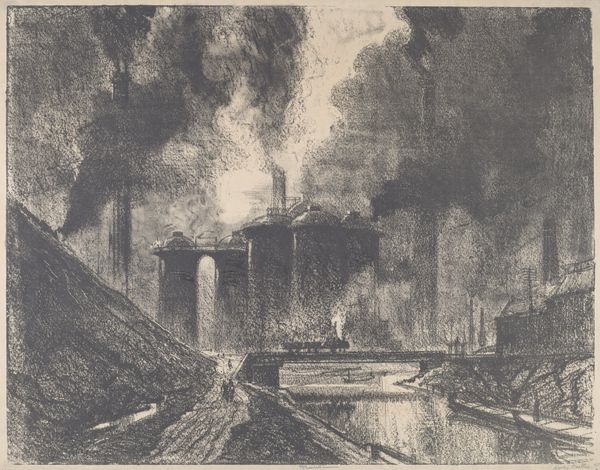
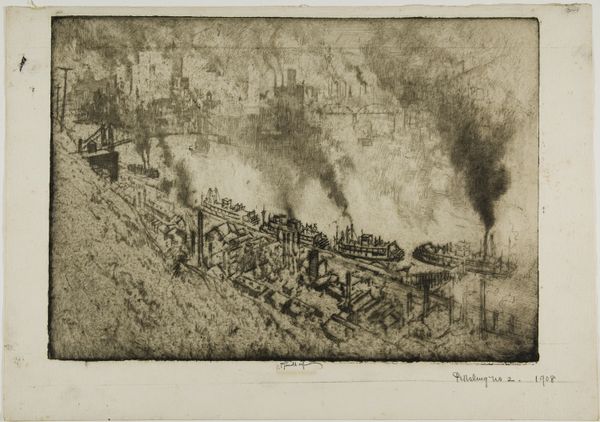
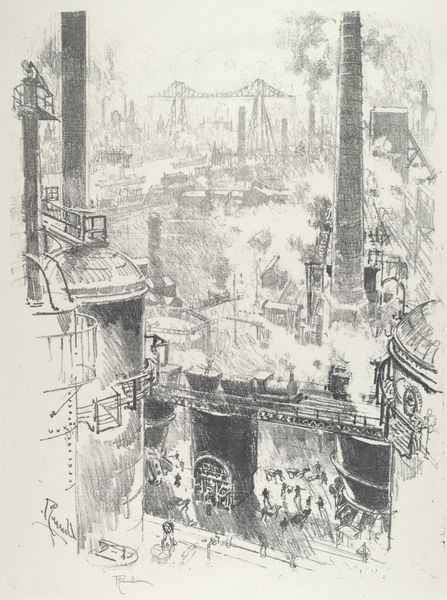
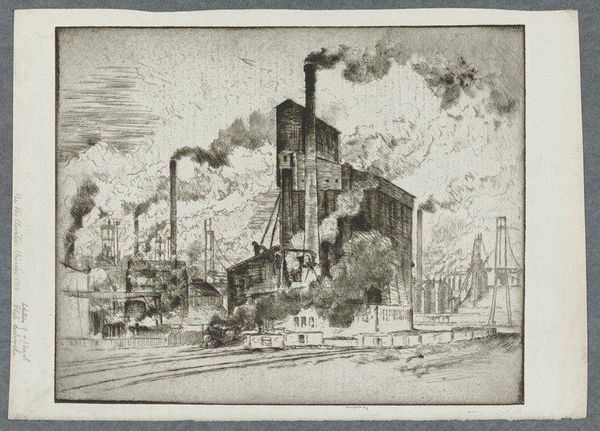
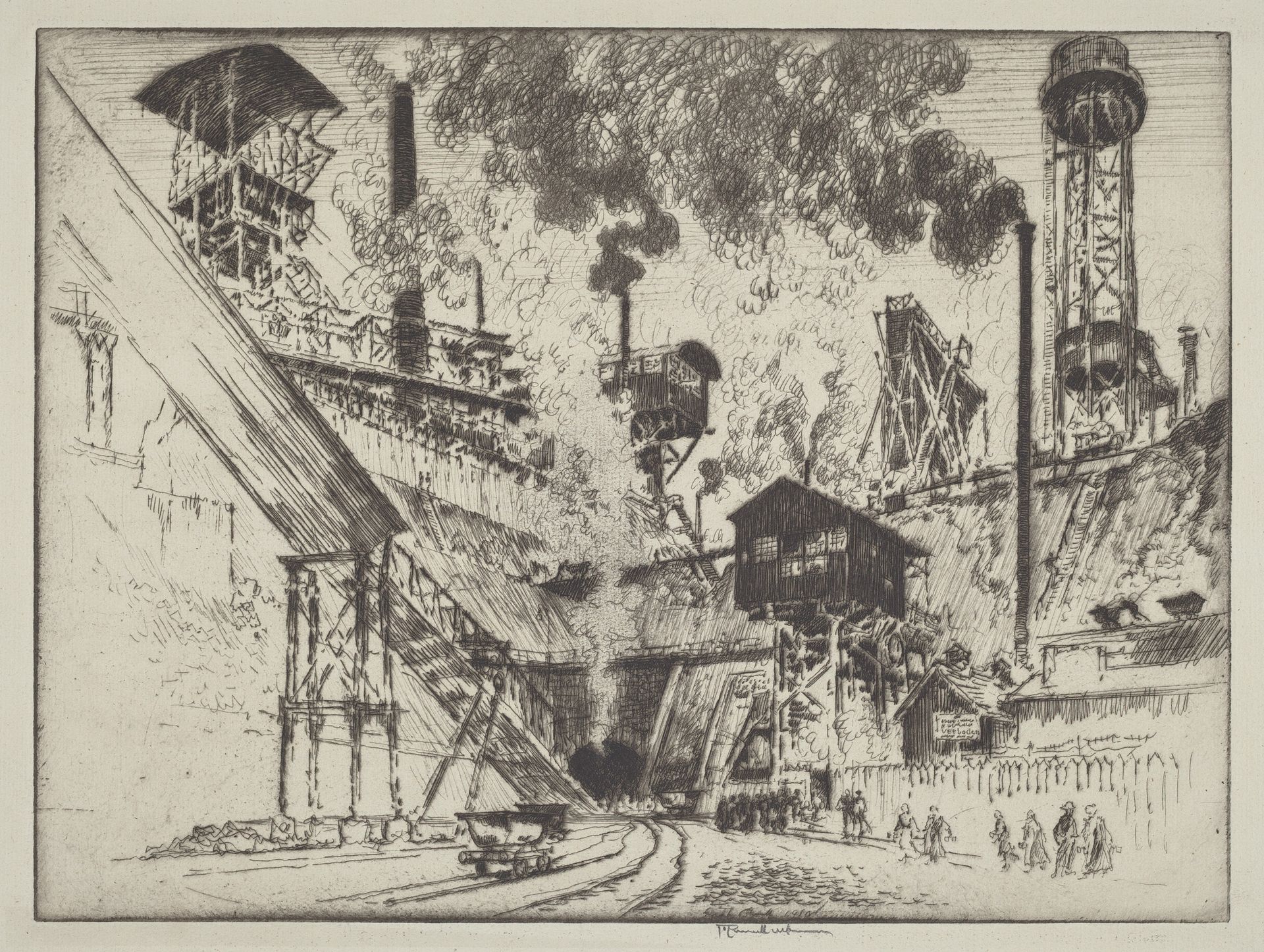
Joseph Pennell made this etching, Mouth of the Mine, Ruhrort near Oberhausen, with ink on paper, and it’s all about how marks accumulate to form a picture. The dense hatching creates depth and texture, which gives a sense of the gritty, industrial landscape, the marks somehow dirtying the page. Look at the smoke billowing from the stacks. Those lines aren’t just describing smoke; they’re also creating a mood, a sense of unease. The etching has a tactile quality, like you could run your fingers over the surface and feel the grit of the coal dust. It reminds me of Piranesi's architectural prints, where the weight of history and human endeavor is palpable in every line. I see this piece as part of a dialogue with artists like the Bechers, who documented industrial structures with a similar attention to detail. It's this ongoing conversation about how we see, represent, and make sense of the world around us. And ultimately, it's a reminder that art is not about fixed meanings, but about embracing ambiguity and the endless possibilities of interpretation.
Mouth of the Mine, Ruhrort near Oberhausen
1910


Artwork details
- Medium
- print, etching
- Copyright
- National Gallery of Art: CC0 1.0
Tags
Comments
Share your thoughts
About this artwork
Joseph Pennell made this etching, Mouth of the Mine, Ruhrort near Oberhausen, with ink on paper, and it’s all about how marks accumulate to form a picture. The dense hatching creates depth and texture, which gives a sense of the gritty, industrial landscape, the marks somehow dirtying the page. Look at the smoke billowing from the stacks. Those lines aren’t just describing smoke; they’re also creating a mood, a sense of unease. The etching has a tactile quality, like you could run your fingers over the surface and feel the grit of the coal dust. It reminds me of Piranesi's architectural prints, where the weight of history and human endeavor is palpable in every line. I see this piece as part of a dialogue with artists like the Bechers, who documented industrial structures with a similar attention to detail. It's this ongoing conversation about how we see, represent, and make sense of the world around us. And ultimately, it's a reminder that art is not about fixed meanings, but about embracing ambiguity and the endless possibilities of interpretation.
Comments
Share your thoughts