About this artwork
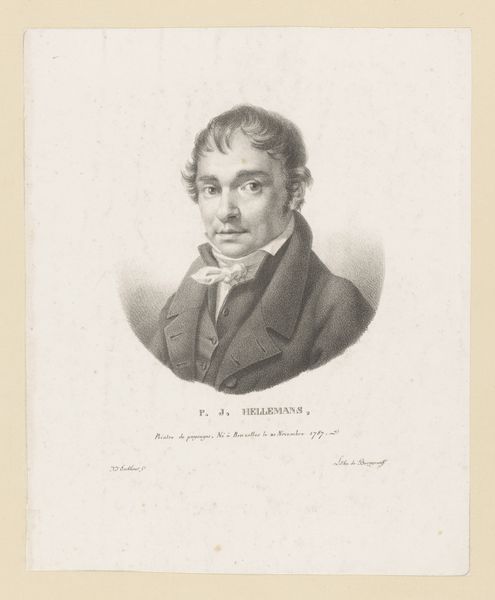
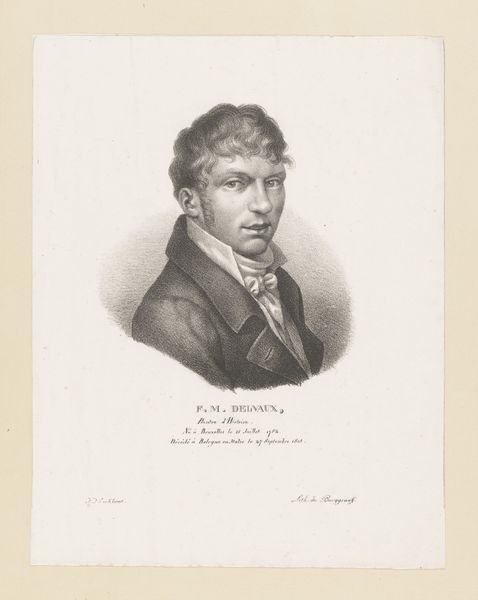
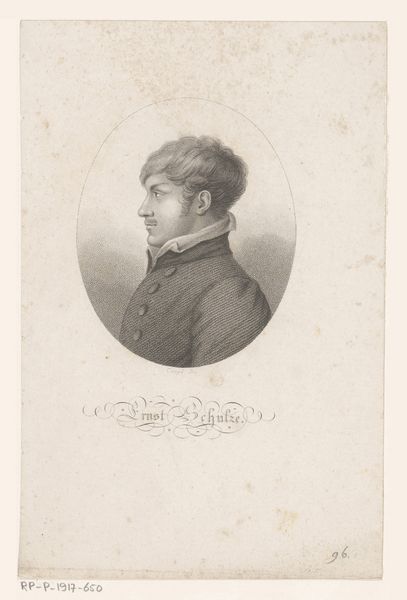
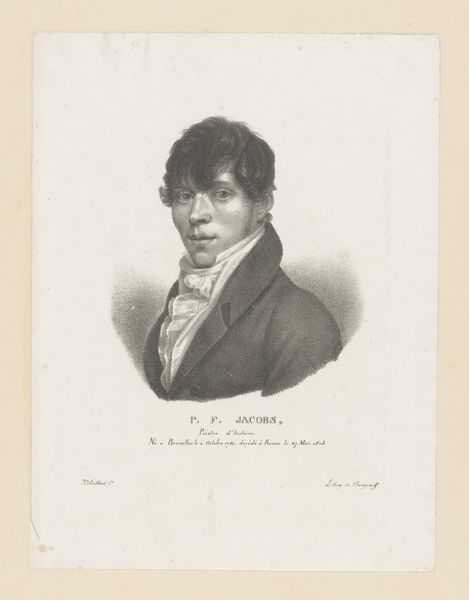
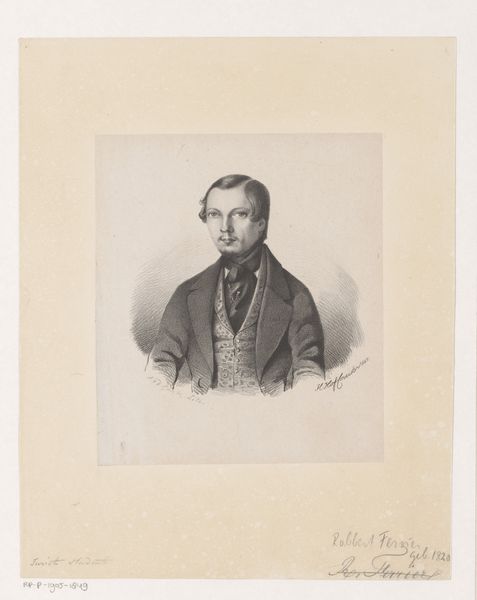
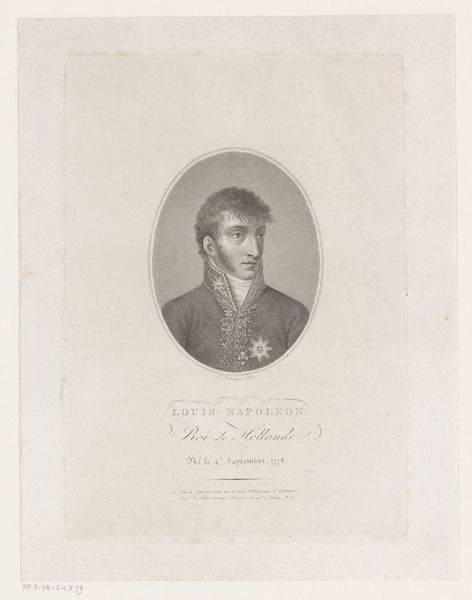
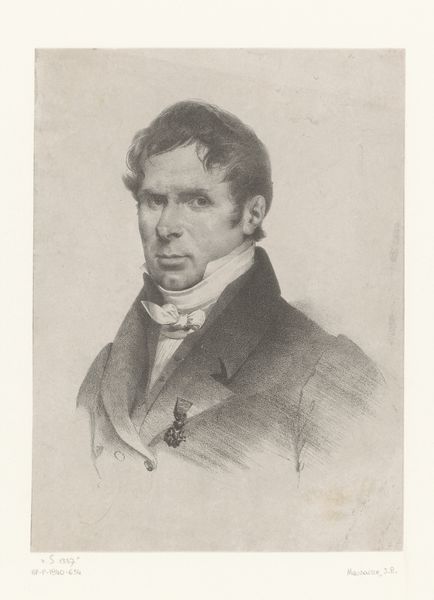
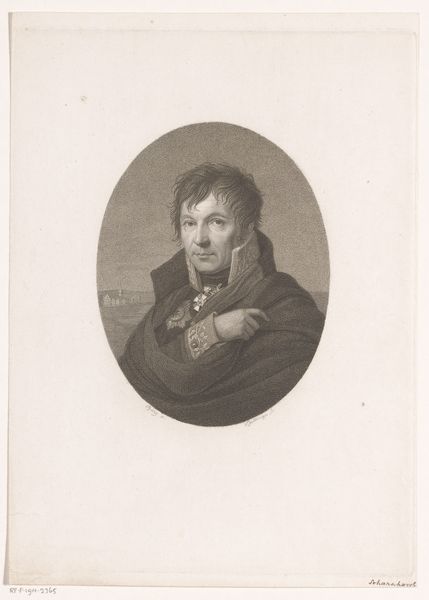
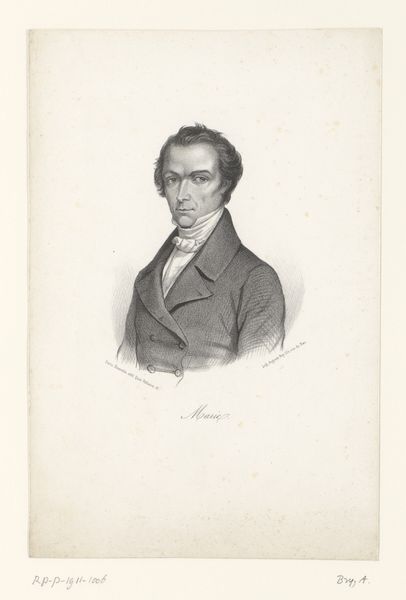
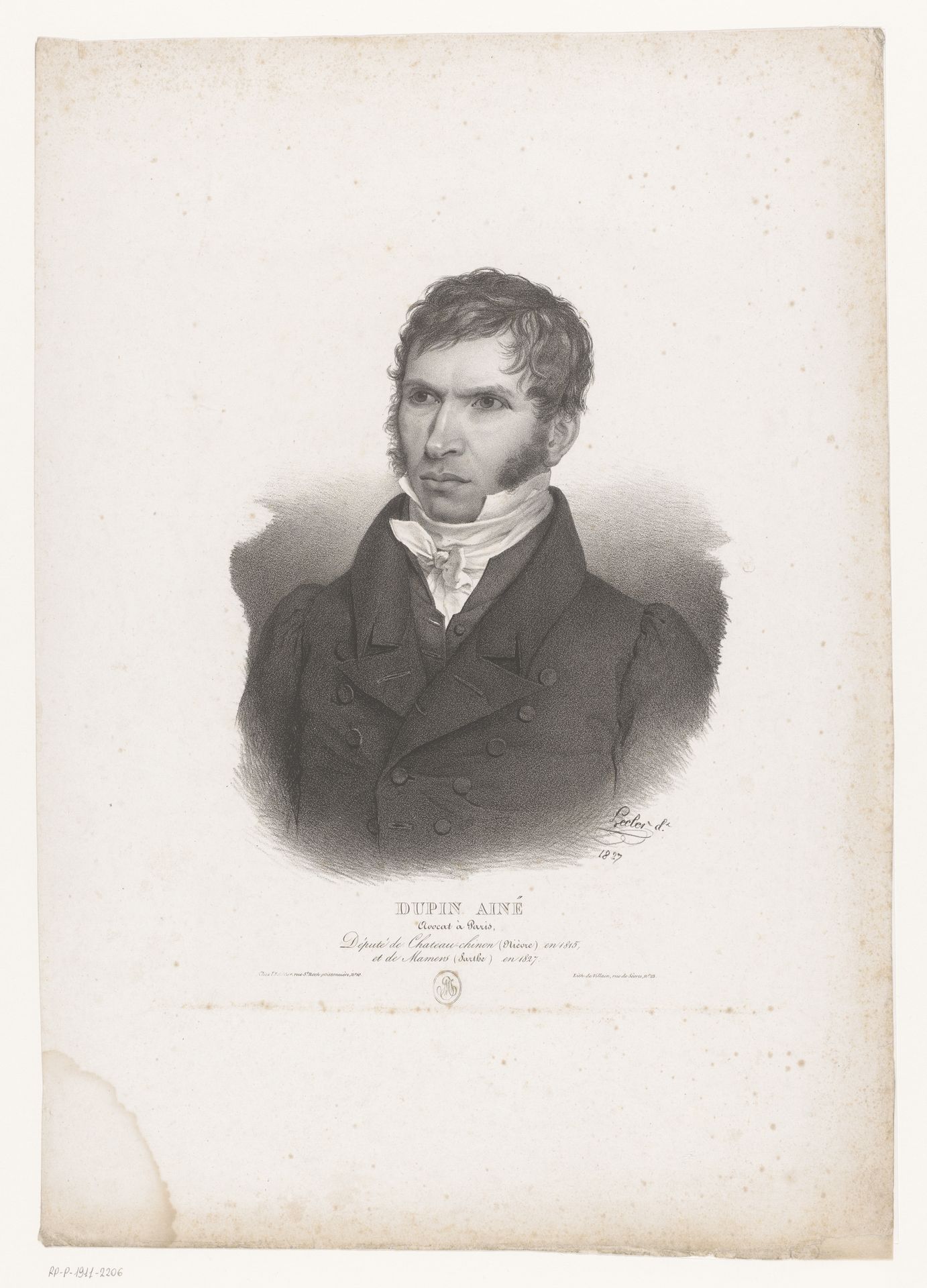
Editor: Here we have Auguste Toussaint Lecler’s "Portret van André Dupin," created in 1827. It's a print, a drawing with ink on paper... I find the subject’s expression very stern. What jumps out to you when you look at it? Curator: I notice the labor and materials involved in producing this print, especially during that era. Consider the process: the original drawing, the engraving, the printing itself, each stage involving skilled artisans. This wasn't a solitary act of "genius," but a collaborative process embedded in a specific economic system. How do you think this process shaped the final artwork? Editor: That's fascinating! I hadn't considered the collaborative aspect. So, the choice of printmaking—as opposed to, say, an oil painting—speaks to something about accessibility or dissemination of the image? Curator: Precisely. Printmaking allowed for the wider distribution of Dupin’s image, influencing public perception of him. Dupin, as a prominent lawyer and politician, surely understood this. Do you think he might have commissioned this portrait specifically to enhance his public image through mass reproduction? Editor: It seems highly plausible! The control of the image would have been in Dupin's interest to portray himself to the public as he saw himself. Was this a common strategy? Curator: It became increasingly common. We see a rise in printed portraits coinciding with a growing middle class and increasing political engagement. Consider the paper itself - its availability and cost reflect broader economic shifts. Can we see the material conditions of 19th-century France reflected in the print itself? Editor: I guess so! Considering the labor, the materials, and the intention behind its creation completely transforms my initial reading of it. Thanks for making me see that, really! Curator: Indeed! Recognizing the materials and their relationship to society enhances our understanding and appreciation of art in so many contexts.

Artwork details
- Medium
- drawing, print, paper, ink, engraving
- Dimensions
- height 506 mm, width 352 mm
- Copyright
- Rijks Museum: Open Domain
Tags
Comments
Share your thoughts
About this artwork
Editor: Here we have Auguste Toussaint Lecler’s "Portret van André Dupin," created in 1827. It's a print, a drawing with ink on paper... I find the subject’s expression very stern. What jumps out to you when you look at it? Curator: I notice the labor and materials involved in producing this print, especially during that era. Consider the process: the original drawing, the engraving, the printing itself, each stage involving skilled artisans. This wasn't a solitary act of "genius," but a collaborative process embedded in a specific economic system. How do you think this process shaped the final artwork? Editor: That's fascinating! I hadn't considered the collaborative aspect. So, the choice of printmaking—as opposed to, say, an oil painting—speaks to something about accessibility or dissemination of the image? Curator: Precisely. Printmaking allowed for the wider distribution of Dupin’s image, influencing public perception of him. Dupin, as a prominent lawyer and politician, surely understood this. Do you think he might have commissioned this portrait specifically to enhance his public image through mass reproduction? Editor: It seems highly plausible! The control of the image would have been in Dupin's interest to portray himself to the public as he saw himself. Was this a common strategy? Curator: It became increasingly common. We see a rise in printed portraits coinciding with a growing middle class and increasing political engagement. Consider the paper itself - its availability and cost reflect broader economic shifts. Can we see the material conditions of 19th-century France reflected in the print itself? Editor: I guess so! Considering the labor, the materials, and the intention behind its creation completely transforms my initial reading of it. Thanks for making me see that, really! Curator: Indeed! Recognizing the materials and their relationship to society enhances our understanding and appreciation of art in so many contexts.
Comments
Share your thoughts