About this artwork
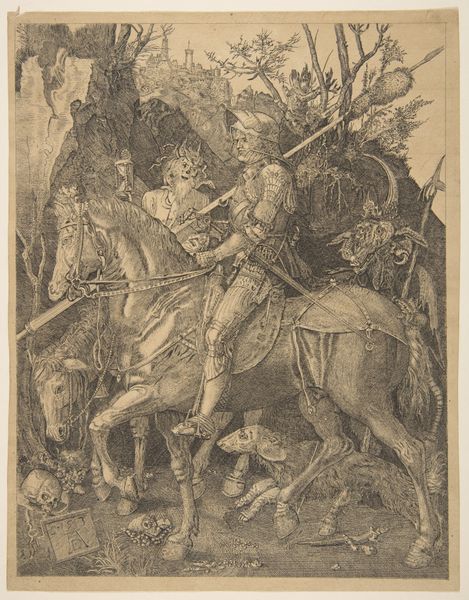
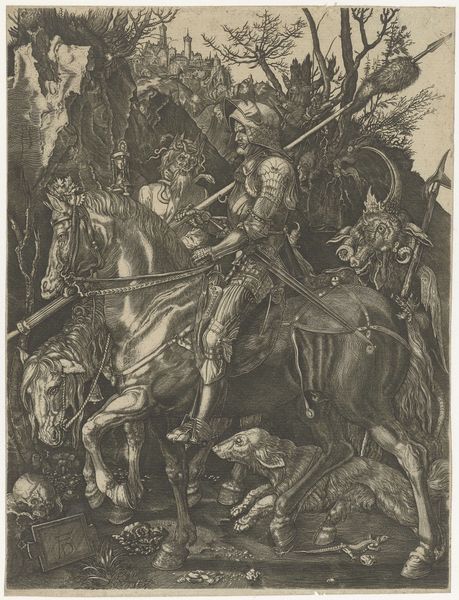
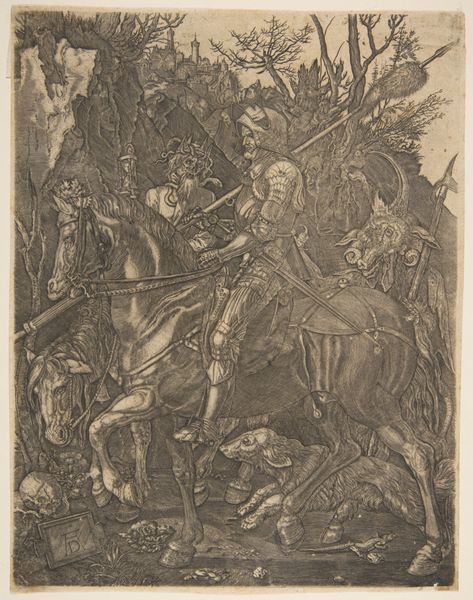
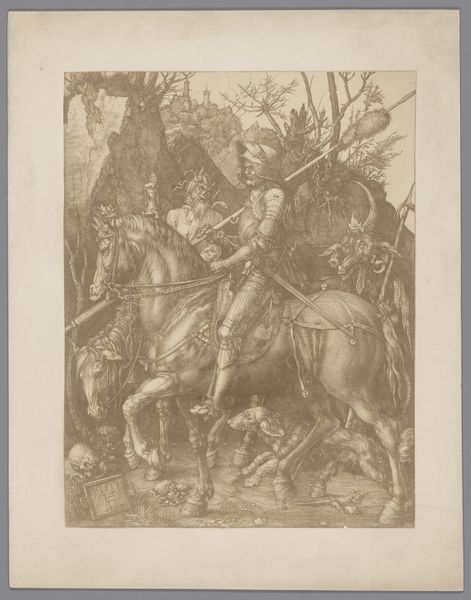
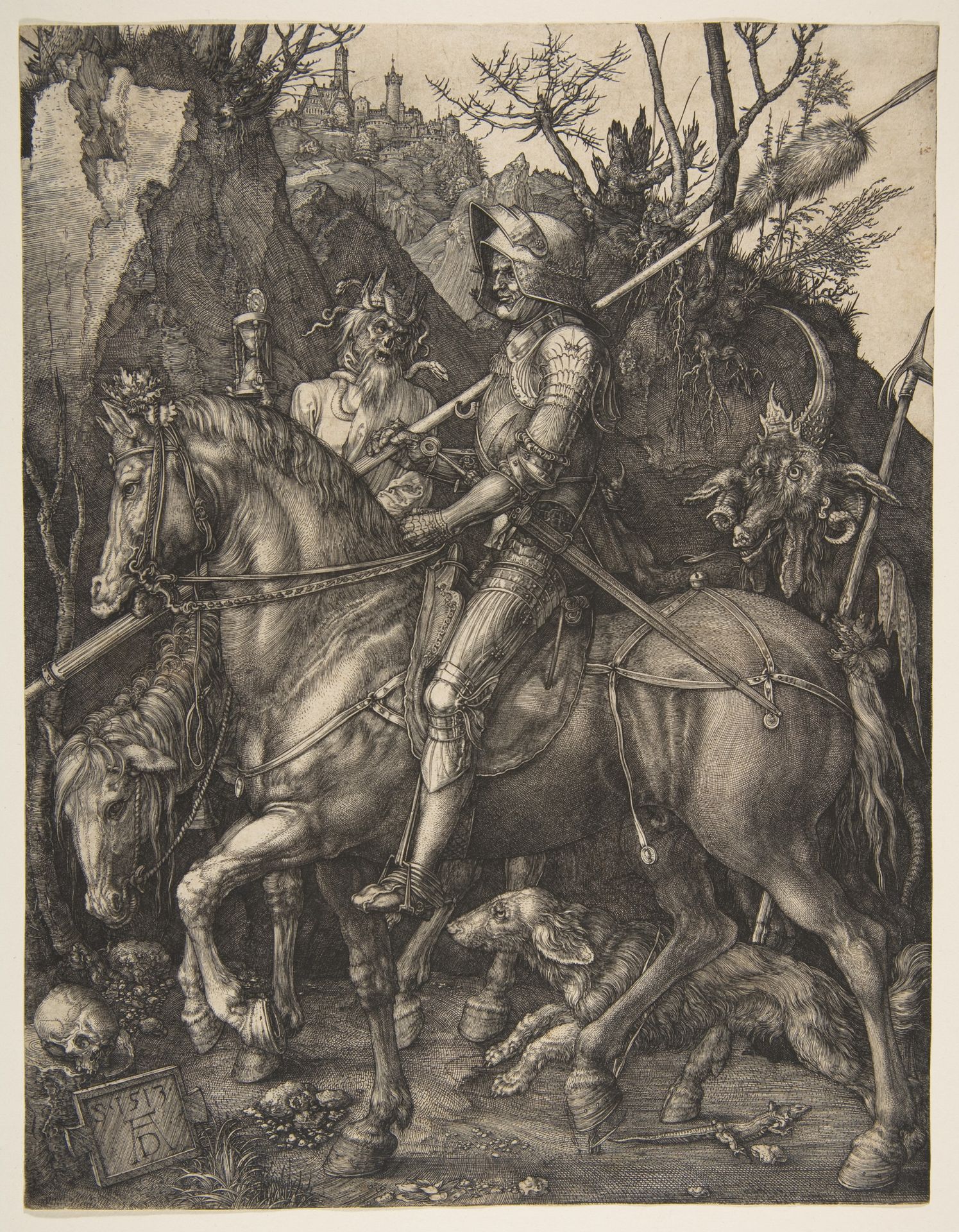
Albrecht Durer made this print using etching techniques to make fine lines on a metal plate. The plate was then inked and transferred to paper. The etching allowed Durer to create incredibly intricate details, from the texture of the knight's armor to the grotesque figures of Death and the Devil lurking in the background. This level of detail wasn't just about showing off skill, it was also about conveying a sense of moral seriousness. Look closely, and you can see the artist's mastery, but also feel the weight of the decisions that the knight is making. Etching was becoming increasingly important in Durer’s time, as it provided artisans with a more efficient way of producing multiple copies of an image. Consider the labor involved in producing each print, from the preparation of the plate to the final transfer. Durer's print bridges craft and fine art, inviting us to consider the amount of work involved in production.
Knight, Death, and the Devil
1513


Artwork details
- Medium
- drawing, print, engraving
- Dimensions
- sheet: 9 9/16 x 7 3/8 in. (24.3 x 18.8 cm)
- Location
- Metropolitan Museum of Art, New York, NY
- Copyright
- Public Domain
Tags
drawing
allegory
dog
landscape
figuration
form
11_renaissance
horse
line
history-painting
northern-renaissance
engraving
Comments

This is Dürer’s most famous print, and it has been subject to widely differing interpretations in the course of time. The ‘christian knight’, the tireless warrior who cannot be deterred from his path, is probably depicted here. Neither Death on his emaciated overworked nag, nor the laughable, cross-eyed, pig-snouted Devil can stop him.
About this artwork
Albrecht Durer made this print using etching techniques to make fine lines on a metal plate. The plate was then inked and transferred to paper. The etching allowed Durer to create incredibly intricate details, from the texture of the knight's armor to the grotesque figures of Death and the Devil lurking in the background. This level of detail wasn't just about showing off skill, it was also about conveying a sense of moral seriousness. Look closely, and you can see the artist's mastery, but also feel the weight of the decisions that the knight is making. Etching was becoming increasingly important in Durer’s time, as it provided artisans with a more efficient way of producing multiple copies of an image. Consider the labor involved in producing each print, from the preparation of the plate to the final transfer. Durer's print bridges craft and fine art, inviting us to consider the amount of work involved in production.
Comments
This is Dürer’s most famous print, and it has been subject to widely differing interpretations in the course of time. The ‘christian knight’, the tireless warrior who cannot be deterred from his path, is probably depicted here. Neither Death on his emaciated overworked nag, nor the laughable, cross-eyed, pig-snouted Devil can stop him.