drawing, lithograph, print
#
portrait
#
pencil drawn
#
drawing
#
lithograph
# print
#
charcoal drawing
#
pencil drawing
#
portrait drawing
#
history-painting
#
realism
Dimensions: 525 mm (height) x 392 mm (width) (bladmaal)
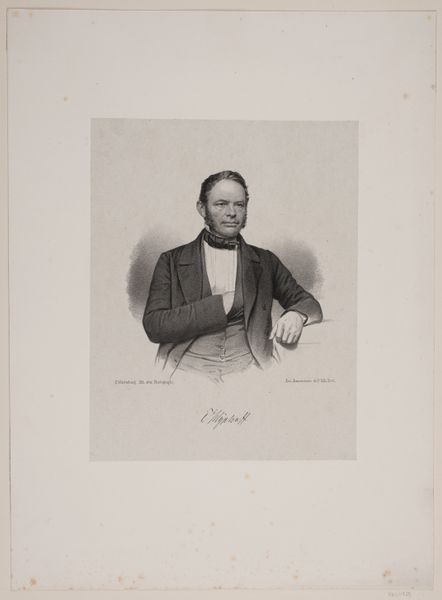
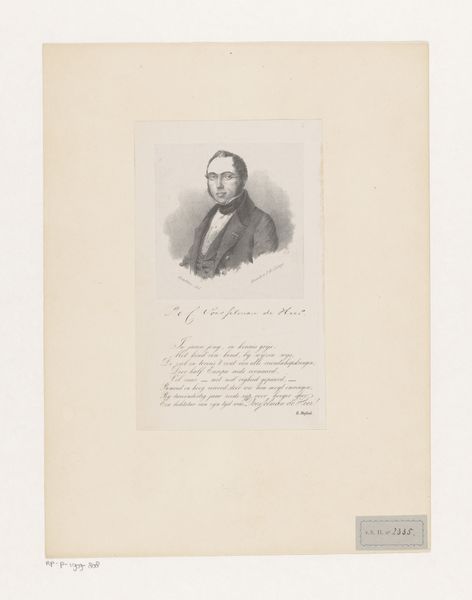
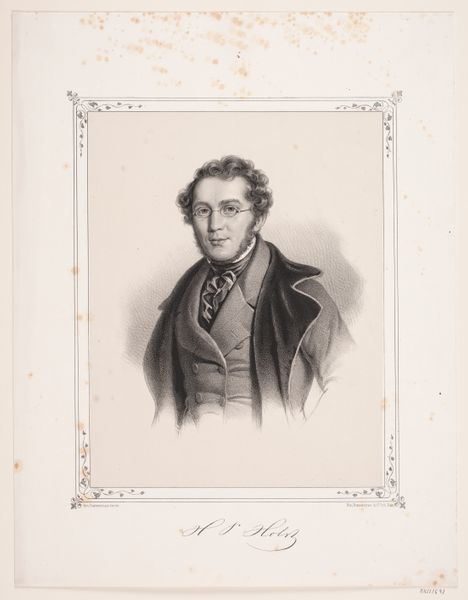
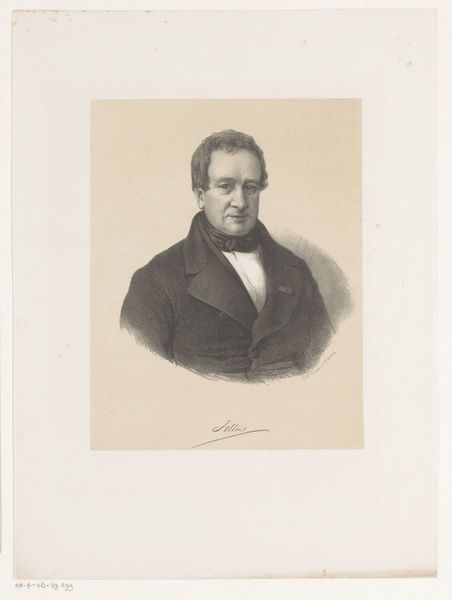
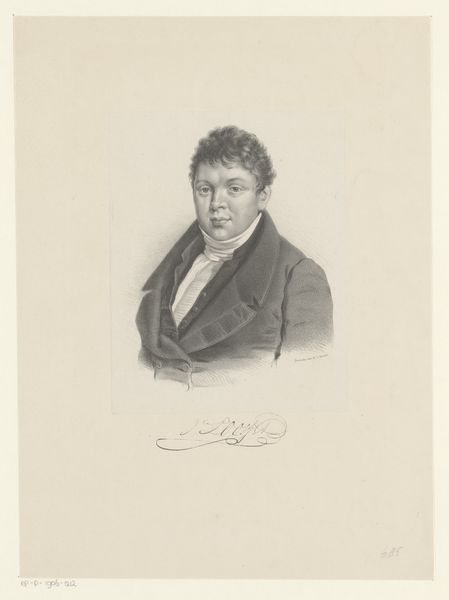
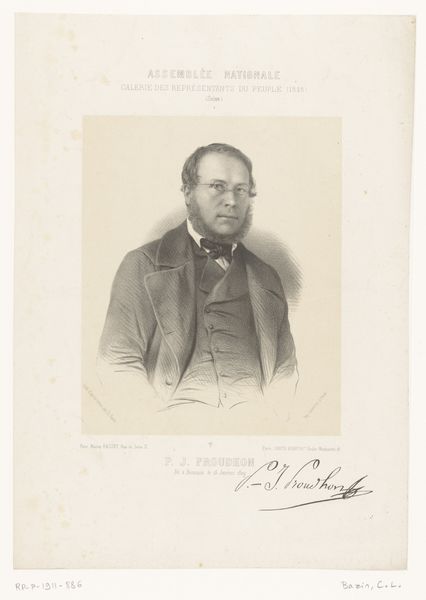
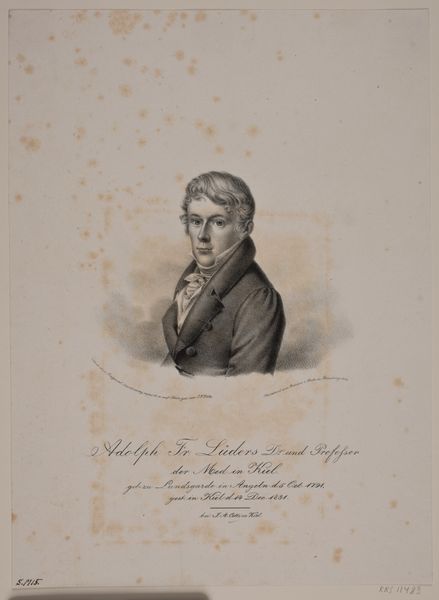
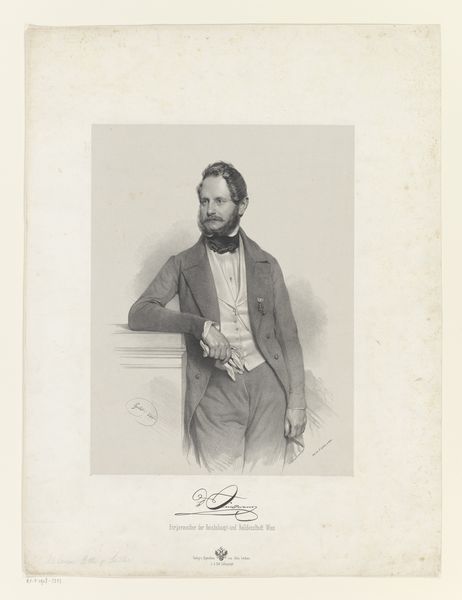
Curator: Let's delve into this intriguing piece, titled "Over- og Landsretsadvokat J.G.T. G\u00fclich," a lithograph portrait from the 1840s currently housed in the SMK, the National Gallery of Denmark. Editor: My first impression is of stark contrast; the artist uses dark, decisive strokes that give the figure both prominence and weight against the flat page. The detailing is quite fine; it invites the eye closer. Curator: Absolutely, and to appreciate this fully, we need to recognize the political context of the 1840s. G\u00fclich was a lawyer, deeply involved in the Schleswig-Holstein question, a complex dispute over the duchies' relationship to Denmark and Germany. This print wasn’t merely a likeness but a statement, a visual endorsement of his position in a turbulent period. Editor: Yes, observe the formal precision in the rendering of the face. Note how light and shadow define his features, creating a sense of gravitas and perhaps a subtle air of intellectual authority. The lithographic technique allows for a gradient of tones. Curator: It also presents interesting questions regarding how masculinity was performed and publicized at this time. G\u00fclich's serious, almost severe expression, speaks to a cultural expectation of men in positions of power and authority, especially during a period marked by nationalistic fervor. Editor: And structurally, look at the way the text frames the portrait, adding weight to the figure; consider also the typeface, the placement and effect of that language that lends an official aura. Curator: Indeed. The text surrounding the image seems to provide context, a guarantee in Staatsrechtliche Garantien--constitutional guarantees of Schleswig-Holstein; we might see the whole print as propaganda! Editor: Considering the detail within such a graphic medium--it is more than just representation. These strategic arrangements direct our sight line from top to bottom, revealing both status and claim to history! Curator: Seeing it this way encourages me to reflect on the function of the printed portrait as a tool for solidifying identity, for political gain, in a rapidly changing world. Editor: I will leave seeing this print asking myself questions about image construction; the semiotics within composition have provided me a framework I would not have previously noticed.
Comments
No comments
Be the first to comment and join the conversation on the ultimate creative platform.
 Collect
 React
React Comment
More like this