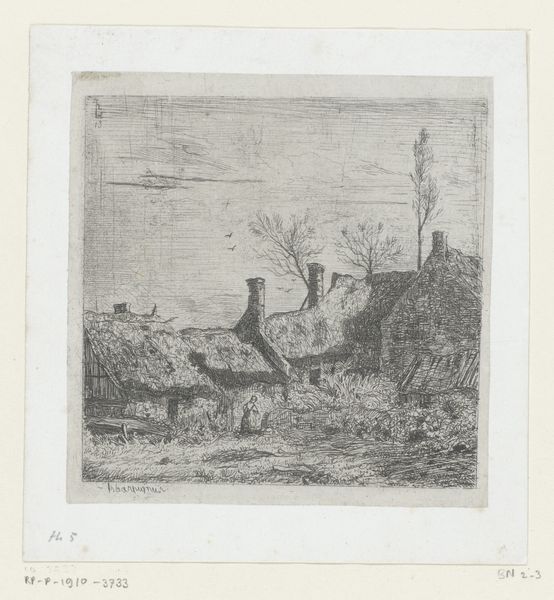
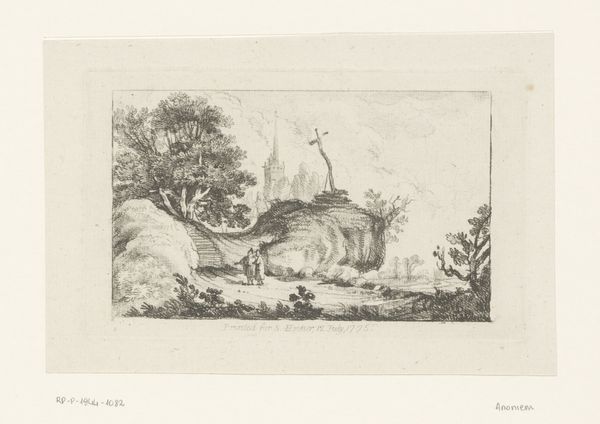
print, paper, ink, engraving
#
ink paper printed
# print
#
old engraving style
#
landscape
#
figuration
#
paper
#
ink
#
northern-renaissance
#
engraving
Dimensions: height 101 mm, width 126 mm
Copyright: Rijks Museum: Open Domain
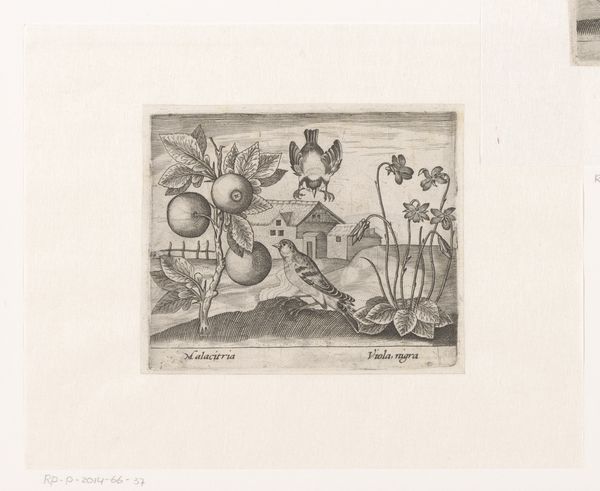
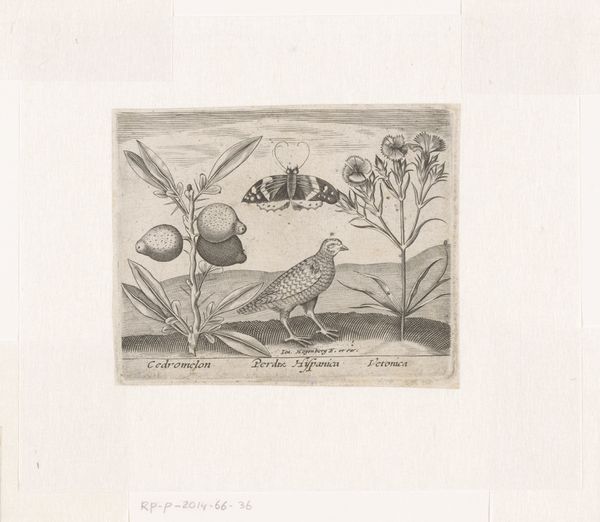
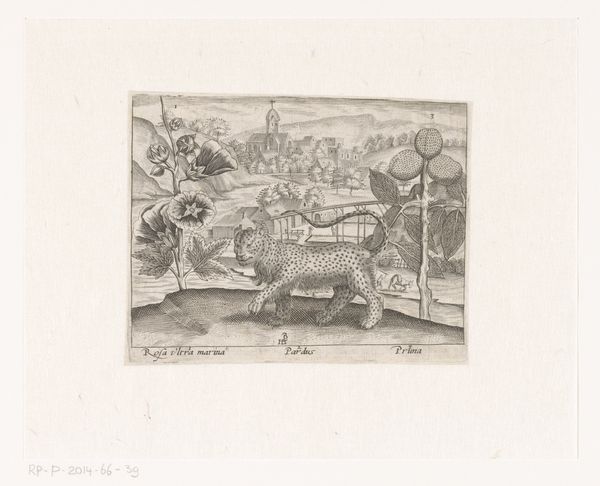
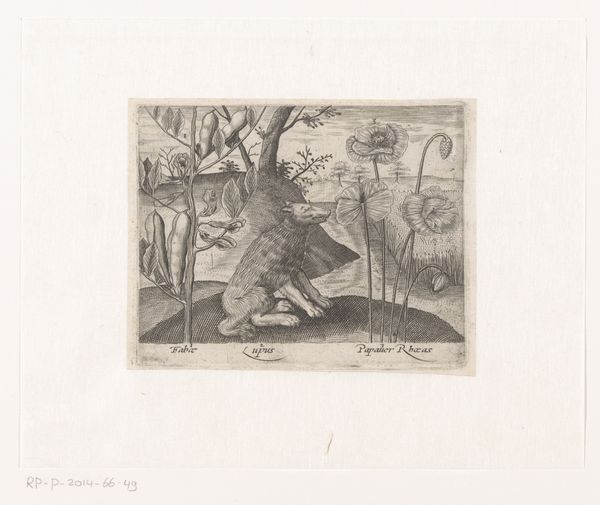
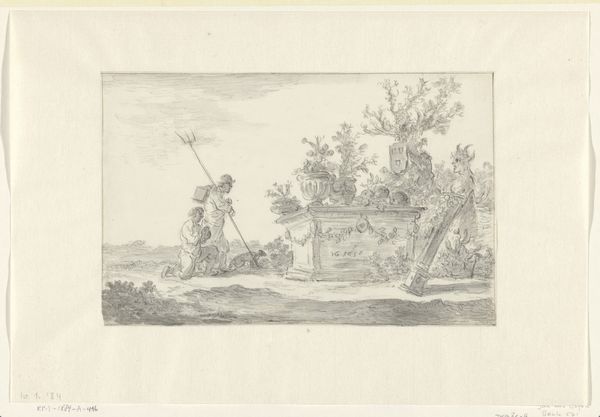
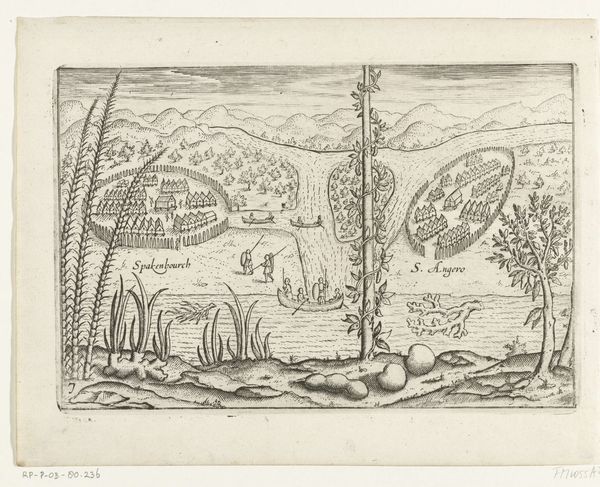
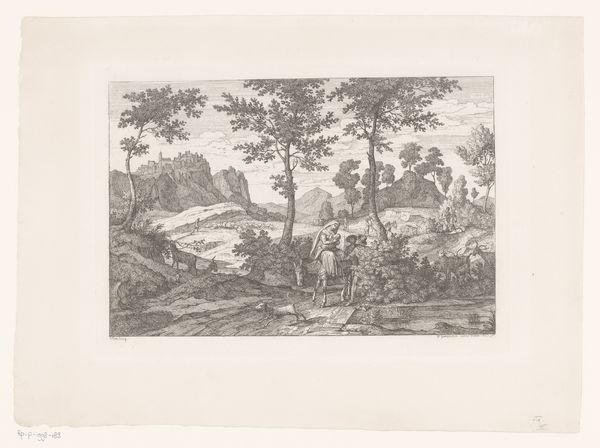
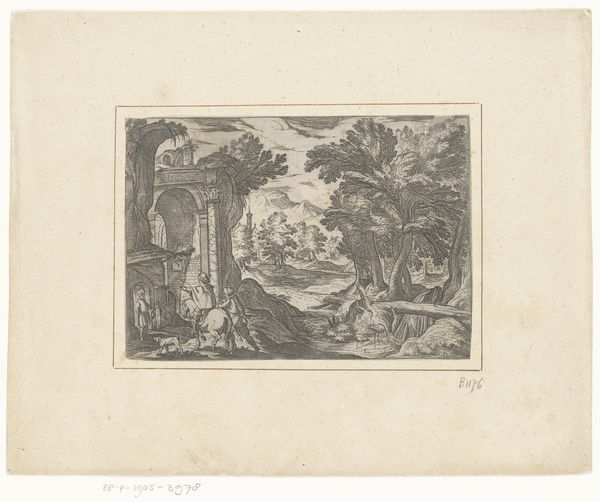
Editor: This print, "Series of Prints with Flowers and Animals in a Landscape," made around 1600 by Johann Hogenberg, is an engraving in ink on paper. It's rather charming, a peaceful little scene. How do you interpret the way the landscape and wildlife are presented here? Curator: This print offers insight into the social function of art during the Northern Renaissance. Botanical and zoological illustrations were not merely scientific; they were closely linked to the rise of humanist interests and the development of encyclopedic collections. These prints circulated widely, influencing scientific thought but also shaping cultural understandings of the natural world. Notice how the artist meticulously depicts the bird, flora, and landscape, and ask yourself what impact such a widely distributed depiction might have? Editor: So, you are saying these weren't just pretty pictures, but kind of educational tools? I hadn’t thought of that. It's like a Renaissance version of a nature documentary still. Curator: Exactly! The printing press made images and knowledge far more accessible. Furthermore, such detailed depictions would have fueled an elite culture of collecting and display that served the powerful and wealthy. How might access to the printed image been stratified in that era? Editor: Good point. Only certain people would have had the means to collect these. So it reflects not only scientific interest but also a social hierarchy. Curator: Precisely. Reflect on what these now-historical prints tell us about Renaissance values and the public roles art assumed. Editor: It makes me see how art even back then was tied to social forces and how information was disseminated. Fascinating. Thanks.
Comments

rijksmuseum over 2 years ago
⋮
In making his representations of flowers and animals Hogenberg borrowed freely from prints by other artists. Some combinations are endearing, others slightly bizarre. What does a polar bear have to do with artichokes? It is precisely the series’ mixture of originality and naiveté that is so appealing to modern eyes.


Join the conversation
Join millions of artists and users on Artera today and experience the ultimate creative platform.
 Collect
More like this