print, etching
# print
#
etching
#
landscape
#
bird
#
fruit
Dimensions: height 95 mm, width 116 mm
Copyright: Rijks Museum: Open Domain
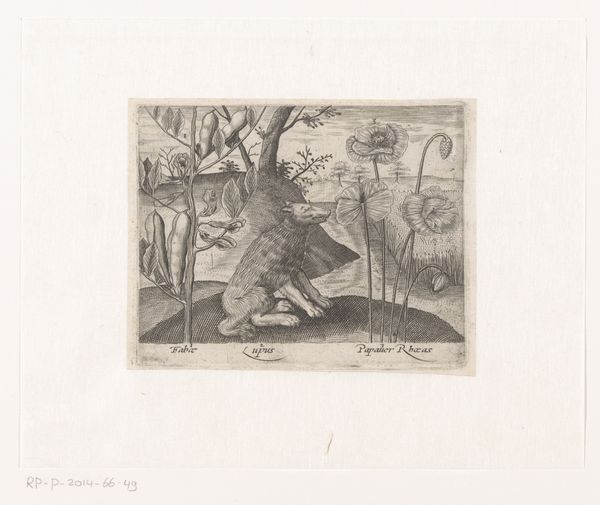
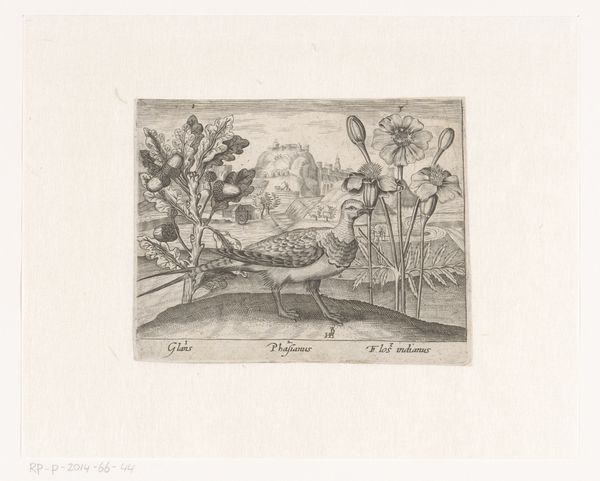
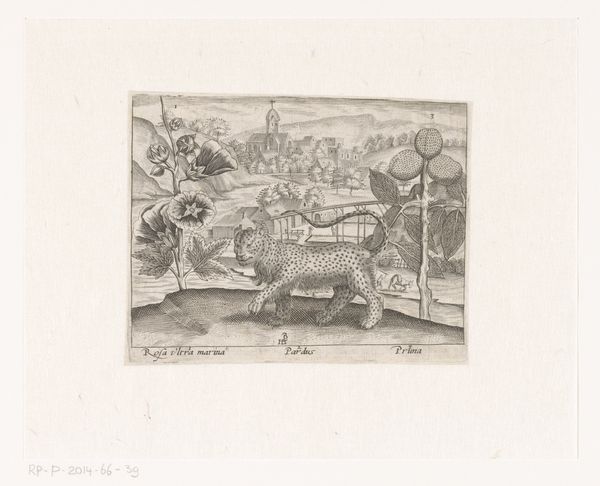
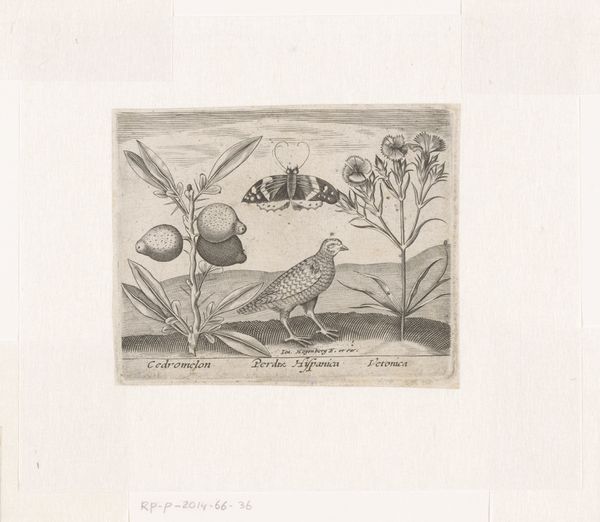
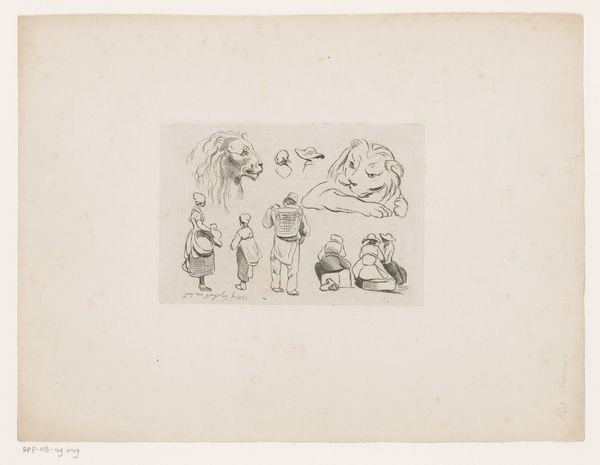
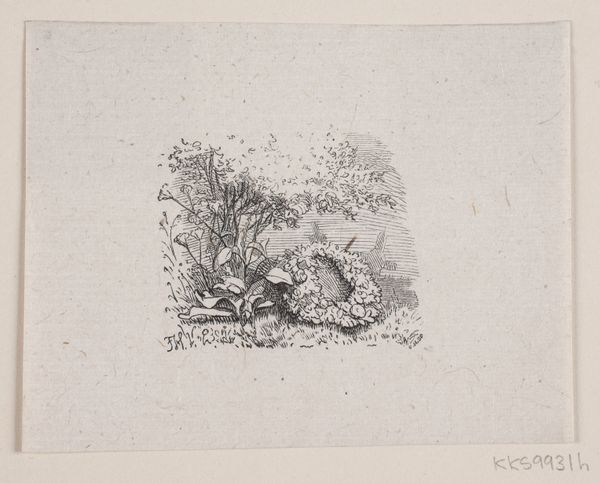
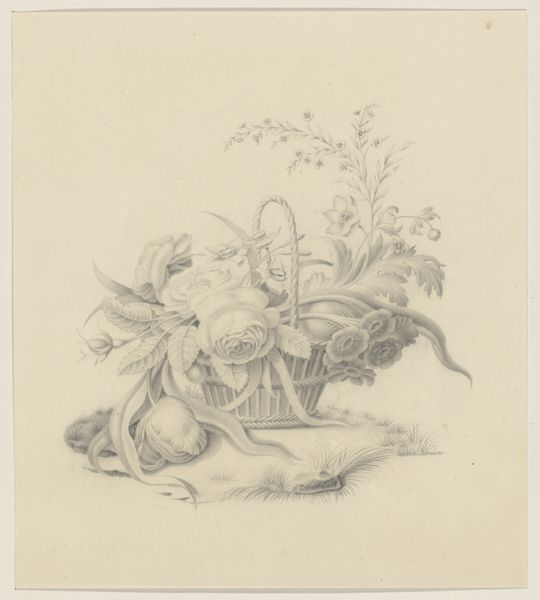
Editor: This etching, titled "Series of Prints with Flowers and Animals in a Landscape" by Johann Hogenberg, dates back to around 1600. The intricate details, particularly in the flora and fauna, give it a very scientific, observational mood. What do you see in this piece? Curator: I see a snapshot of a world in transition. These detailed depictions of nature weren’t just aesthetic; they were often entangled with colonial projects. Think about the intense interest in cataloging and classifying the natural world. It was driven by the desire to understand, and therefore control, both land and resources. What do you make of the way the plants are labeled? Editor: I hadn’t really considered that aspect. They look like early attempts at botanical classification, but what does that have to do with colonialism? Curator: Well, these kinds of scientific endeavors were directly linked to resource extraction and exploitation. The act of naming and categorizing was part of claiming ownership. Who benefits when knowledge is centralized and controlled in this way? And who is excluded? Editor: So, it’s not just a charming landscape. It's a record of a particular moment of scientific advancement that was underpinned by complex power dynamics? Curator: Exactly. Consider the violence inherent in extracting these plants from their indigenous contexts, re-presenting them within a European framework. We need to constantly ask ourselves: Whose stories are being told, and whose are being erased in the process? Editor: I’m definitely going to view these older landscapes with a new critical lens from now on. Curator: Remember that these images were not simply objective records. They are complex cultural documents shaped by power, politics, and the colonial gaze.
Comments

rijksmuseum over 2 years ago
⋮
In making his representations of flowers and animals Hogenberg borrowed freely from prints by other artists. Some combinations are endearing, others slightly bizarre. What does a polar bear have to do with artichokes? It is precisely the series’ mixture of originality and naiveté that is so appealing to modern eyes.


Join the conversation
Join millions of artists and users on Artera today and experience the ultimate creative platform.
 Collect
More like this