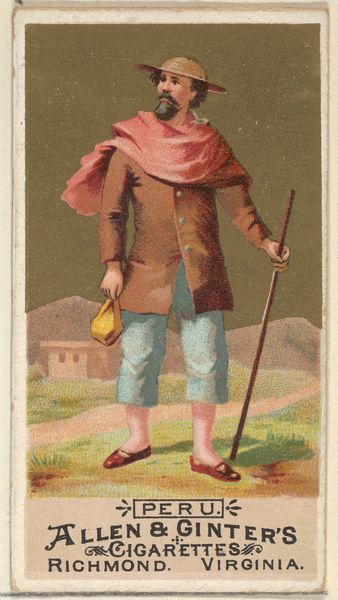
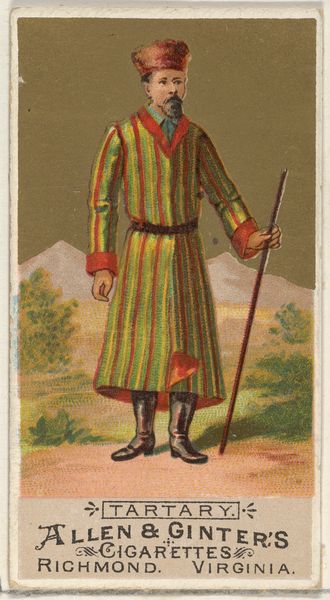
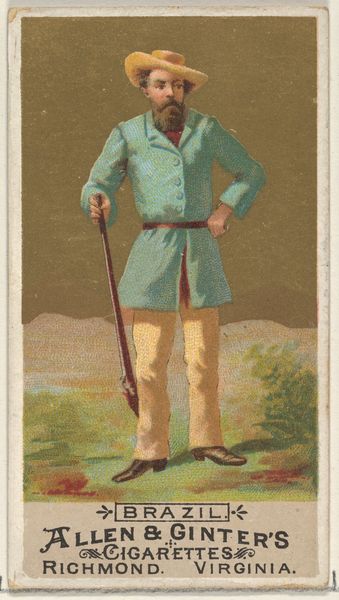
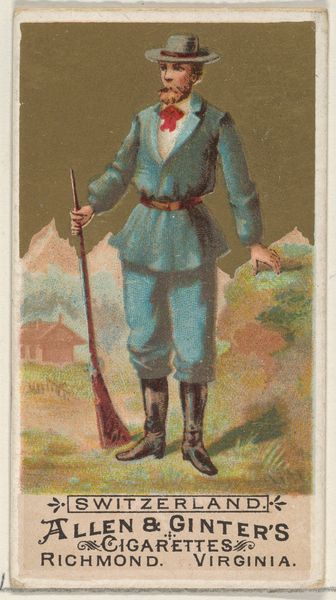
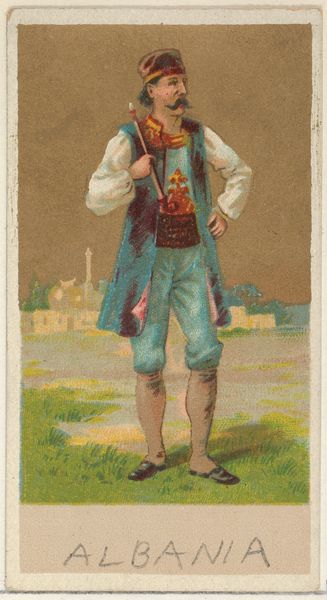
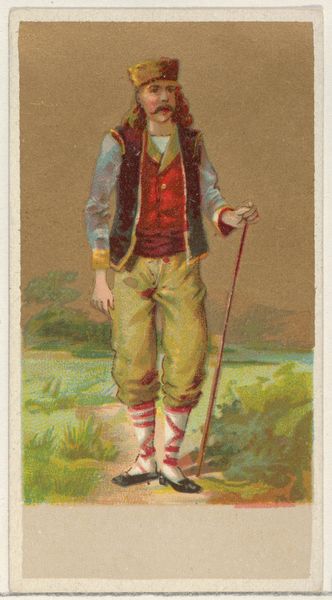
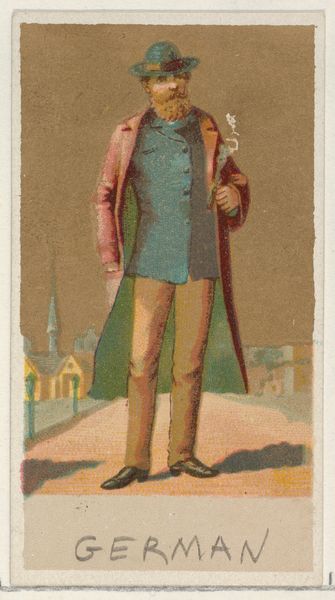
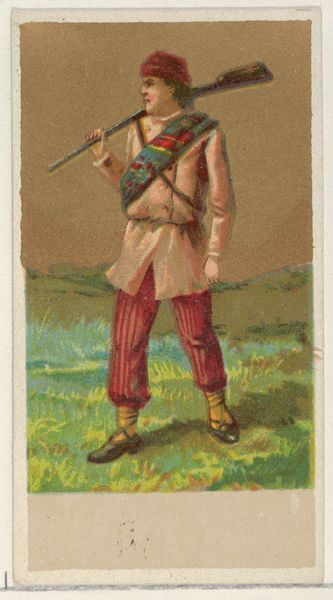
Peru, from the Natives in Costume series (N16), Teofani Issue, for Allen & Ginter Cigarettes Brands 1886 - 1900


drawing, lithograph, print, paper, photography
portrait
drawing
water colours
lithograph
paper
photography
coloured pencil
orientalism
watercolour illustration
genre-painting
academic-art
Dimensions: Sheet: 2 3/4 x 1 1/2 in. (7 x 3.8 cm)
Copyright: Public Domain
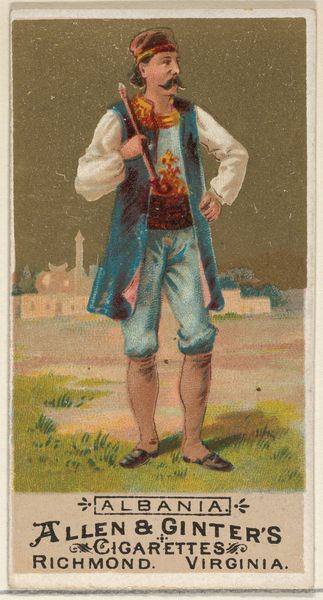
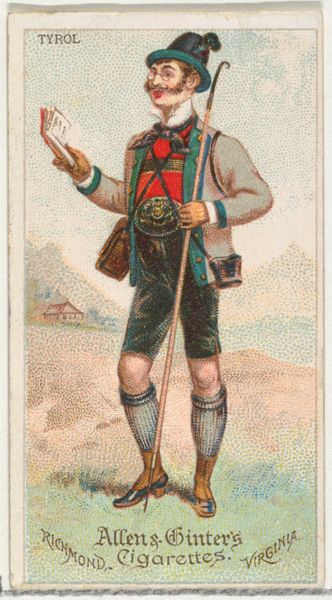
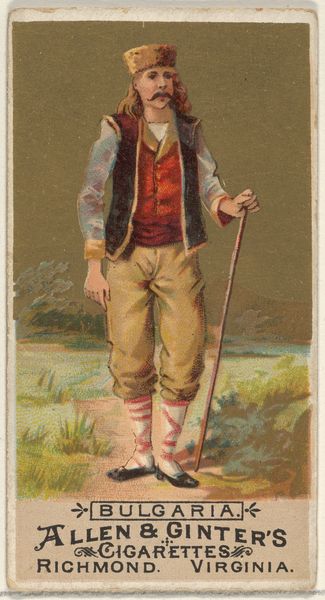
Editor: This lithograph, "Peru, from the Natives in Costume series (N16), Teofani Issue, for Allen & Ginter Cigarettes Brands," created sometime between 1886 and 1900, depicts a man in traditional Peruvian attire. The small scale suggests it was perhaps part of a larger collection. What story do you think this print tells, given its history as a promotional item for cigarettes? Curator: Considering the origins of this piece – produced for Allen & Ginter Cigarettes – we need to investigate its function as a commodity. This wasn't about high art; it was about creating a collectible to drive sales. The “Natives in Costume” series participates in a visual language that exoticizes Peruvian culture for a consumer market. Think about the materiality: mass-produced lithography, cheap paper, easily distributed. The image is consumed and then discarded with the cigarette pack. Editor: So the material and purpose are more significant than the artistic merit in this case? Curator: Exactly! The watercolour illustration emulates "high art", attempting to elevate the status of the product and, in extension, the consumer who possesses the set. It's also important to ask whose vision of Peruvian culture is presented here and what labor practices enabled its creation. Were local Peruvian artists or artisans involved in its creation? Doubtful. Editor: It seems more complex than a simple portrait once you factor in production. I never considered how the art served the brand, rather than the other way around. Curator: That's the crux of it! By viewing it materially, we can unpack the layered intentions behind seemingly straightforward images, particularly considering production, and ultimate disposal after consumption of the cigarette product. Editor: Right. Thinking about the cigarettes’ influence shifts my focus from the aesthetics to labor, materiality, and commerce – a broader view overall. Curator: Precisely. Hopefully, next time you view an artwork, this helps illuminate those relations.
Comments
No comments
Be the first to comment and join the conversation on the ultimate creative platform.
 React
React Comment