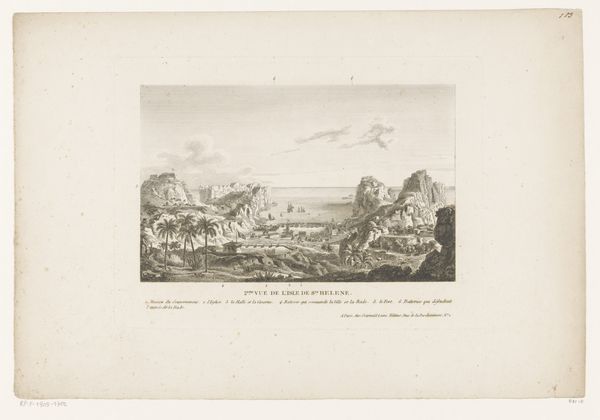
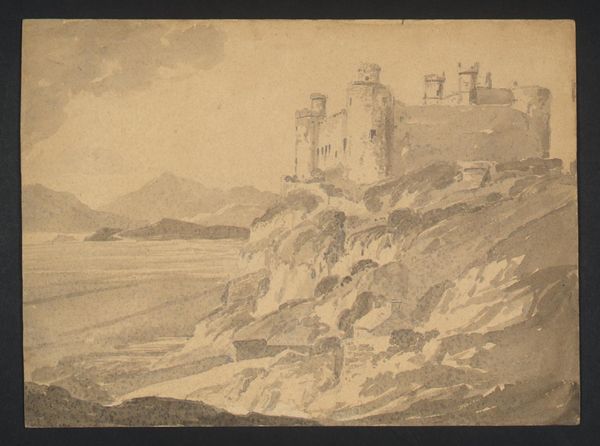
Fotoreproductie van een tekening van het strand van Granville, Frankrijk 1855 - 1885

drawing, print, photography, pencil
drawing
landscape
photography
coloured pencil
pencil
watercolor
realism
Dimensions: height 61 mm, width 104 mm
Copyright: Rijks Museum: Open Domain
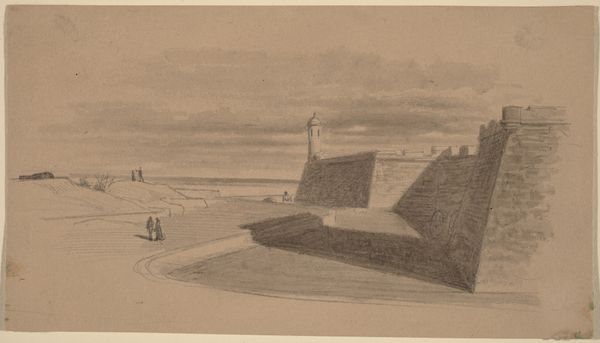
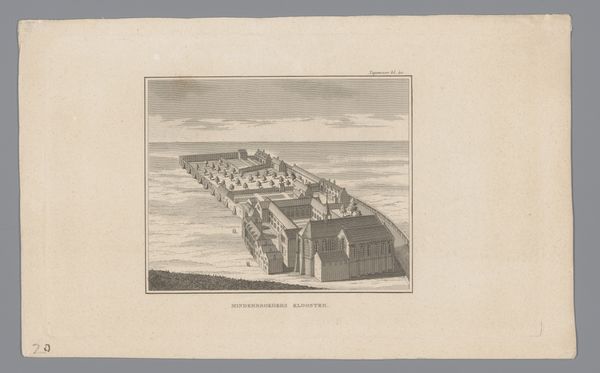
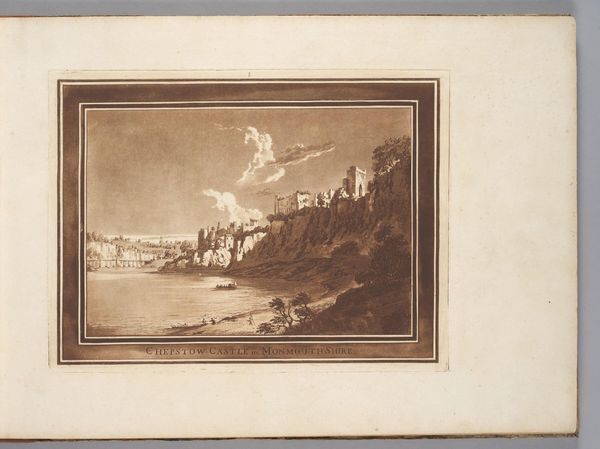
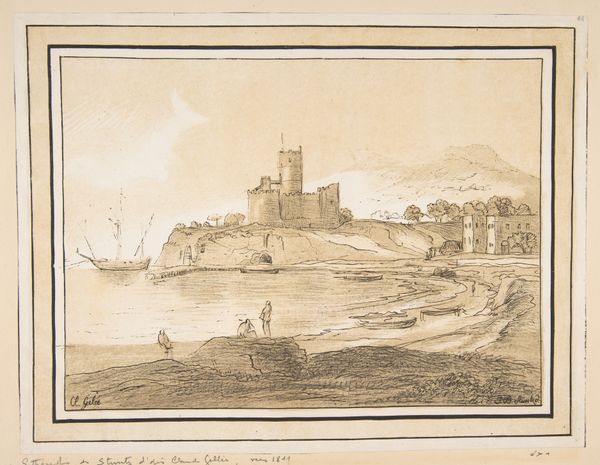
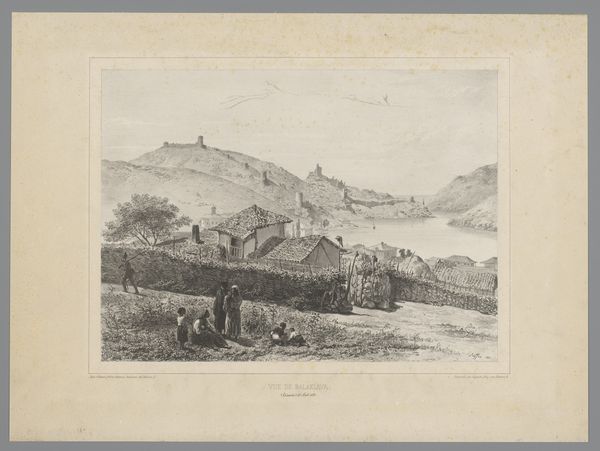
Curator: Before us is a photographic reproduction of a drawing depicting the beach at Granville, France. While the photograph itself likely dates between 1855 and 1885, the drawing it reproduces may be from slightly earlier. It is credited to Alfred le Jeune Chardon. Editor: There's an odd serenity to it, almost ghostly. The figures are mere specks, dwarfed by the immensity of the cliff and the rather placid-looking sea. It gives the impression of a leisure class observing its own performance of leisure. Curator: Absolutely. Granville, during this period, was becoming increasingly popular as a seaside resort for the upper and middle classes. Images like this helped to solidify that identity and attract tourism. The drawing romanticizes the town. Editor: And what of the prominent building perched atop the cliffs? It looms over the scene, almost oppressive despite the overall gentle atmosphere. I wonder about its role and how its presence may have impacted the lives of those on the beach. Was access to this beach and seaside limited, maybe based on wealth? Curator: The building you are pointing out would have likely been some kind of fortification, an important point considering Granville's history. Situated as it is, the image then reveals this interesting tension. The coast, which previously would have had great political meaning, is beginning to transition from a working site to somewhere devoted to the leisure of an exclusive upper class. The figures scattered along the shoreline begin to stand in for this shift, participating in the production of it through their being seen. Editor: It is unsettling how this mirrors present-day coastal access and its accessibility which reflects similar, historical and socioeconomic divisions. Looking at the medium – a reproduction of a drawing, a copy removed from the original - almost reinforces that sense of distance and mediated experience. We're seeing a scene already filtered through layers of representation, further obscuring any raw, unvarnished truth. Curator: Indeed. The layering is significant. What starts as observation evolves into representation and dissemination, each step further shaping perceptions and ultimately impacting the place itself. Editor: Considering the rise of photography and its relationship to ideas of realism, the artistic choice of rephotographing a drawing makes you question truth claims being put forward in representing Granville during that historical moment. It makes me consider issues of accessibility for marginalized communities who may not be fairly represented in depictions of landscapes of leisure, which has many repercussions. Thank you for helping me look more closely at this artwork. Curator: My pleasure. It’s important to consider these kinds of photographs as primary material documents that impacted culture, class, and power in places such as seaside France. Hopefully we've offered our listeners a fresh point of view.
Comments
No comments
Be the first to comment and join the conversation on the ultimate creative platform.
 React
React Comment