c. 1767 - 1768
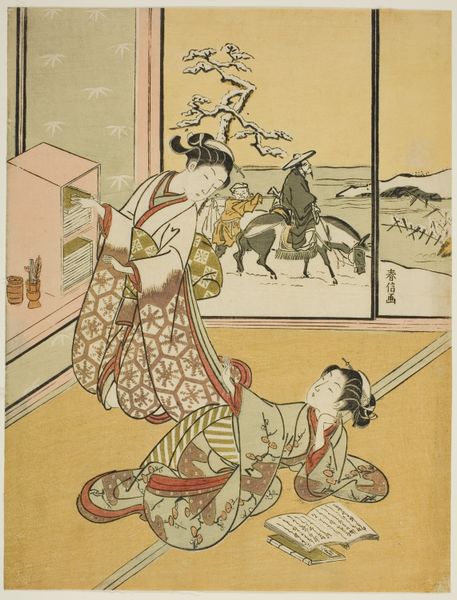
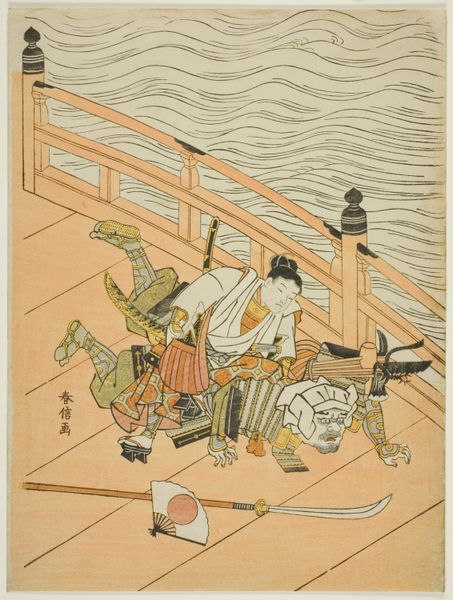
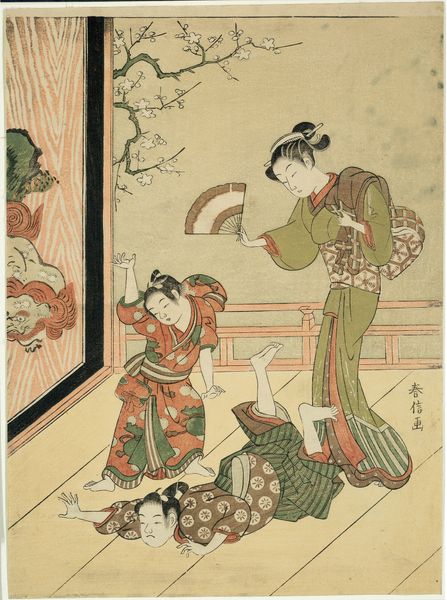
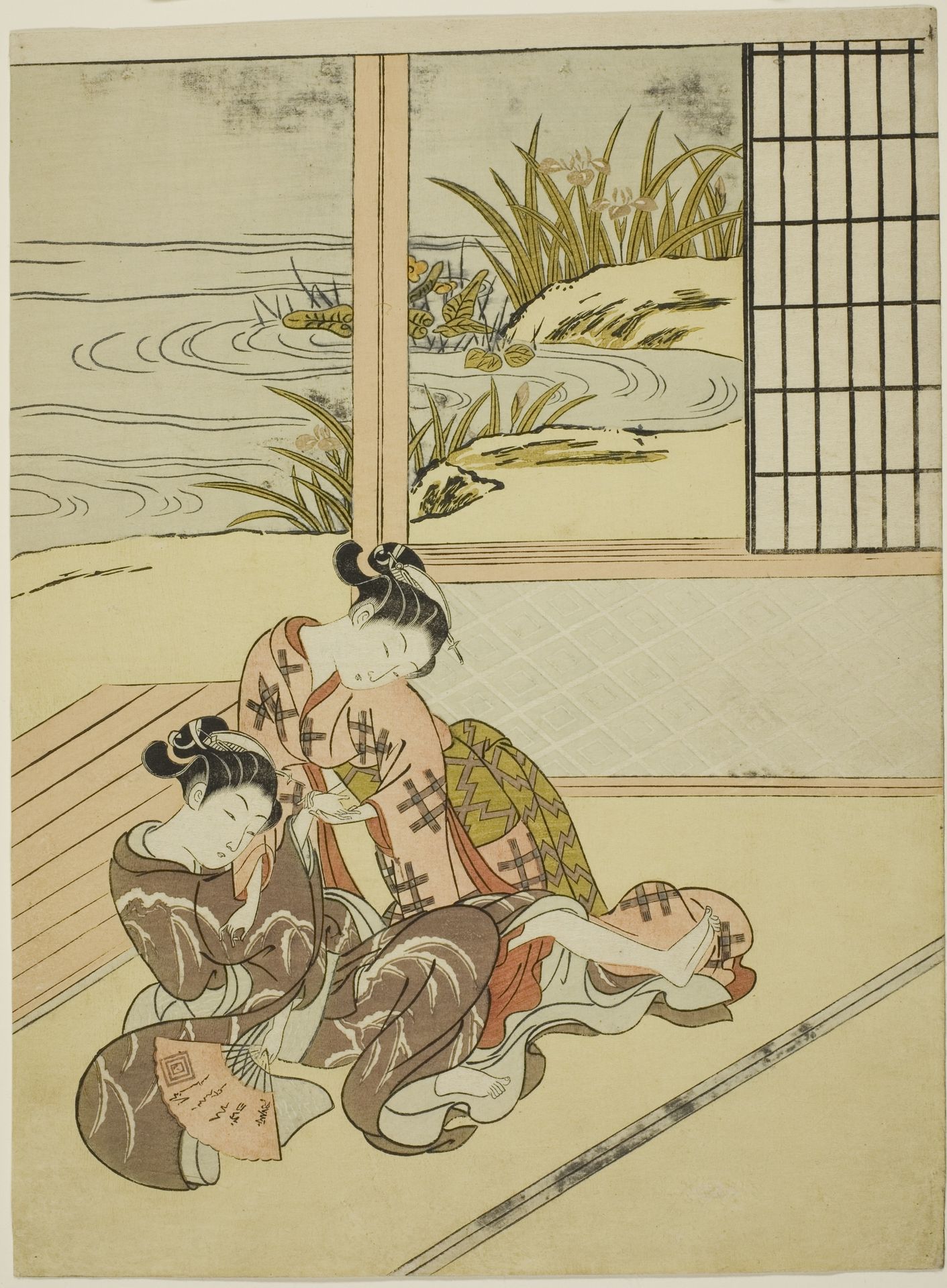
Two Women Strugging for a Fan


Listen to curator's interpretation
Curatorial notes
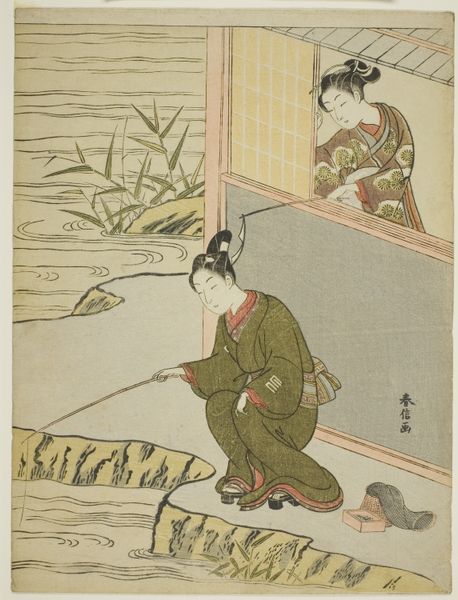
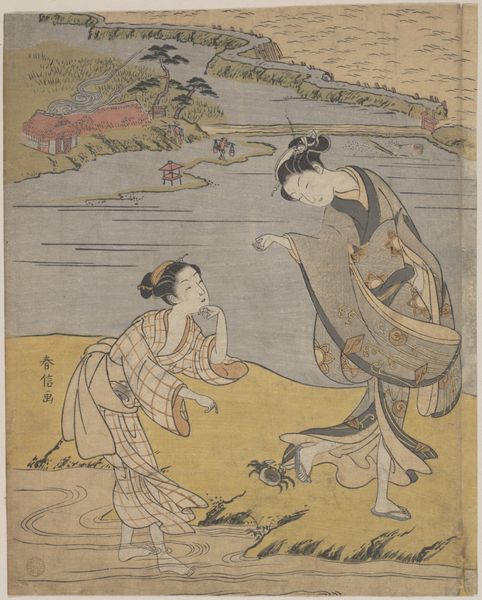
Editor: Suzuki Harunobu’s "Two Women Struggling for a Fan," dating back to around 1767-1768. It’s a print, so ink on paper. There’s something so delicate and intimate about this scene. How do you interpret this work, especially considering the social context of Ukiyo-e? Curator: Ukiyo-e, meaning "pictures of the floating world," catered to the burgeoning merchant class in Edo-period Japan. These prints often depicted courtesans, actors, and scenes of everyday life, reflecting a new kind of consumer culture. Now, observe how Harunobu portrays these women. Do you see any commentary on their status or the roles they might play in society? Editor: Well, they seem very ordinary, just two women bickering playfully over a fan. It's not particularly glamorous. Is that deliberate, challenging idealized depictions of women at the time? Curator: Exactly. Harunobu was known for depicting women in a more realistic, less idealized manner compared to some of his contemporaries. Consider also the rise of literacy and print culture. These images were accessible, reproduced widely, and consumed by a diverse audience. In what ways might the availability and distribution of such imagery impact social perceptions and power dynamics? Editor: So it's less about the single image and more about the cumulative effect of these prints circulating in society, influencing how people viewed women and daily life. Almost like proto-mass media shaping public opinion? Curator: Precisely! It invited the public to participate in shaping society. Ukiyo-e democratized access to imagery. Editor: I hadn't thought of it that way before; that access created shared experience and maybe a shared social identity in a rapidly changing city. Curator: Absolutely. The political power of imagery cannot be dismissed, and Harunobu’s work exemplifies how art shapes and reflects society.