1743
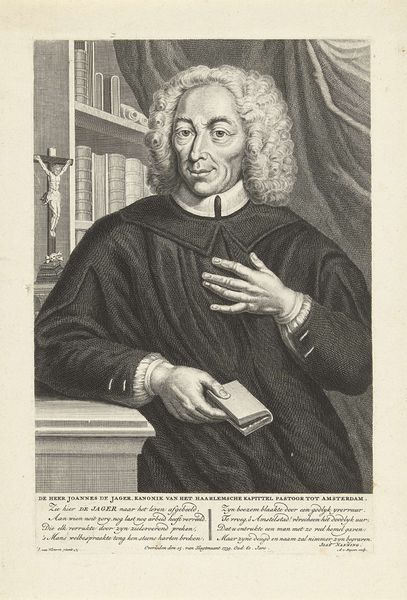
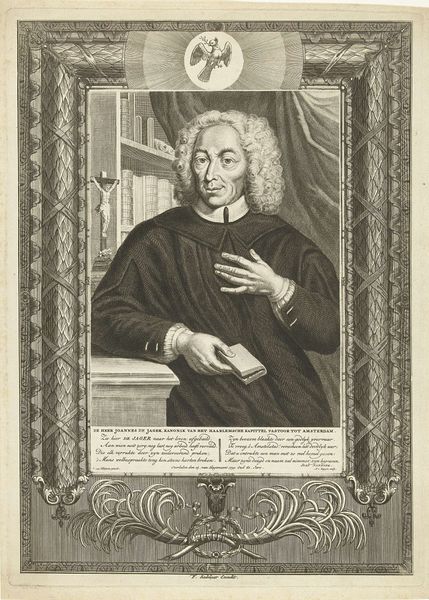
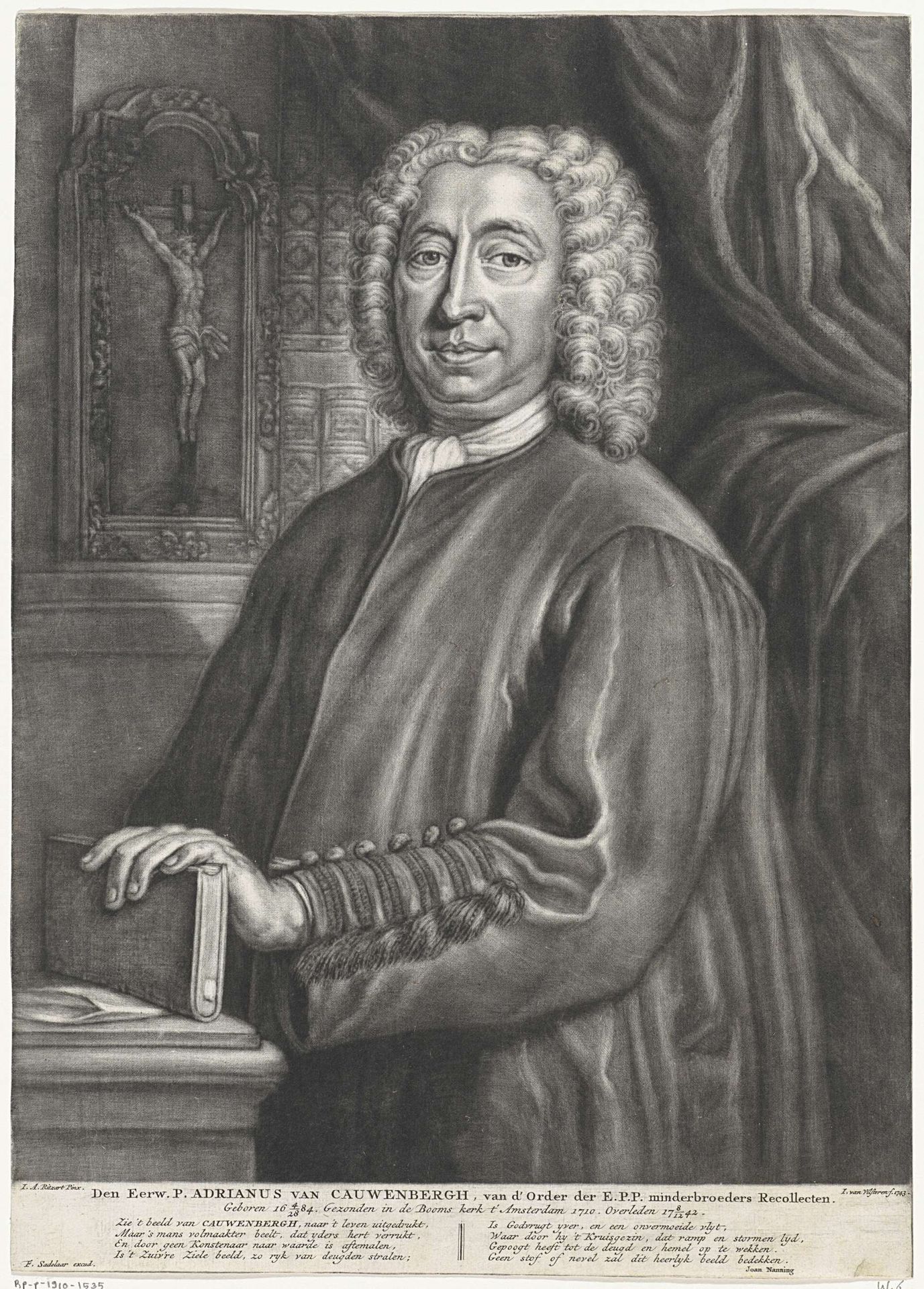
Portret van Adrianus van Cauwenbergh

Listen to curator's interpretation
Curatorial notes
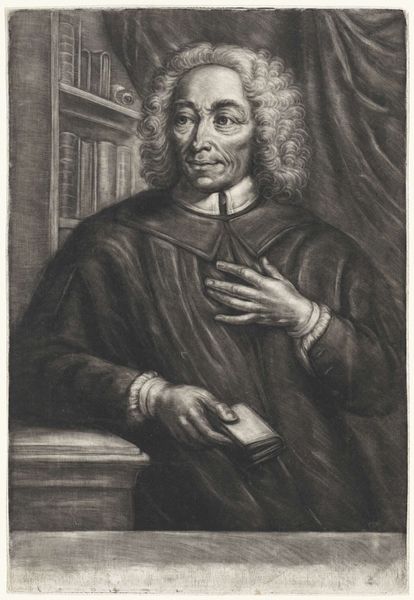
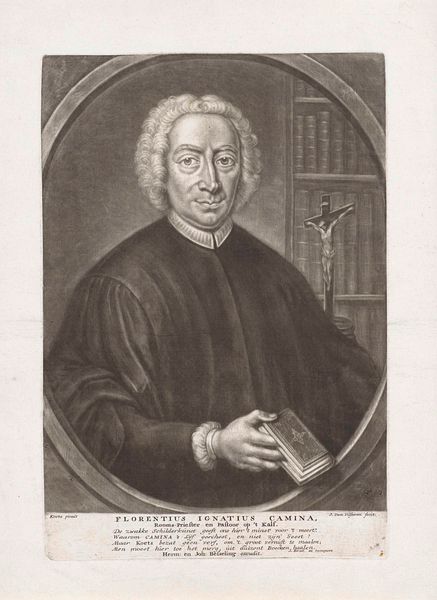
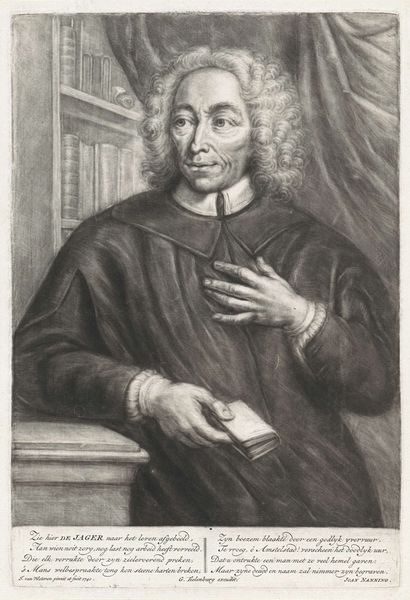
Editor: This is a fascinating engraving! The "Portret van Adrianus van Cauwenbergh," dating back to 1743 and created by Johannes van Vilsteren. It strikes me as a very formal portrait, quite serious in tone, yet there's a curious juxtaposition with the crucifix in the background. What symbols stand out to you? Curator: That crucifix is indeed significant. Note how the figure of Cauwenbergh almost echoes it, a subtle visual alignment. He is presented not just as an individual, but also as embodying piety. The book he holds is less an attribute of learning, and more a symbol of faith itself – a physical manifestation of scripture, perhaps, and a metaphor for adherence to sacred texts. Editor: That’s interesting, I hadn't thought of his stance mirroring the crucifix. The textures are also striking for an engraving; how do they affect the reading of the image? Curator: Textures and their cultural meanings are central here. His elaborate wig, the heavy drape of his robes – they speak of status, of course. Yet, the engraver is not simply depicting opulence. The very *weight* of those textures – amplified through shadow – presses down upon the viewer, impressing the gravity of religious office. Do you perceive any other laden objects or compositional choices? Editor: Perhaps the placement of the book beneath his hand – it feels almost like he is guarding the contents and truth it possesses. Is the symbolic placement of objects typical of Baroque portraiture? Curator: Precisely. This era loved such embedded meanings, as cultural artifacts. Think of how potent each carefully arranged element becomes in shaping the cultural memory of the subject! I am glad we thought about what this work truly meant. Editor: It's given me much to think about! I’ll never look at Baroque portraits quite the same way again.