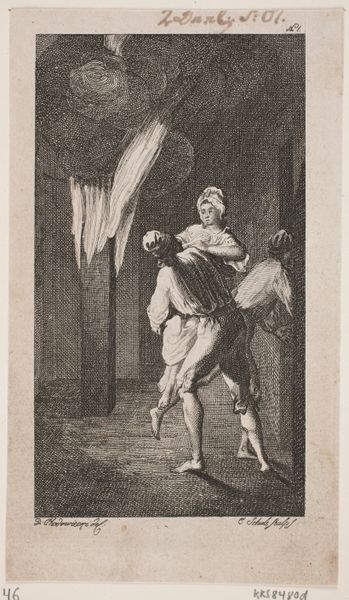
Half ontklede man duwt deur dicht voor binnenkomend kamermeisje 1848 - 1866
0:00
0:00

clauderegnier
Rijksmuseum
Dimensions: height 278 mm, width 210 mm
Copyright: Rijks Museum: Open Domain
Editor: This is "Half ontklede man duwt deur dicht voor binnenkomend kamermeisje"—wow, quite a mouthful—made sometime between 1848 and 1866, currently residing in the Rijksmuseum. It looks like colored pencil and watercolor... It feels almost like a comedic scene captured, kind of theatrical. What strikes you about this piece? Curator: Well, consider the labor implied in its creation. The artist painstakingly rendered this scene using colored pencils and watercolors, relatively accessible materials. Think about the market for such images—who was buying and consuming this type of artwork in the mid-19th century? Editor: So you're saying its value comes from the social context of the drawing and the labour that went into creating it, not the image itself? Curator: Exactly. It's a genre scene, domestic intimacy being interrupted, painted by Claude Régnier, yes, but how was it distributed? Was it a print? What does this imply about the artist's economic relationship to the work? Notice also the textures rendered – the door’s smooth panels versus the wrinkled clothing on the floor. The image itself becomes a commodity, a reflection of bourgeois desires and anxieties surrounding class and gender roles, and how are the working class represented. Editor: I never considered those class tensions before when looking at art of this period. So instead of focusing on just the story within the drawing, we can look at how it was made and shared as a product? Curator: Precisely. How the means of production and consumption shape the narrative itself. Who has the means to produce images, and who consumes them? And more important what images do they create of the working classes to confirm their class superiority? Editor: That's fascinating, a completely different way of understanding the artwork. I will definitely look at art differently now! Curator: Excellent! It’s all about tracing the social life of art, understanding it as part of a broader network of labor and exchange.
Comments
No comments
Be the first to comment and join the conversation on the ultimate creative platform.
 Collect
 React
React Comment
More like this