About this artwork
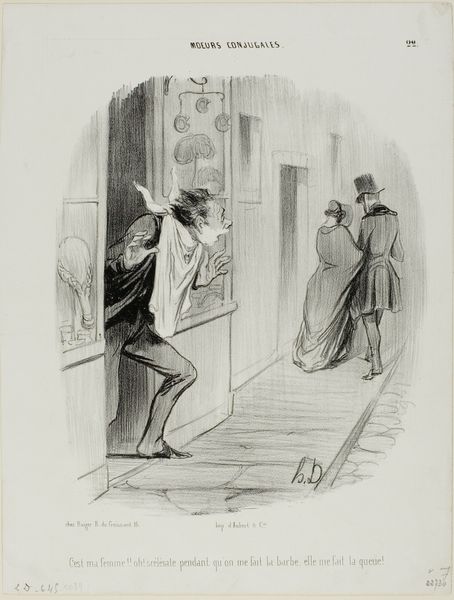
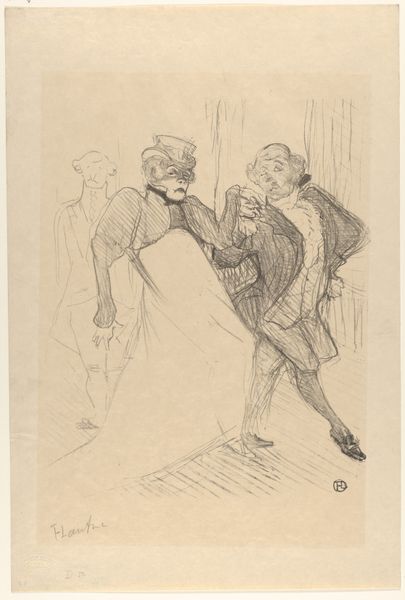
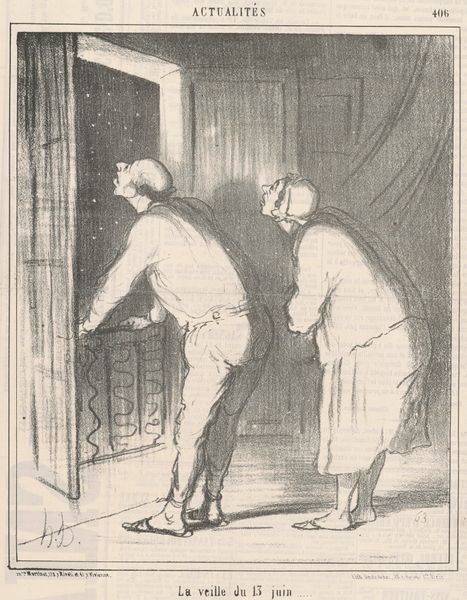
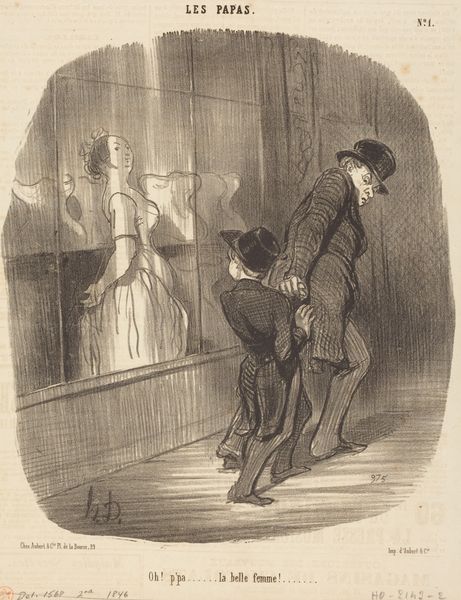
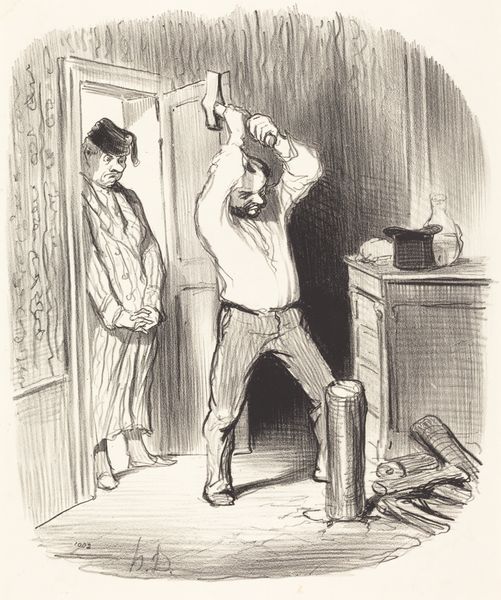
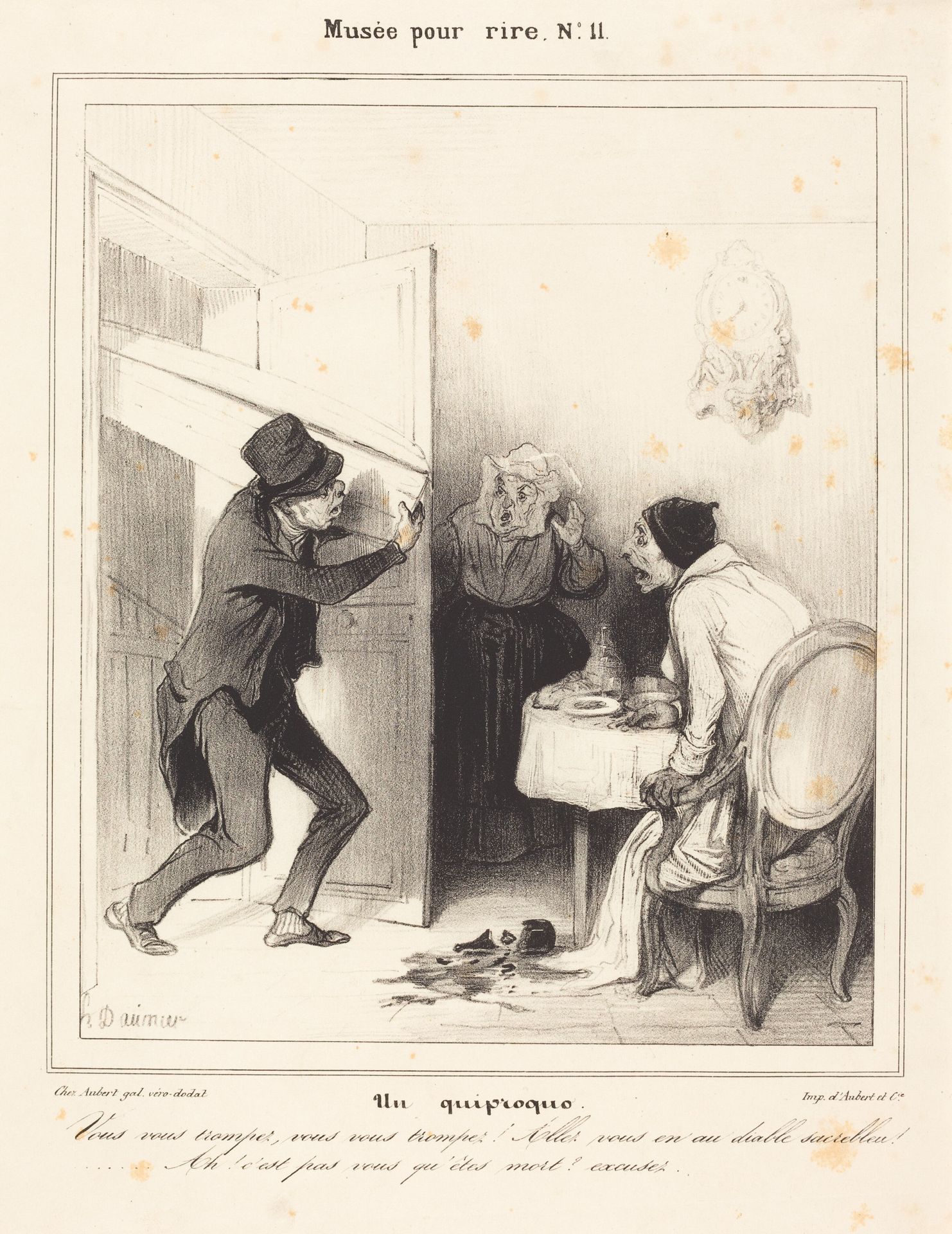
Editor: Here we have Honoré Daumier's 1838 lithograph, "Un quiproquo - Vous vous trompez... allez... au diable...". The exaggerated expressions and clumsy body language of the characters give it a very farcical feel. What’s your interpretation of this print? Curator: Well, from a historical viewpoint, Daumier was working in a France ripe with social and political tension, cleverly using caricature to critique bourgeois society under the guise of humour. Lithography was also becoming a powerful tool for mass communication at the time. What role do you think the print’s wide circulation might have played? Editor: I hadn't thought about the social impact of printing technology! It makes sense that this commentary could spread far and wide and would certainly spark conversations and critiques. Curator: Exactly! Think about the title, which is French for "a misunderstanding." Daumier stages the embarrassment, the discomfort, almost like theater. Do you notice how the composition places the intruder versus the shocked reactions of those within? Editor: I see it now, he's used this staged confrontation to comment on social interactions and the clash of expectations and realities in a humorous way. It definitely adds to that farcical element. Curator: Precisely! And beyond humor, these works played a critical role in shaping public opinion and critiquing the establishment. It underscores art's social agency. Editor: It is interesting to understand this piece of art with more knowledge of its context! Curator: Yes, examining art through its historical lens helps us decode how societal values, like humor and critiques of class, get embedded within the work.
Un quiproquo - Vous vous trompez... allez... au diable...
1838


Artwork details
- Medium
- lithograph, print
- Copyright
- National Gallery of Art: CC0 1.0
Tags
lithograph
caricature
romanticism
genre-painting
Comments
Be the first to share your thoughts about this work.
About this artwork
Editor: Here we have Honoré Daumier's 1838 lithograph, "Un quiproquo - Vous vous trompez... allez... au diable...". The exaggerated expressions and clumsy body language of the characters give it a very farcical feel. What’s your interpretation of this print? Curator: Well, from a historical viewpoint, Daumier was working in a France ripe with social and political tension, cleverly using caricature to critique bourgeois society under the guise of humour. Lithography was also becoming a powerful tool for mass communication at the time. What role do you think the print’s wide circulation might have played? Editor: I hadn't thought about the social impact of printing technology! It makes sense that this commentary could spread far and wide and would certainly spark conversations and critiques. Curator: Exactly! Think about the title, which is French for "a misunderstanding." Daumier stages the embarrassment, the discomfort, almost like theater. Do you notice how the composition places the intruder versus the shocked reactions of those within? Editor: I see it now, he's used this staged confrontation to comment on social interactions and the clash of expectations and realities in a humorous way. It definitely adds to that farcical element. Curator: Precisely! And beyond humor, these works played a critical role in shaping public opinion and critiquing the establishment. It underscores art's social agency. Editor: It is interesting to understand this piece of art with more knowledge of its context! Curator: Yes, examining art through its historical lens helps us decode how societal values, like humor and critiques of class, get embedded within the work.
Comments
Be the first to share your thoughts about this work.