c. early to mid 19th century
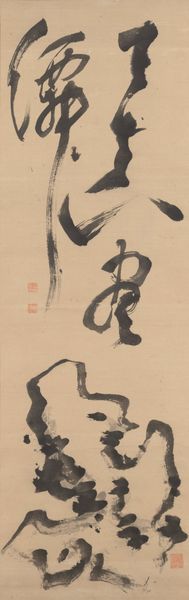
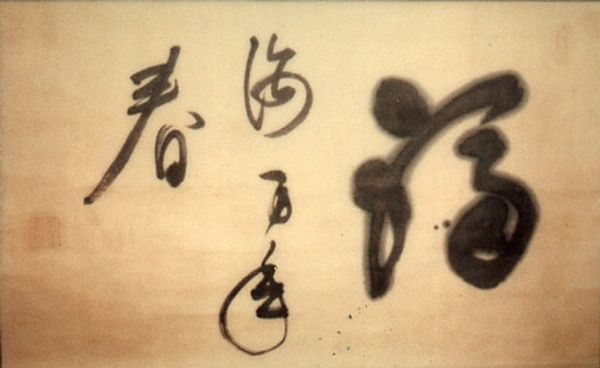
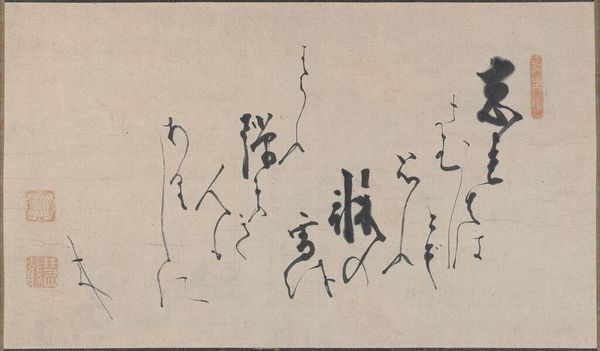
Sound of waves


Listen to curator's interpretation
Curatorial notes
Editor: This piece is called "Sound of Waves," created by Kikuchi Gozan sometime in the early to mid-19th century. It's ink on paper, part of the Minneapolis Institute of Art collection. The calligraphy itself, the brushstrokes, feel so intentional and powerful. What do you see in this work, looking beyond the aesthetic qualities? Curator: Well, I'm immediately drawn to the materiality of the piece. Look at the paper itself - probably hand-made, think of the labor involved. Its texture influences how the ink is absorbed, creating these variations in tone. And the ink, how was it produced? What were the social conditions surrounding its creation and distribution? Those questions are vital. Editor: That's interesting! I hadn't really thought about the production of the materials. Curator: Exactly! This wasn't just a simple purchase at an art supply store. It was about the procurement of resources, skilled craftsmanship. Even the seals, tell us about trade networks and connoisseurship within its contemporary art market, something that traditional analyses of calligraphy don't usually focus on. What was the paper's journey, what's its source? What social class could afford such paper and ink? Editor: So you're saying understanding those economic factors enriches our appreciation of even the most seemingly simple artwork. The process creates the art, almost as much as the artistic talent does. Curator: Precisely. This piece is less about the artist’s singular genius, and more about the web of material production and cultural consumption that allowed it to exist. Editor: Wow, that’s given me a totally new way of considering how artwork came to be, really situating the work in time and the realities of available resources. Curator: That's the core of understanding its full cultural and historical resonance, especially concerning an object from the 19th century when international and local trade systems where ever growing in complexity.