
Curatorial notes
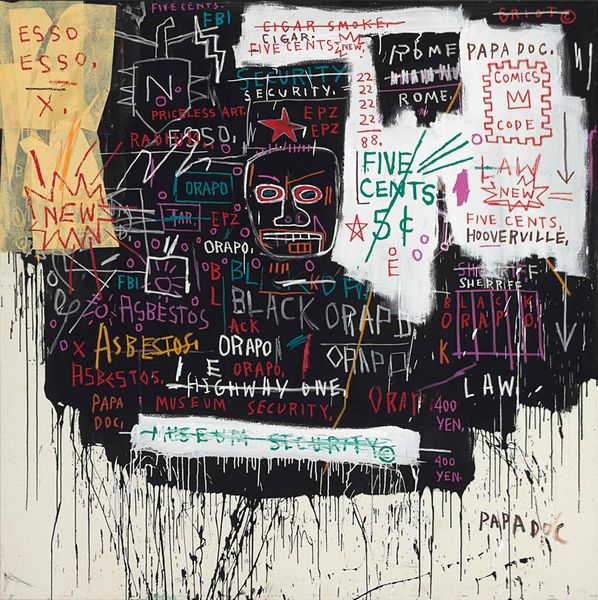
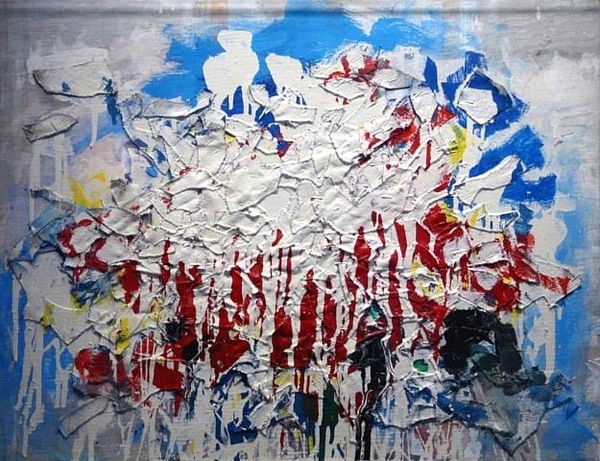
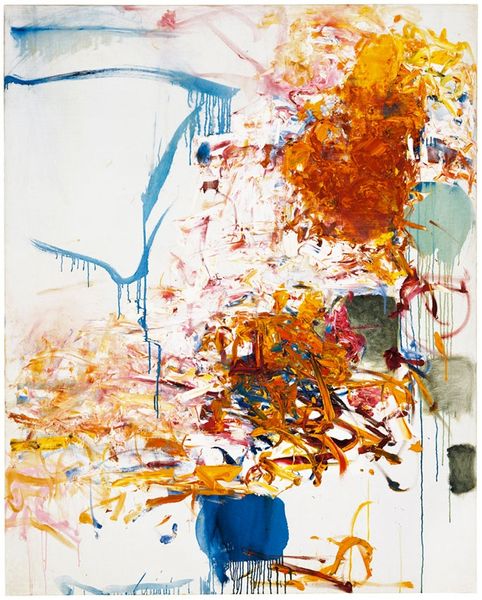
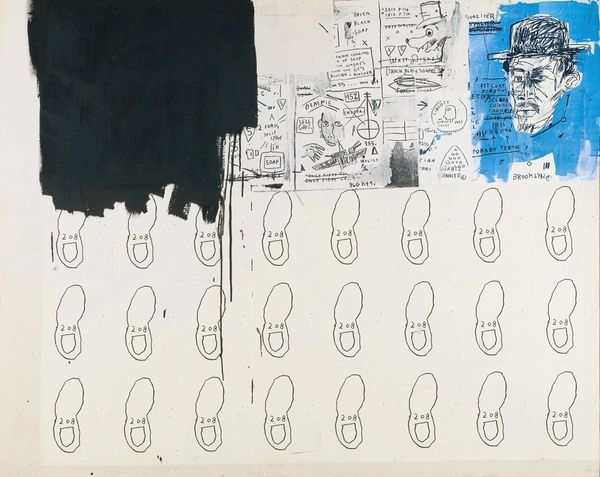
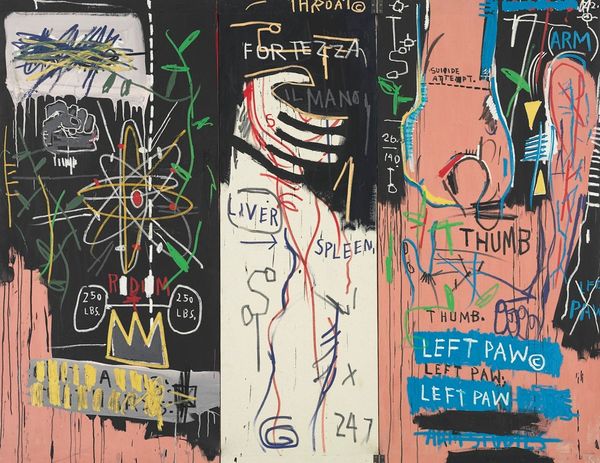
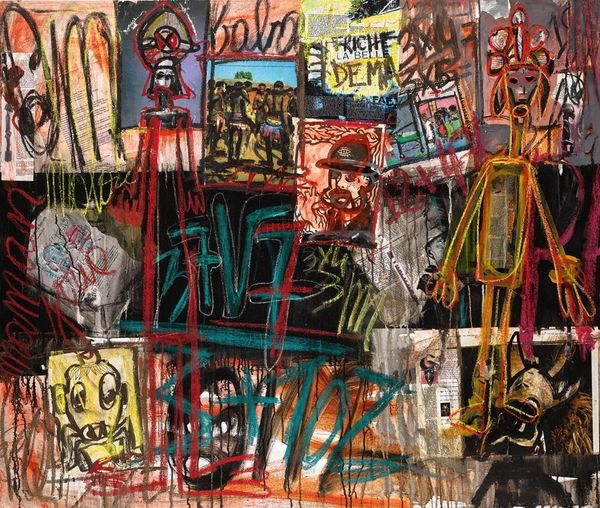
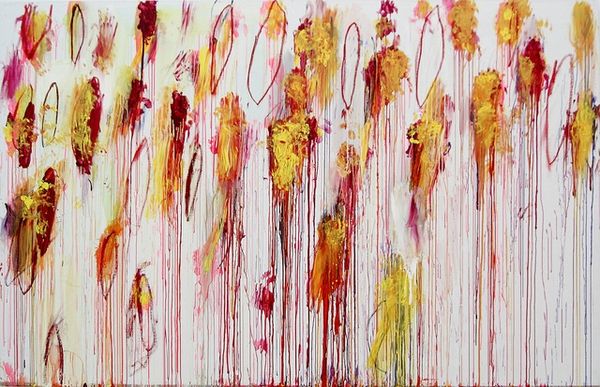
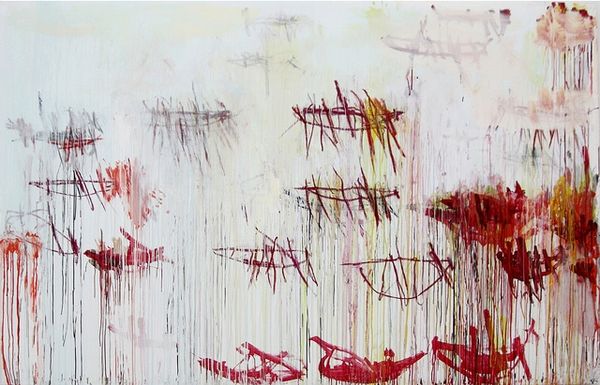
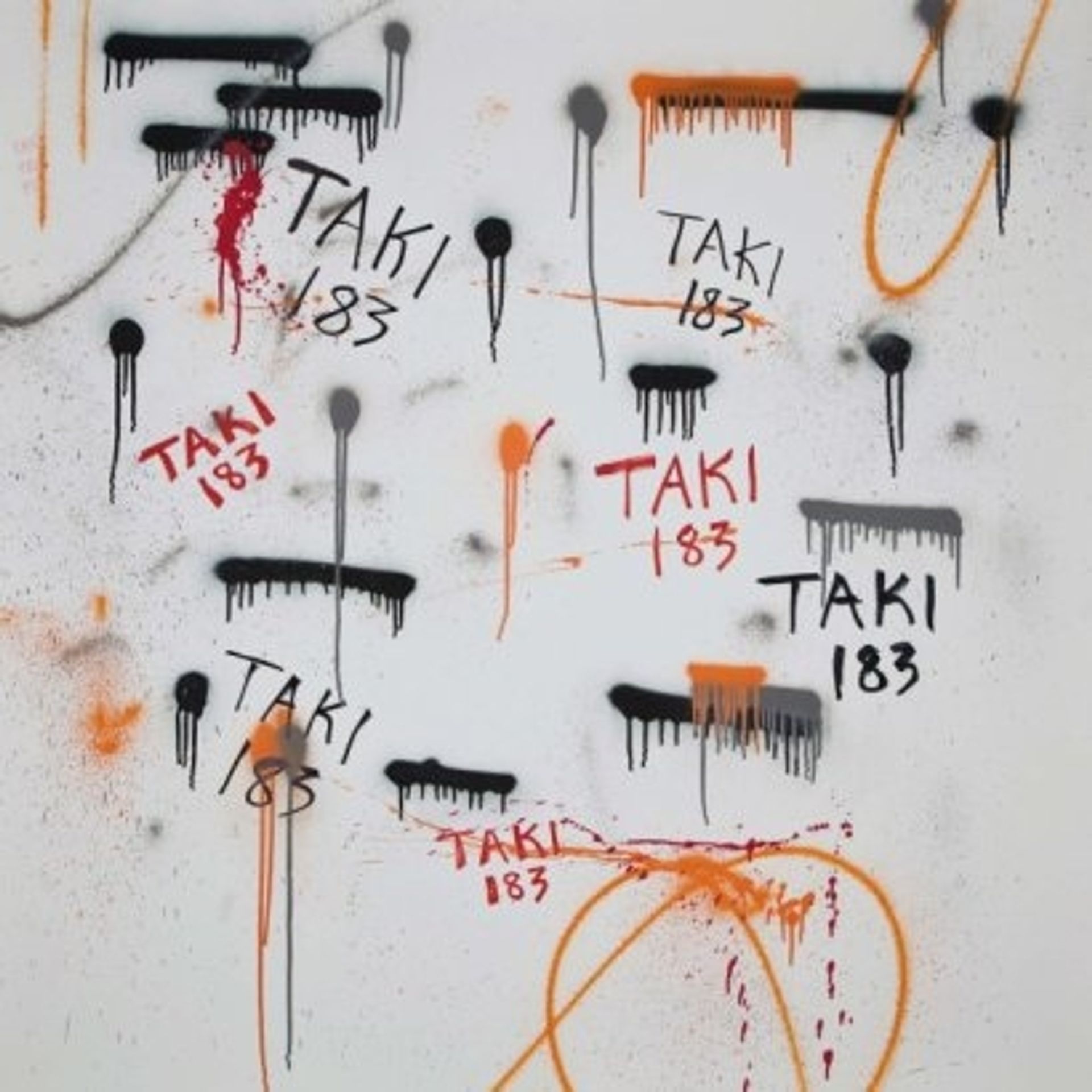
Curator: So, here we have an untitled work by TAKI 183. It seems to primarily employ acrylic paint and stencils. What are your first impressions? Editor: Chaotic, but deliberate. It evokes the visual language of tagging and street art, like a palimpsest of urban experience. There’s a raw energy here, a feeling of… marking territory. Curator: It’s fascinating to see this “tagging” elevated to gallery status. The very act of marking – repeatedly stenciling “TAKI 183” – calls into question the art world’s gatekeeping. It uses the spray can and stencil, typical tools of the street artist. What is it about this persistent repetition? Editor: Think about the power embedded in a name, especially one circulated so widely, even illicitly. “TAKI 183” becomes an emblem, almost a mythical figure, representative of a specific time, and the entire culture of graffiti writing in New York. Each instance of the name, slightly varied in color and application, accumulates meaning. Curator: Indeed. The drips and imperfections become intrinsic to the work. They highlight the physical process, and draw our attention to the inherent tension of how materials behave. Look at the variations in how the different colours have been applied. Some drips more than others – I wonder what accounts for that? Editor: These colours too. Black, grey, red, and orange – primal hues that activate our emotions, and suggest different tones. The black and grey drips give a shadowy, urgent mood. The orange and red almost read as defiance – the artist is willing to stand out! It has become a symbol of underground culture that eventually pushed its way to mainstream attention. Curator: And what was once subversive can easily become commodified, displayed on a gallery wall… almost sanitized. Does that change how you read the work, knowing its context may be completely transformed? Does that alter the intended message? Editor: I think it adds another layer, inviting reflection on how symbols shift across different environments, losing or gaining potency with context. It raises crucial questions about art and power. Curator: An intriguing point. It encourages us to consider not only what is depicted, but how art, labor and material circumstances combine to influence meaning. Editor: It all comes down to reading those signs, decoding those layers, doesn’t it? A simple tag reveals a story about identity and place.