About this artwork
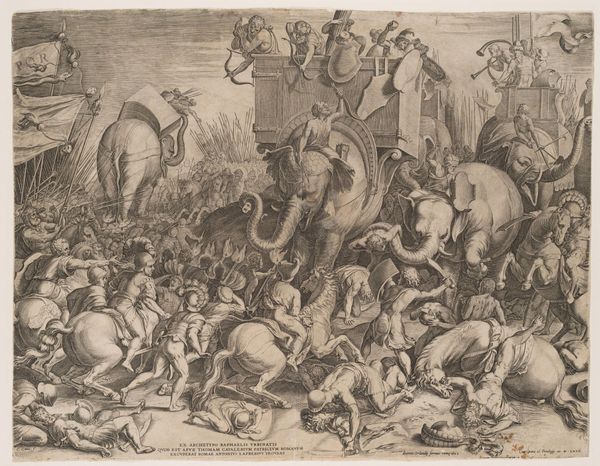
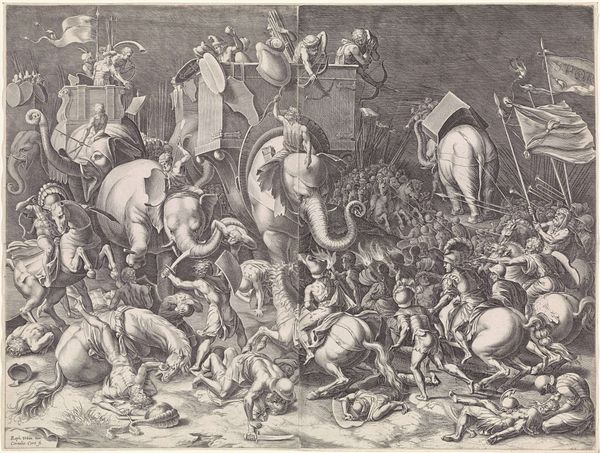
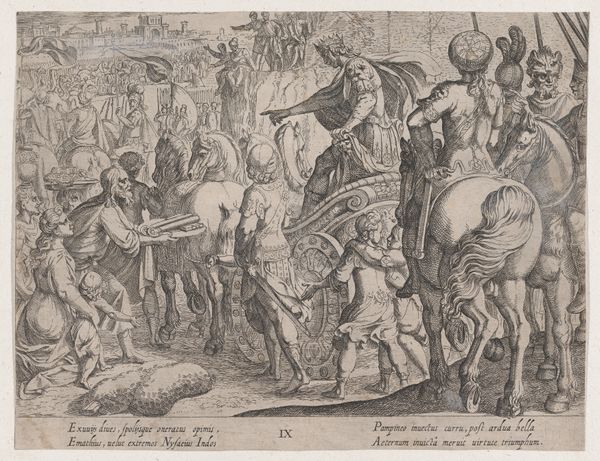
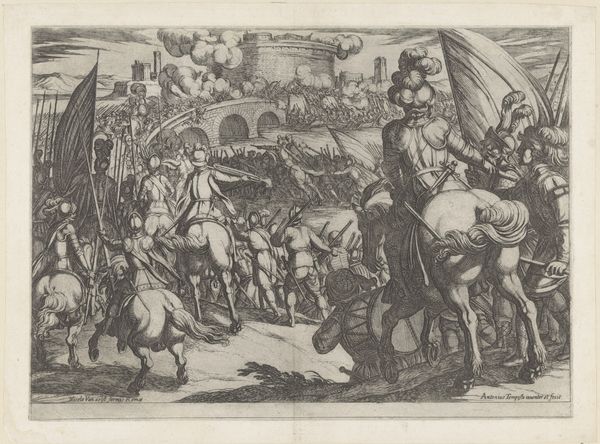
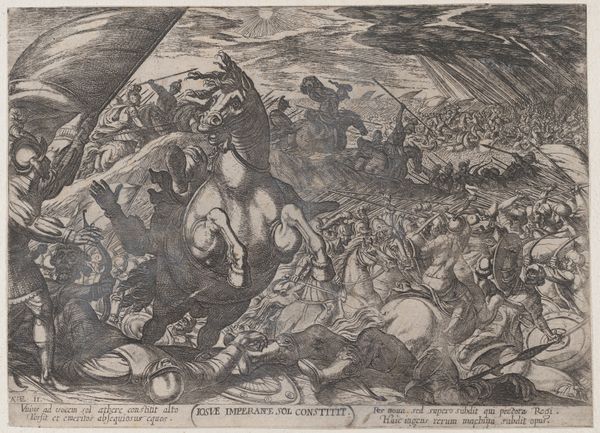
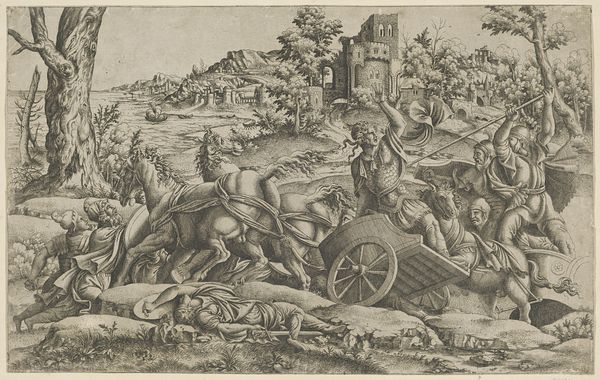
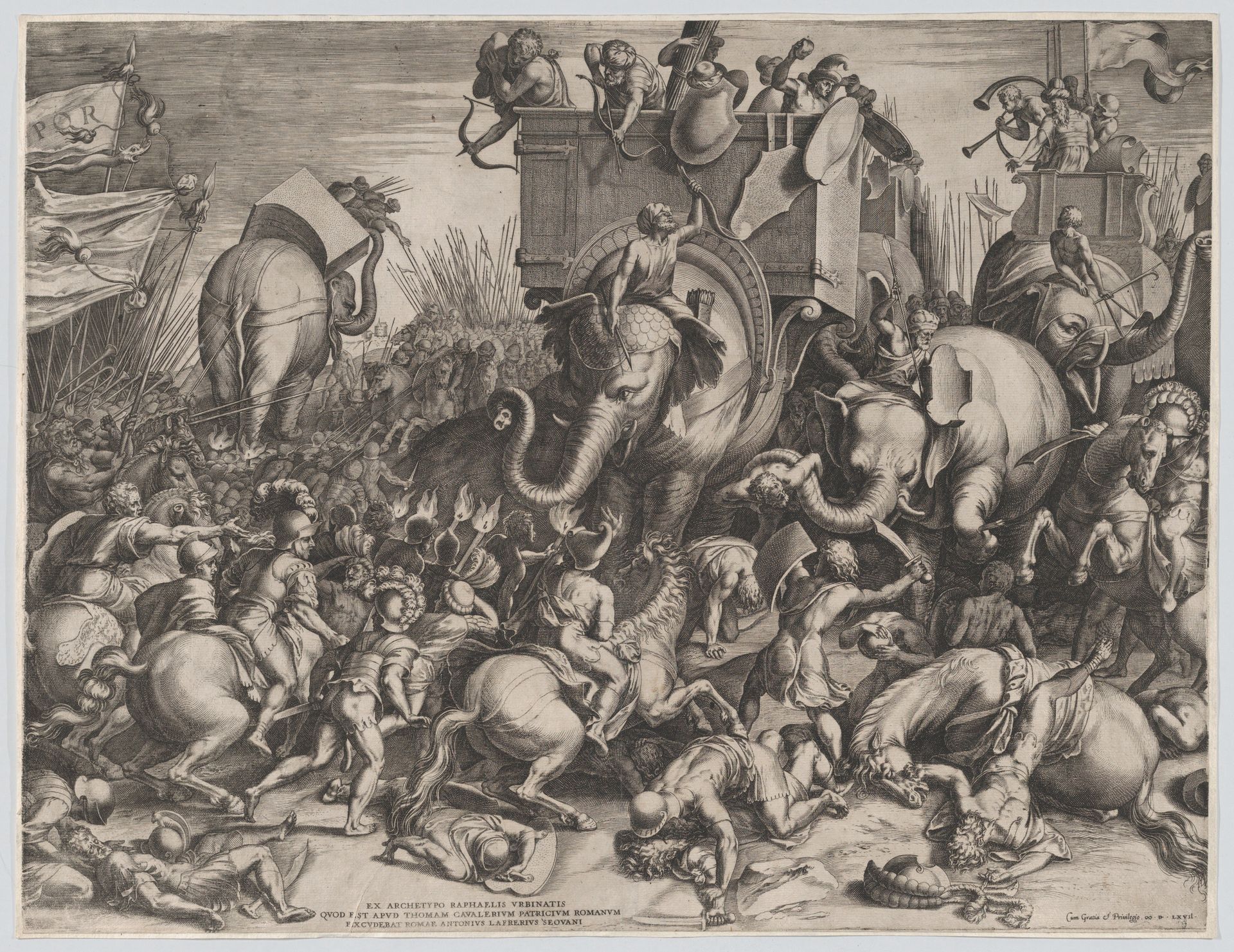
Cornelis Cort made this print, "The Battle Between Scipio and Hannibal at Zama", in the late 16th century, a time when Europe was grappling with its relationship to its classical past. Here, Cort depicts a pivotal moment in the Second Punic War, framing it through a lens that emphasizes Roman strength and order. But what does it mean to represent a battle where one side, Carthage, was not European? Consider the power dynamics embedded in such a portrayal. The print not only illustrates a historical event, but also speaks to the Renaissance fascination with power, empire, and the "other." Look closely, and you'll notice how Cort uses the chaos of battle to highlight Roman victory, subtly reinforcing a narrative of European dominance that was gaining traction at the time. The emotional intensity of the scene serves to draw viewers into this narrative, implicating us in its complex legacy. How might this image have been different if seen through Carthaginian eyes?
The Battle Between Scipio and Hannibal at Zama 1550 - 1578


Artwork details
- Medium
- drawing, print, engraving
- Dimensions
- sheet: 16 5/16 x 21 1/4 in. (41.4 x 53.9 cm)
- Location
- Metropolitan Museum of Art, New York, NY
- Copyright
- Public Domain
Tags
drawing
medieval
death
landscape
figuration
11_renaissance
soldier
horse
history-painting
engraving
Comments
No comments
About this artwork
Cornelis Cort made this print, "The Battle Between Scipio and Hannibal at Zama", in the late 16th century, a time when Europe was grappling with its relationship to its classical past. Here, Cort depicts a pivotal moment in the Second Punic War, framing it through a lens that emphasizes Roman strength and order. But what does it mean to represent a battle where one side, Carthage, was not European? Consider the power dynamics embedded in such a portrayal. The print not only illustrates a historical event, but also speaks to the Renaissance fascination with power, empire, and the "other." Look closely, and you'll notice how Cort uses the chaos of battle to highlight Roman victory, subtly reinforcing a narrative of European dominance that was gaining traction at the time. The emotional intensity of the scene serves to draw viewers into this narrative, implicating us in its complex legacy. How might this image have been different if seen through Carthaginian eyes?
Comments
No comments