About this artwork
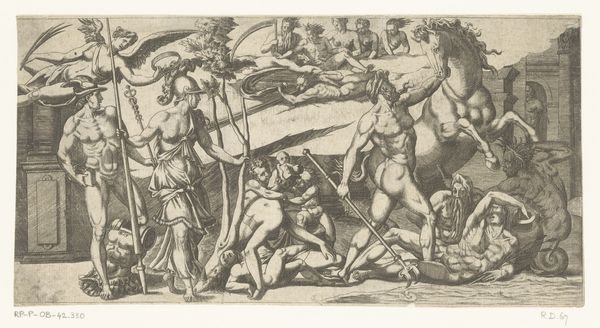
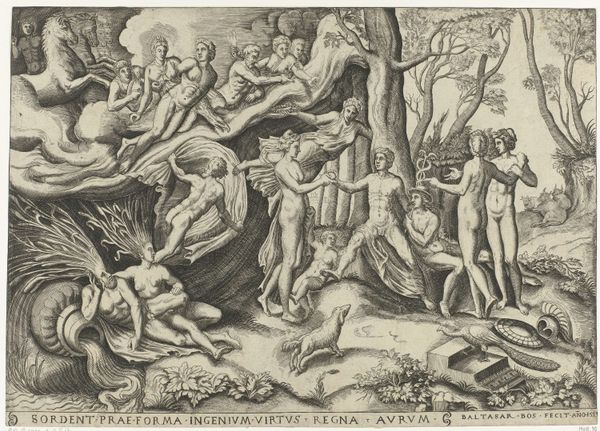
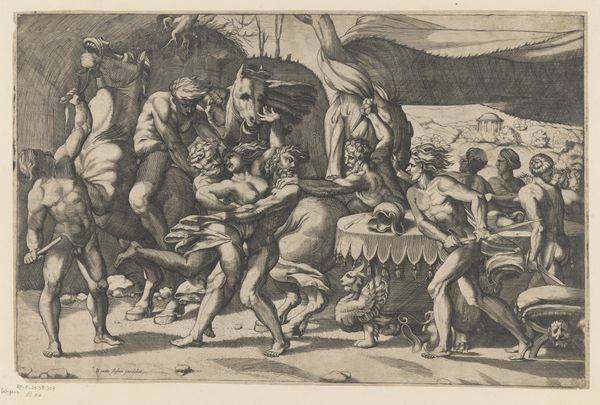
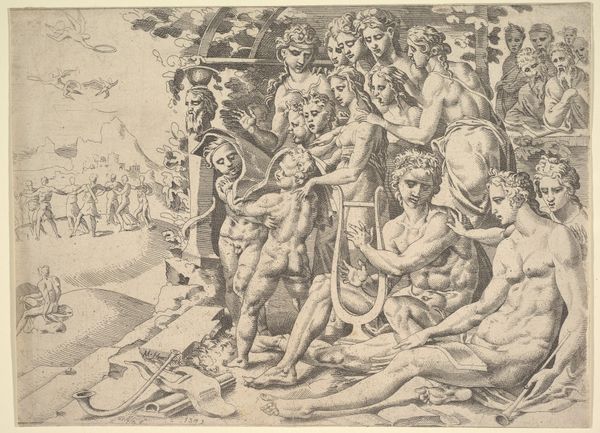
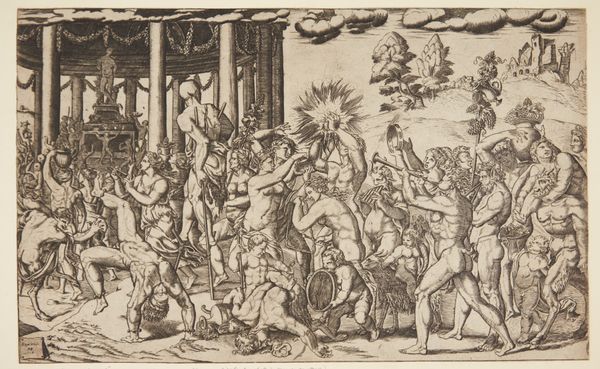
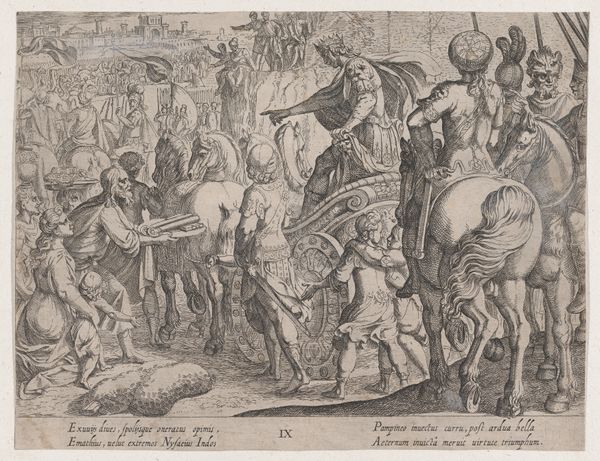
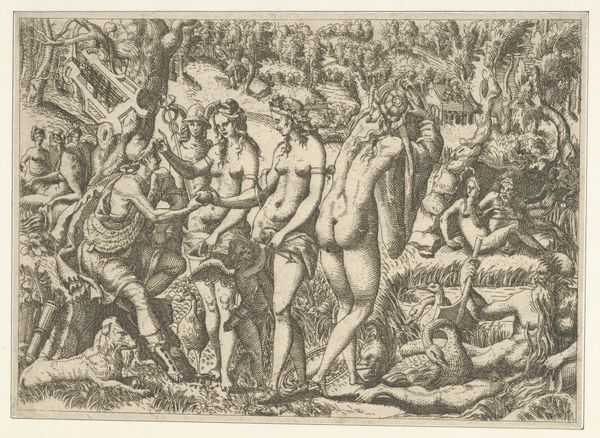
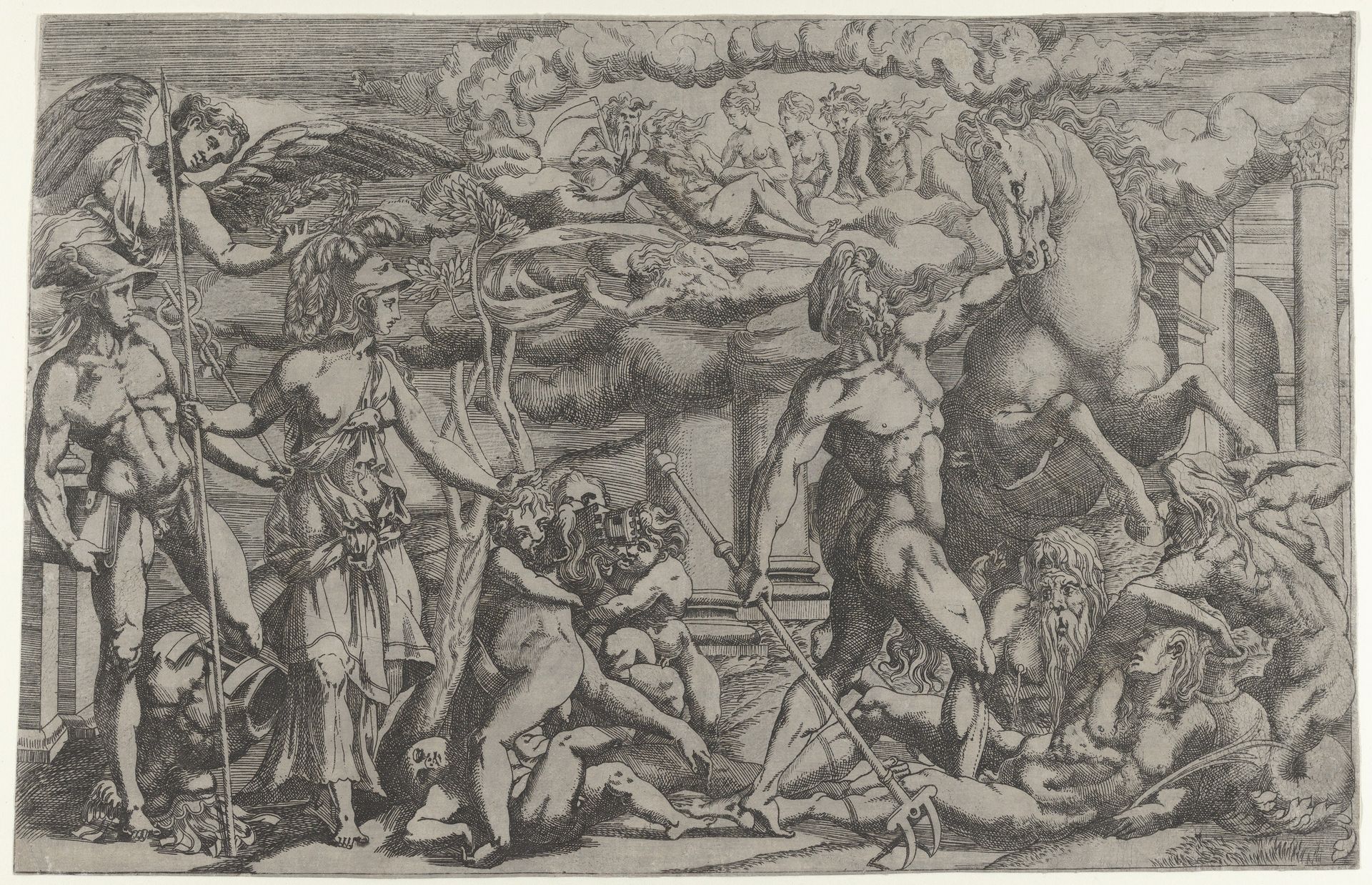
This engraving, made by Antonio Fantuzzi in the 16th century, depicts the mythological contest between Athena and Poseidon. Observe the figures of Athena, with her helmet and olive tree, and Poseidon, wielding his trident, each presenting their gift to the city of Athens. The trident of Poseidon, a symbol of power over the seas, echoes through history, resonating with earlier depictions of gods holding spears or scepters, emblems of authority and control. Consider its likeness to the thunderbolt of Zeus, a weapon of the heavens, and the staff of Asclepius, a symbol of healing. This trident is not merely a tool, but an assertion of dominion, a visual echo of man's eternal struggle to master the forces of nature and the subconscious depths of the collective human experience. The scene evokes a primal drama, tapping into our inherent need for order and understanding. It is a symbol that reappears, transformed yet familiar, in the annals of art history.
Contest between Athena and Poseidon
1540 - 1545


Artwork details
- Medium
- drawing, print, ink, engraving
- Dimensions
- Sheet (trimmed): 10 5/16 × 16 1/8 in. (26.2 × 41 cm)
- Location
- Metropolitan Museum of Art, New York, NY
- Copyright
- Public Domain
Tags
Comments
Share your thoughts
About this artwork
This engraving, made by Antonio Fantuzzi in the 16th century, depicts the mythological contest between Athena and Poseidon. Observe the figures of Athena, with her helmet and olive tree, and Poseidon, wielding his trident, each presenting their gift to the city of Athens. The trident of Poseidon, a symbol of power over the seas, echoes through history, resonating with earlier depictions of gods holding spears or scepters, emblems of authority and control. Consider its likeness to the thunderbolt of Zeus, a weapon of the heavens, and the staff of Asclepius, a symbol of healing. This trident is not merely a tool, but an assertion of dominion, a visual echo of man's eternal struggle to master the forces of nature and the subconscious depths of the collective human experience. The scene evokes a primal drama, tapping into our inherent need for order and understanding. It is a symbol that reappears, transformed yet familiar, in the annals of art history.
Comments
Share your thoughts