About this artwork
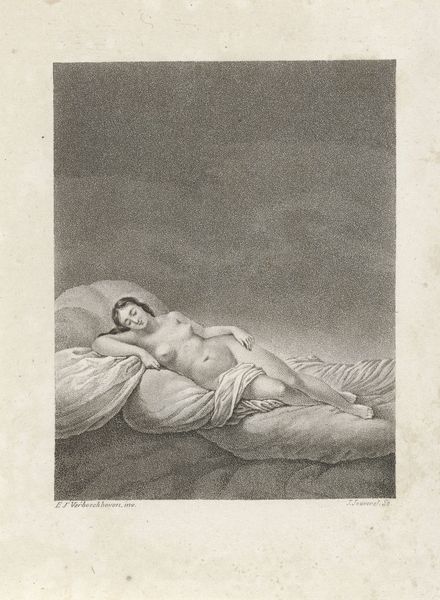
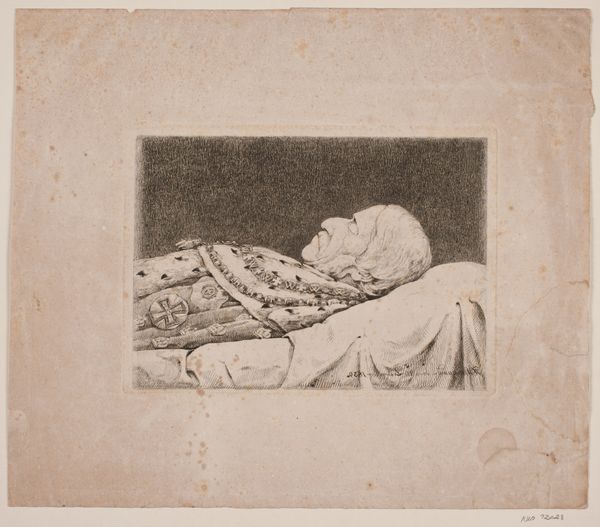
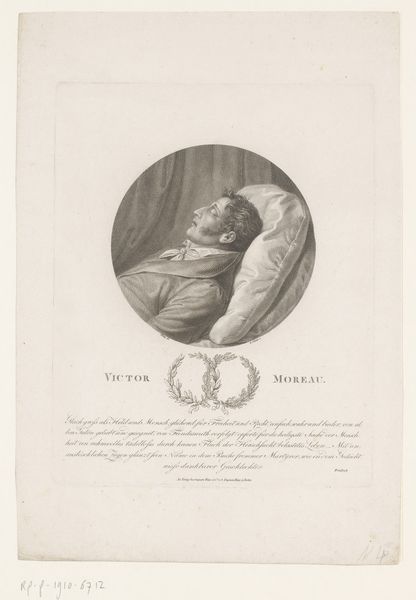
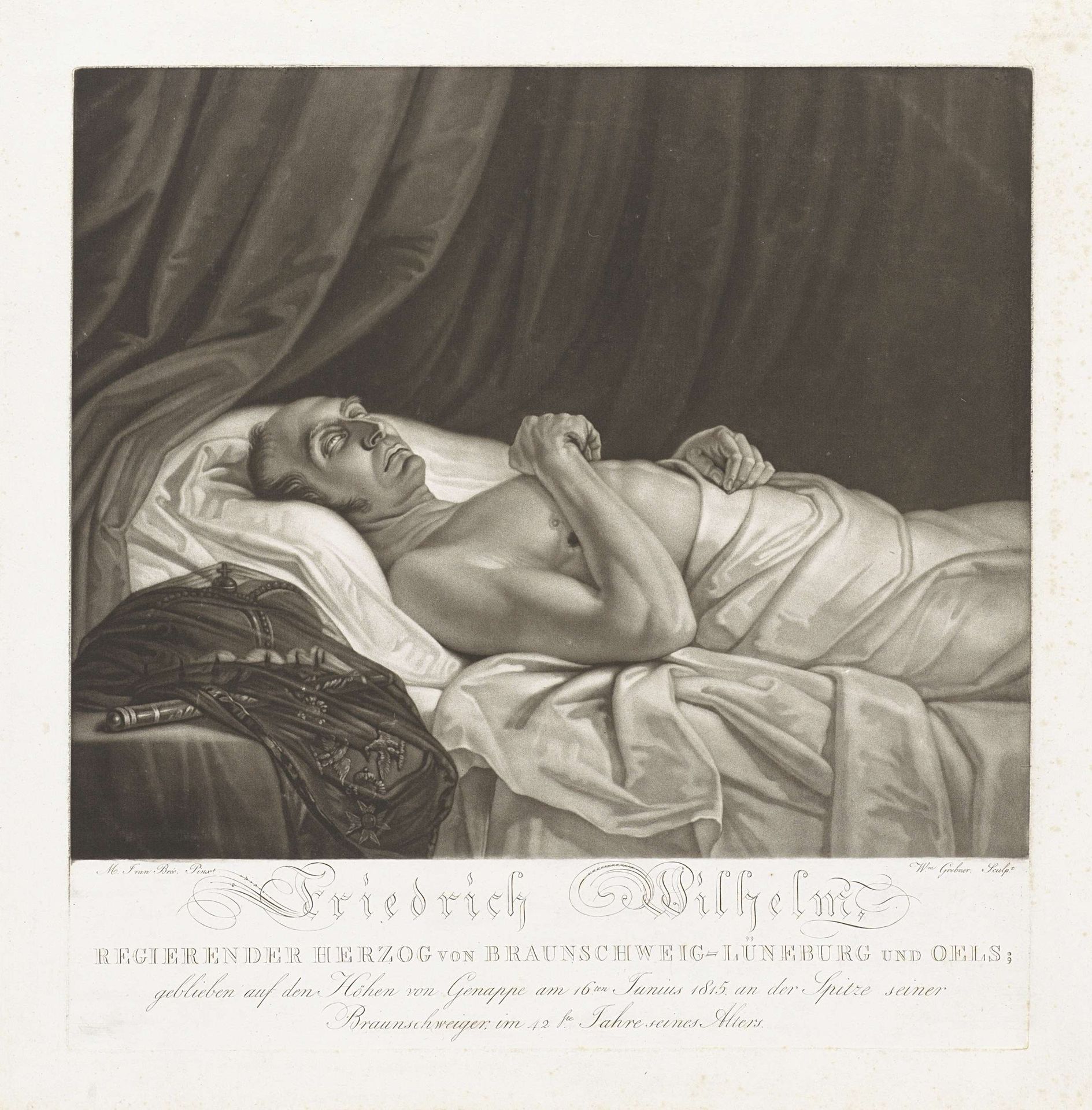
Willem Grebner captured Frederik Willem, Duke of Brunswick-Wolfenbüttel, on his deathbed in this print. Note how the Duke's lifeless body, with its hands clasped, contrasts sharply with his discarded military attire, evoking a sense of profound stillness and the end of earthly struggles. This composition echoes the visual language of earlier Christian iconography depicting the recumbent Christ, or even a saint in repose. Consider the recurring motif of the prone figure in art history—from ancient effigies to Renaissance depictions of death—and the way it signifies not just mortality, but also a transition to another state. The Duke's relaxed posture, set against the backdrop of his abandoned military garments, stirs a potent mix of sorrow and respect, suggesting a connection between personal loss and collective memory. The image, therefore, transcends its immediate subject to touch upon universal themes of death, legacy, and the emotional weight of history.
Frederik Willem, hertog van Brunswijk-Wolfenbüttel op zijn sterfbed
1815 - 1866

Artwork details
- Medium
- engraving
- Dimensions
- height 382 mm, width 373 mm
- Copyright
- Rijks Museum: Open Domain
Tags
Comments
Share your thoughts
About this artwork
Willem Grebner captured Frederik Willem, Duke of Brunswick-Wolfenbüttel, on his deathbed in this print. Note how the Duke's lifeless body, with its hands clasped, contrasts sharply with his discarded military attire, evoking a sense of profound stillness and the end of earthly struggles. This composition echoes the visual language of earlier Christian iconography depicting the recumbent Christ, or even a saint in repose. Consider the recurring motif of the prone figure in art history—from ancient effigies to Renaissance depictions of death—and the way it signifies not just mortality, but also a transition to another state. The Duke's relaxed posture, set against the backdrop of his abandoned military garments, stirs a potent mix of sorrow and respect, suggesting a connection between personal loss and collective memory. The image, therefore, transcends its immediate subject to touch upon universal themes of death, legacy, and the emotional weight of history.
Comments
Share your thoughts