1726
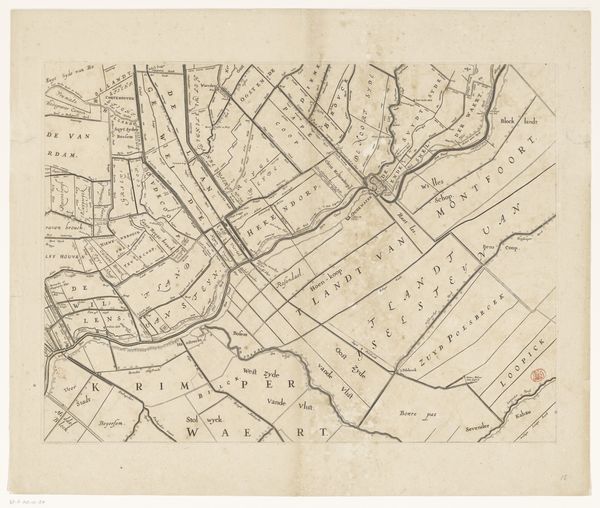
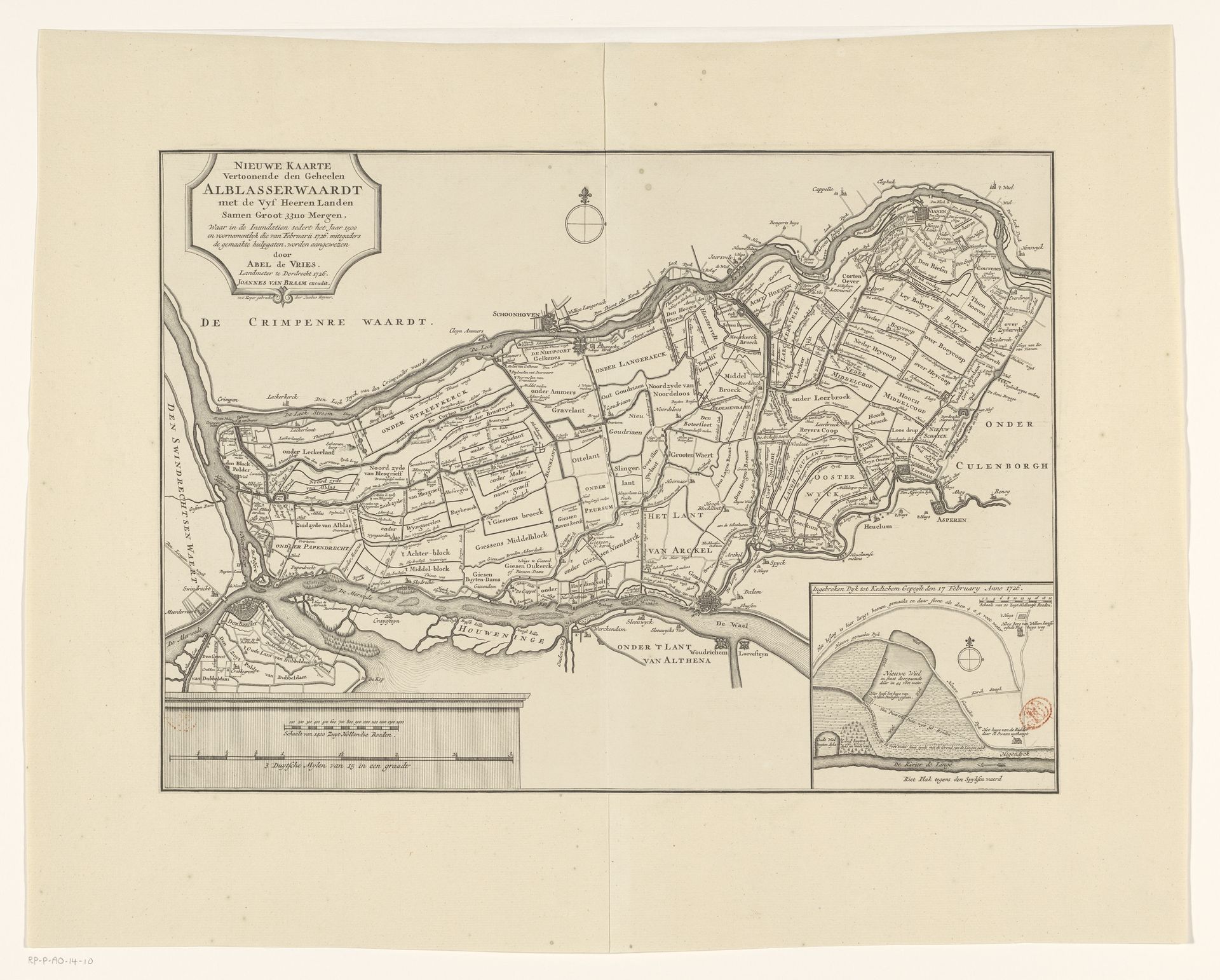
Kaart van de Alblasserwaard en de Vijfheerenlanden

Jacob Keyser
@jacobkeyserLocation
RijksmuseumListen to curator's interpretation
Curatorial notes
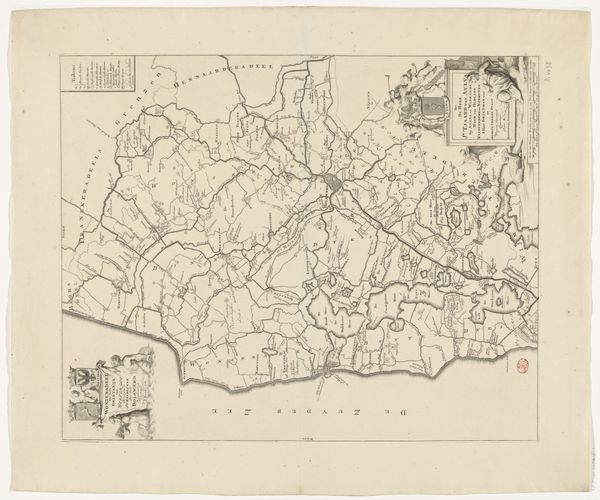
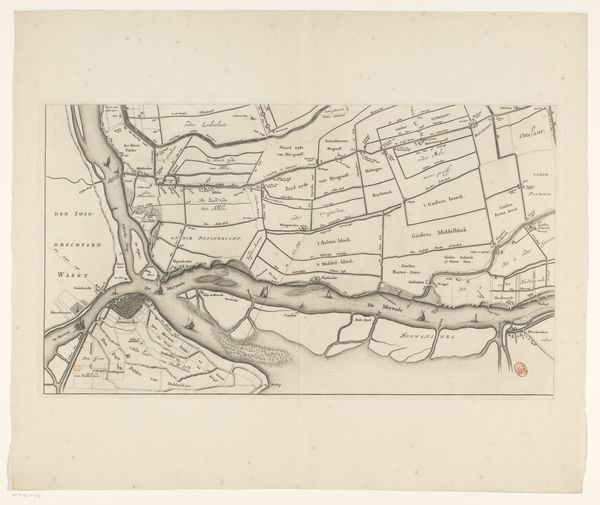
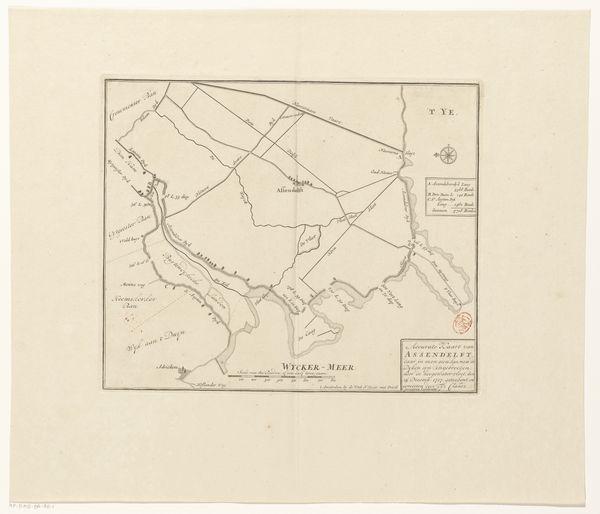
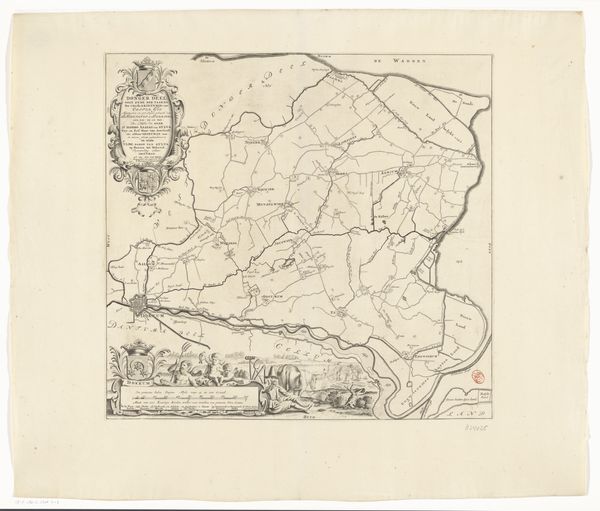
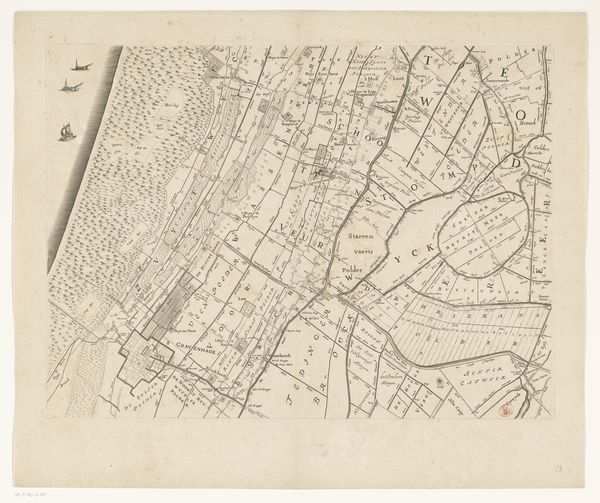
Editor: This is "Kaart van de Alblasserwaard en de Vijfheerenlanden," a 1726 map drawing by Jacob Keyser, currently held at the Rijksmuseum. The intricacy of the lines is amazing, making the region feel like a complex network. What stands out to you from a formalist perspective? Curator: The density of information conveyed through line and spatial organization is indeed remarkable. Note the deliberate separation of the title cartouche and the map's key from the main geographical rendering; these elements function as paratexts that, while adding meaning, remain visually distinct from the represented space. What effect do you believe this separation creates? Editor: It almost elevates the map from purely utilitarian to a kind of… artwork? By isolating those elements, it highlights the care put into their design and lettering, making them almost like framed details. Curator: Precisely. Now consider the negative space within the map itself. See how it emphasizes certain areas through its strategic absence, directing our eye and establishing a visual hierarchy. How does the distribution of empty versus filled areas contribute to the overall composition? Editor: The lack of detail in some areas creates breathing room, highlighting the density and importance of the populated or geographically significant parts. The visual weight seems deliberately distributed. Curator: Indeed. The balance of positive and negative space, and the structured application of line and text, construct a visually compelling representation of spatial relationships and geographical information, one that transcends mere cartography. Editor: I never thought of a map in terms of composition before. Thinking about positive and negative space and visual hierarchy has revealed new dimensions to how it communicates. Curator: It’s through this process of dissecting form and structure that we begin to understand how all art operates beyond its apparent subject matter.