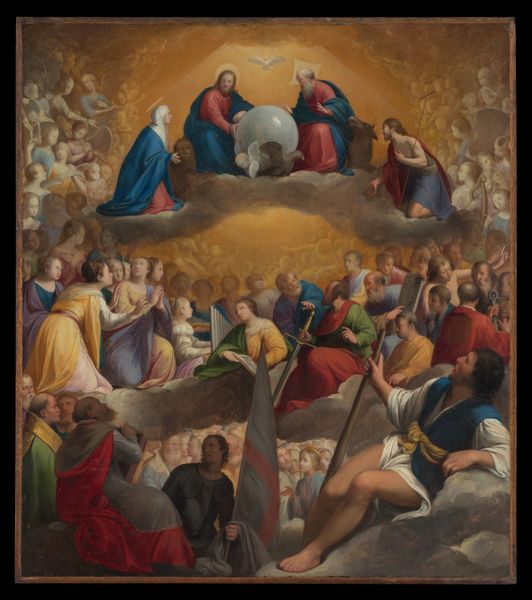
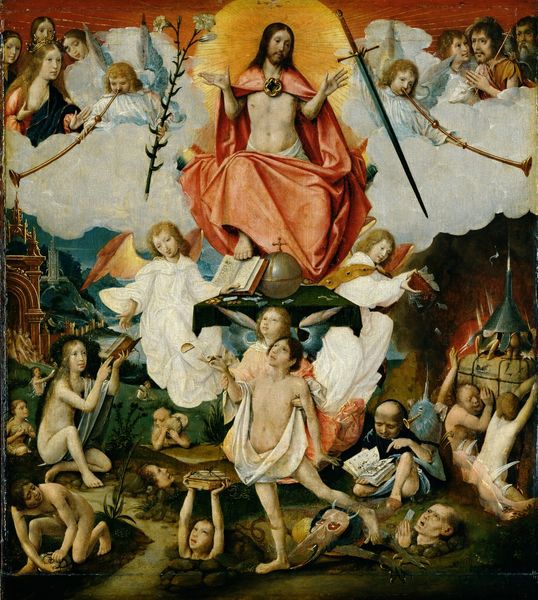
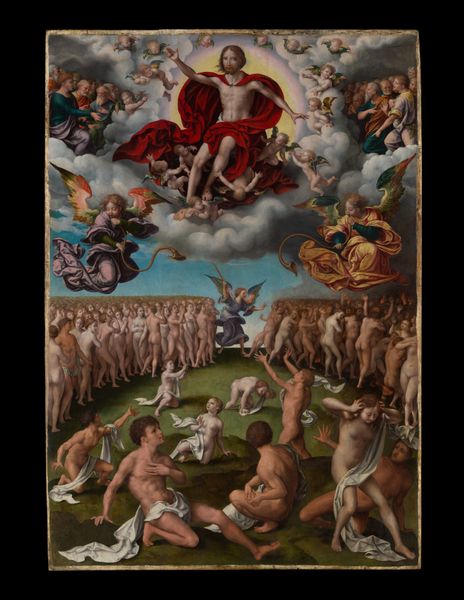
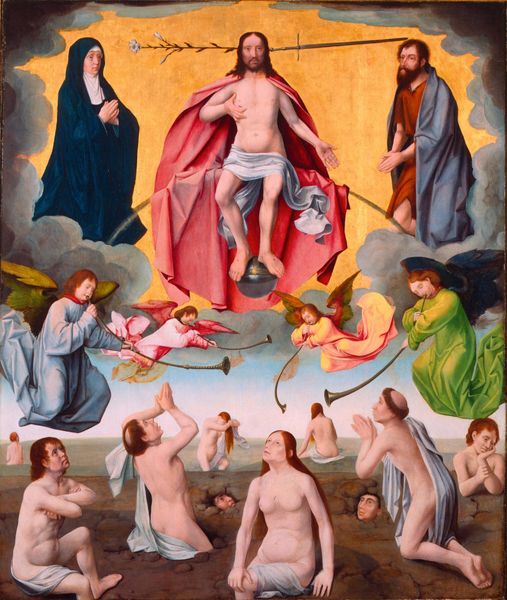
The Last Judgment c. 1550
0:00
0:00


tempera, oil-paint
#
allegory
#
tempera
#
oil-paint
#
mannerism
#
figuration
#
oil painting
#
history-painting
#
italian-renaissance
Dimensions: 11 3/8 x 7 1/2 in. (28.89 x 19.05 cm) (image)11 7/8 x 8 x 1/4 in. (30.16 x 20.32 x 0.64 cm) (panel)20 x 14 3/4 x 2 1/8 in. (50.8 x 37.47 x 5.4 cm) (outer frame)
Copyright: Public Domain
Attributed to Francesco Roviale Spagnolo, this rendering of ‘The Last Judgement’ was painted around 1560 on a wooden panel, using tempera and oil. Consider the inherent qualities of these materials: the relative absorbency of the gesso-prepared wood, the granular, light-reflecting properties of the powdered pigments bound in egg yolk, and the depth and luster imparted by oil glazes. These choices have imbued the artwork with social and cultural significance. Tempera painting on wood panels like this was common during the early Renaissance. The artist would have needed expertise in carpentry, preparing gesso grounds, and grinding and mixing pigments. All this demanded patience and physical labor, indicative of the time invested in production. Looking closely, you’ll notice the dynamic figures and the intricate details achieved through skilled artistry. Understanding these aspects encourages us to reconsider the relationship between fine art and craft, acknowledging the value of materiality, making, and context in comprehending the artwork's full meaning.
Comments

minneapolisinstituteofart over 2 years ago
⋮
When Michelangelo’s Last Judgment in the Sistine Chapel was unveiled in 1541, it elicited great wonder, as well as a thriving business in copies and a heated debate concerning the figures’ nudity. In 1564 the controversy was quenched when strategically placed draperies were painted to cover the most provocative parts. This panel is based on the Sistine model after its censorship. Although a number of figure groups have been eliminated, the overall composition remains largely the same. In particular, it emphasizes the figure of Christ as the supreme judge by isolating him and distancing him from the surrounding choirs of heaven.


Join the conversation
Join millions of artists and users on Artera today and experience the ultimate creative platform.
 Collect
More like this