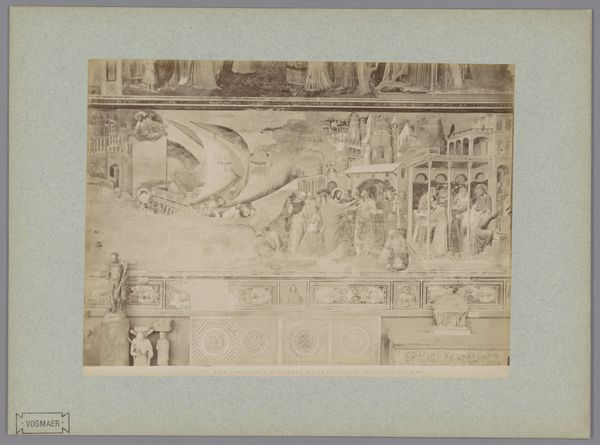
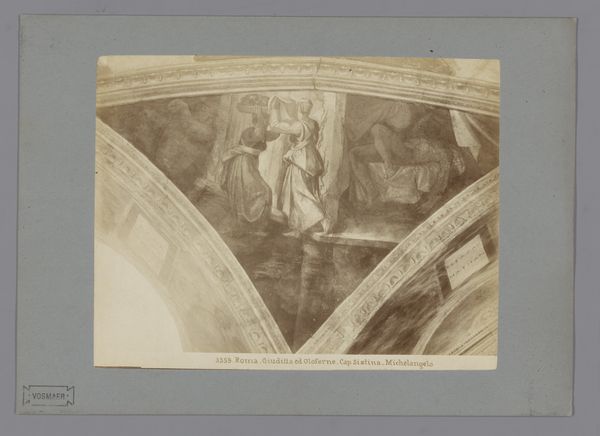
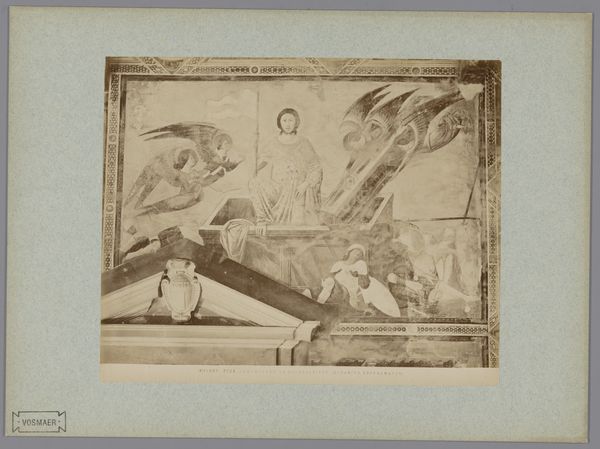
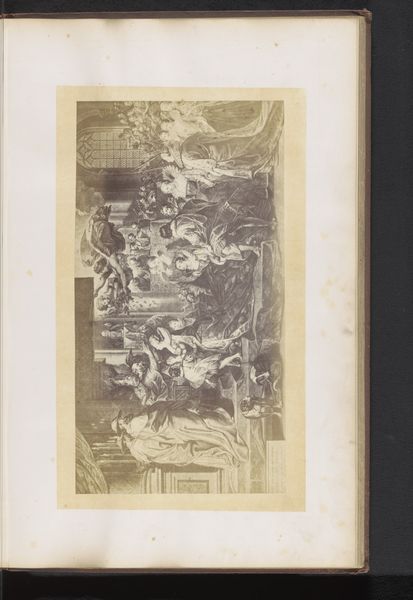
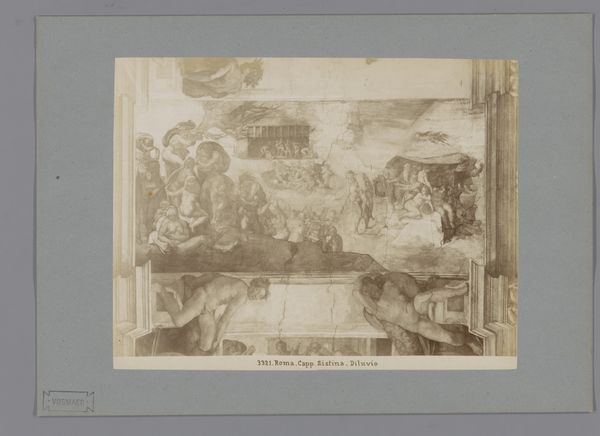
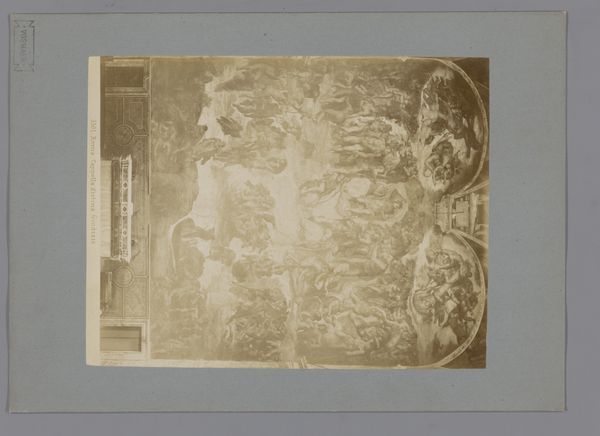
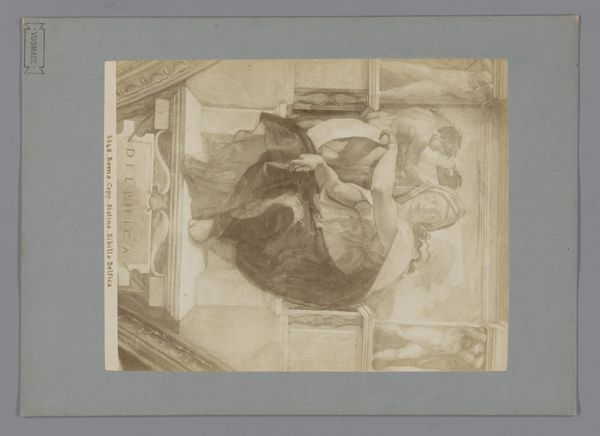
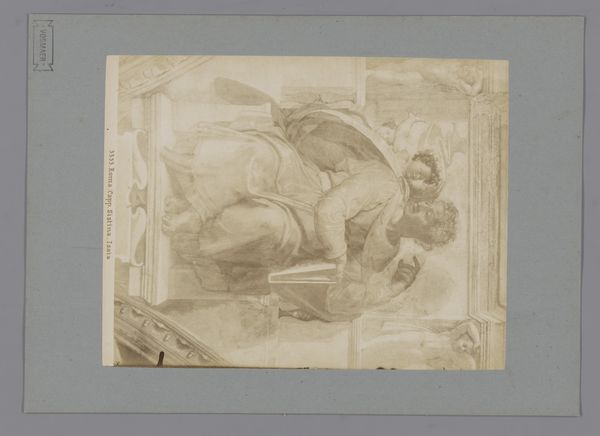
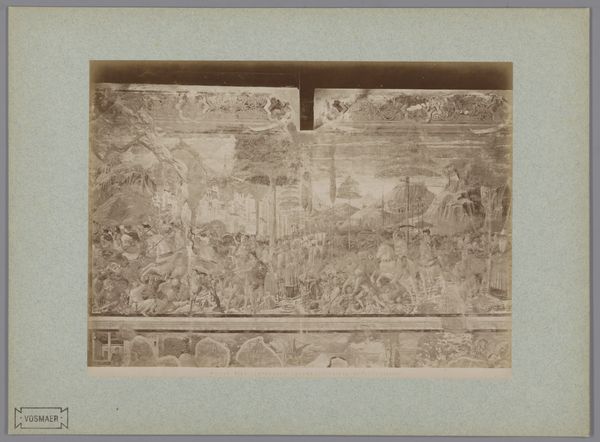
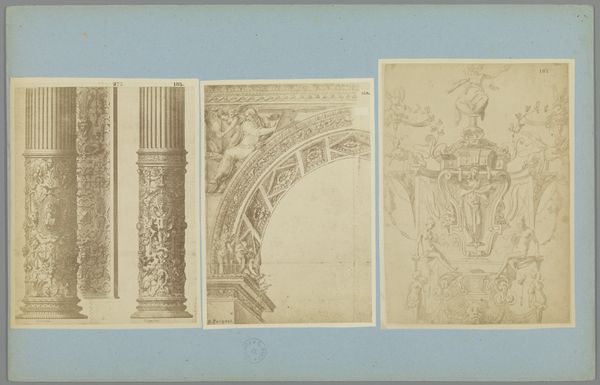
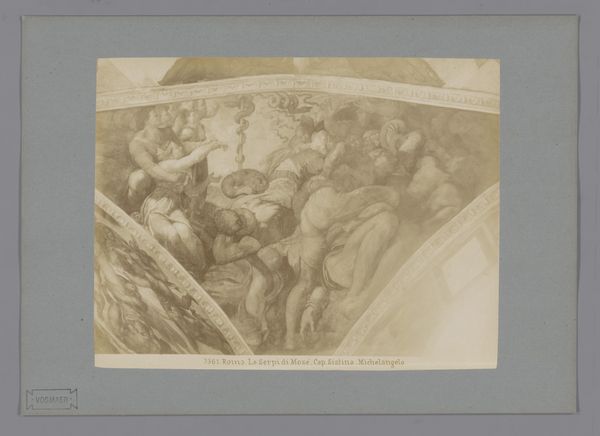
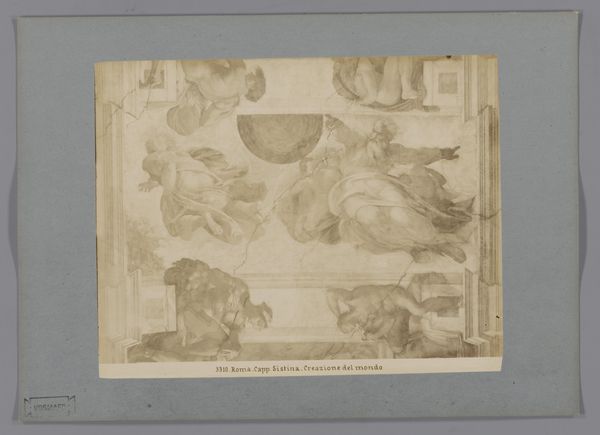
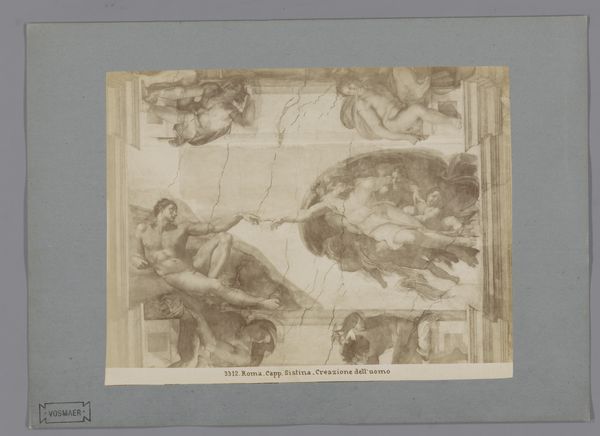
Fotoreproductie van het fresco Sibille van Cumae naar Michelangelo in de Sixtijnse kapel 1851 - 1900
0:00
0:00

anonymous
Rijksmuseum
print, fresco, photography
#
pale palette
#
muted colour palette
# print
#
white palette
#
paper texture
#
fresco
#
photography
#
history-painting
#
italian-renaissance
Dimensions: height 256 mm, width 201 mm, height 354 mm, width 254 mm
Copyright: Rijks Museum: Open Domain
This photograph reproduces Michelangelo’s fresco of the Cumaean Sibyl, part of his epic ceiling decoration in the Vatican’s Sistine Chapel. Michelangelo painted the frescoes between 1508 and 1512, commissioned by Pope Julius II. The Sistine Chapel was the Pope’s personal chapel, where the College of Cardinals met to elect new Popes, so this artwork had a very public role right from the start. Michelangelo’s frescoes combine Christian and classical imagery, and the Cumaean Sibyl was a priestess from ancient mythology. This reflects the Renaissance interest in both Christian and classical sources. What does this image tell us about the public role of art? From the beginning, powerful institutions shaped the production and reception of art. For more information about the Sistine Chapel, explore the Vatican archives, art history scholarship, and biographies of Michelangelo and Pope Julius II. Considering the social and institutional context helps us to understand the meaning of art more deeply.
Comments
No comments
Be the first to comment and join the conversation on the ultimate creative platform.
 Collect
 React
React Comment
More like this