1675 - 1695
George I


Listen to curator's interpretation
Curatorial notes
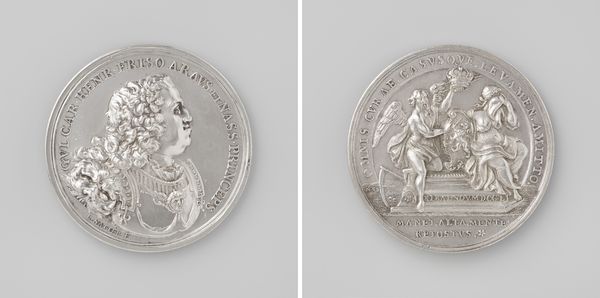
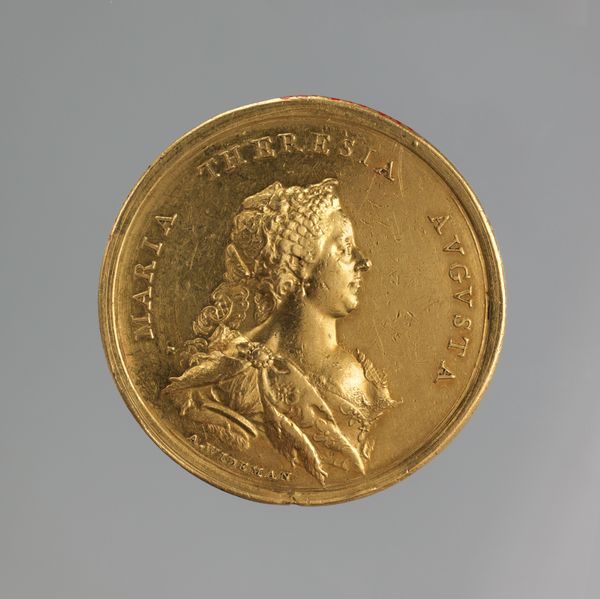
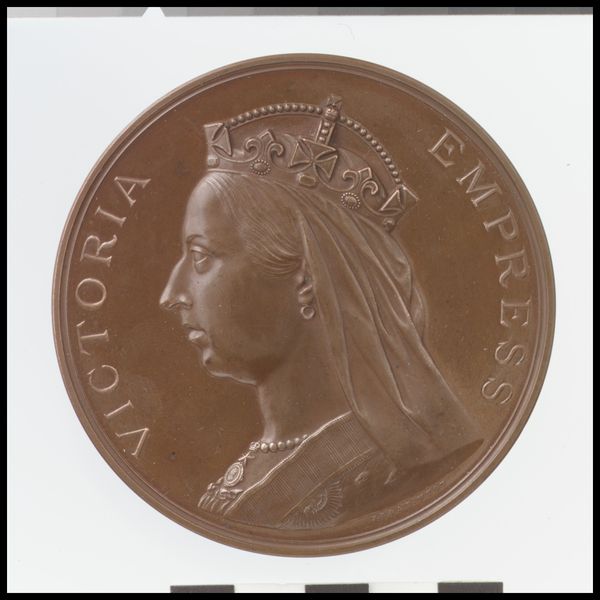
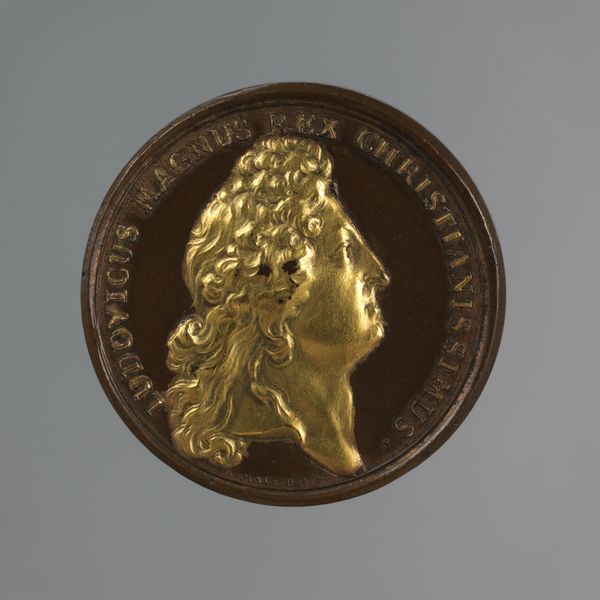
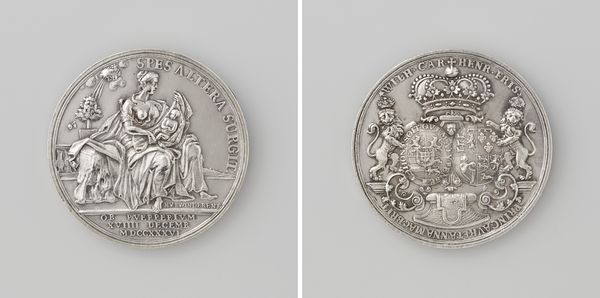
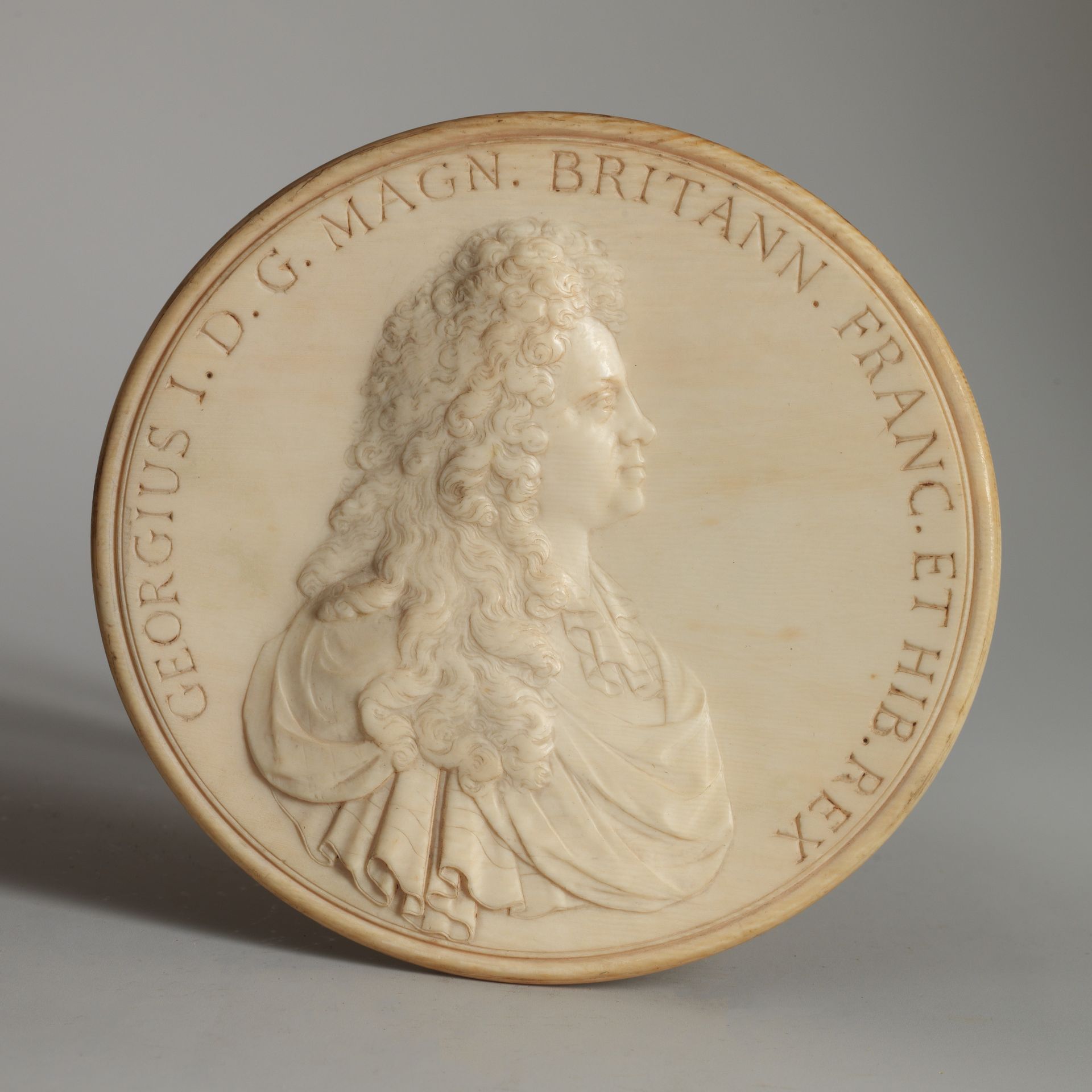
Curator: Here we have a carved relief sculpture depicting George I, created sometime between 1675 and 1695. It resides here at the Metropolitan Museum of Art. Editor: It feels so delicate. Like a fossilized biscuit. I am immediately struck by its stillness. Almost ghostly, this profile staring into the past. Curator: Indeed, the stillness is palpable. These profile portraits, particularly within Neoclassical frameworks, often sought to evoke a sense of timelessness and authority. Think of how this sculpture might engage with power dynamics through the very act of representation, situating the monarch within a lineage of European rulers. Editor: So you see the ghost of an idea? Maybe the ghost of a claim. What really strikes me is the incredible detail achieved in this relief—especially that cascading wig. I can almost feel its weight. You imagine this craftsman, his hands, slowly unearthing, releasing George from his silent medium. Curator: And there’s such artifice, isn't there? In the carefully rendered details of the wig, the drapery, all serving to construct a particular image of majesty. The inscription encircling the portrait is no accident; it directly proclaims his authority and the scope of his reign, creating a powerful brand, in contemporary terms. It reinforces the visual language of power through carefully constructed iconography. Editor: A brand! You're absolutely right! A king as...content. Think how those royal symbols are carved in concert, reinforcing that era’s narratives of power, yet stripped of the vibrant hues of reality, all this bone-white permanence and imperial cool. What is really there when something shifts into icon, and out of someone? Curator: These shifts, of course, speak to the artificiality of image creation and how constructed visual narratives solidify authority—often masking inherent instabilities or social unrest. It makes me wonder about its potential contemporary reinterpretations by queer or postcolonial artists interrogating how gender, sexuality, and race intersect with colonialist projects. Editor: An excellent point. And as an artwork it allows you, visitor, now, years later, to also reinterpret. Or perhaps, just enjoy it in front of you for its skill. Curator: Absolutely, enjoying it is crucial and hopefully, we’ve managed to open pathways for thinking about this object, not just as an artifact, but as a site for continuous engagement with art's complex dialogue with social discourse. Editor: Beautifully put! For me, it has sparked thoughts around beauty, power, material. All here, present for us.