About this artwork
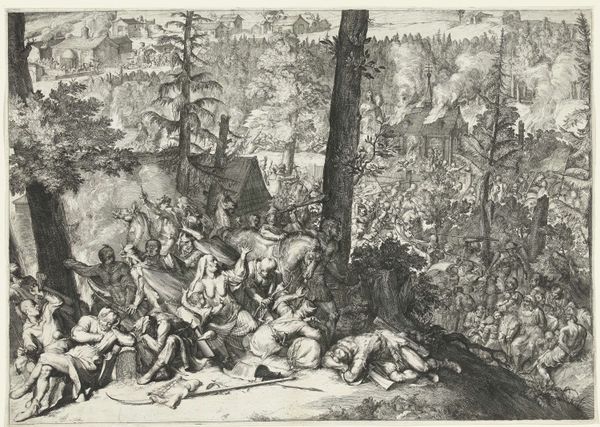
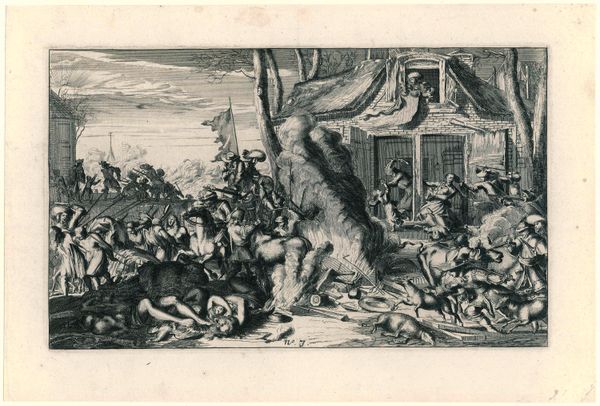
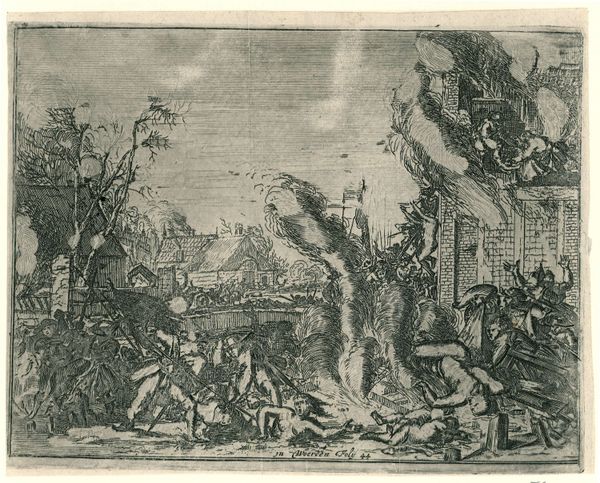
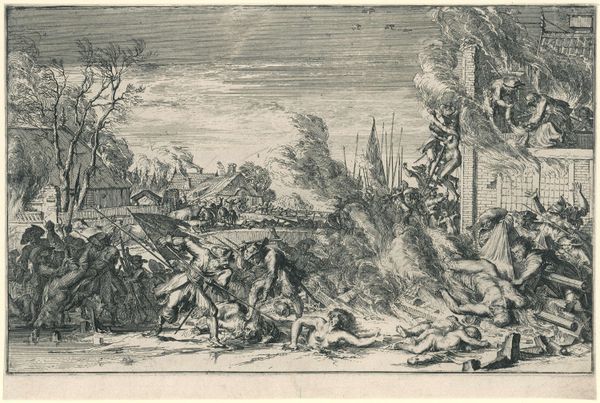
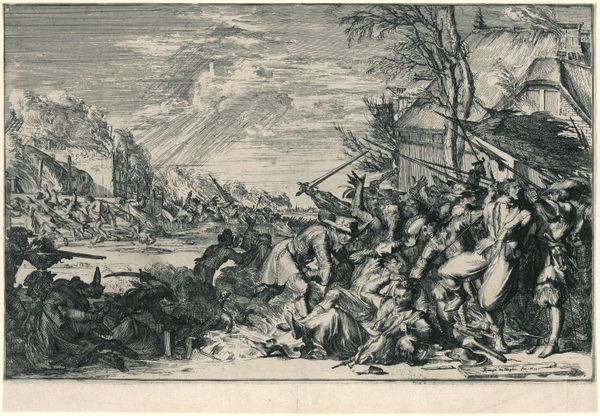
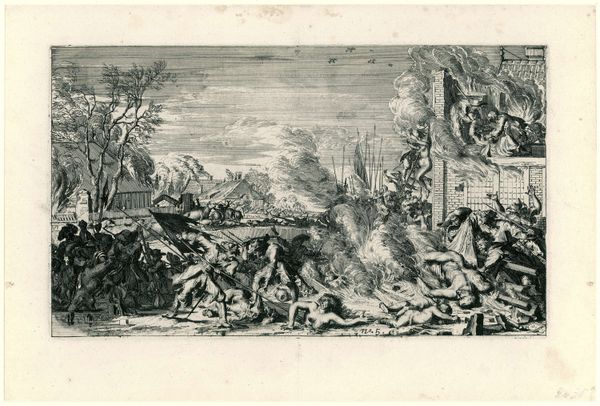
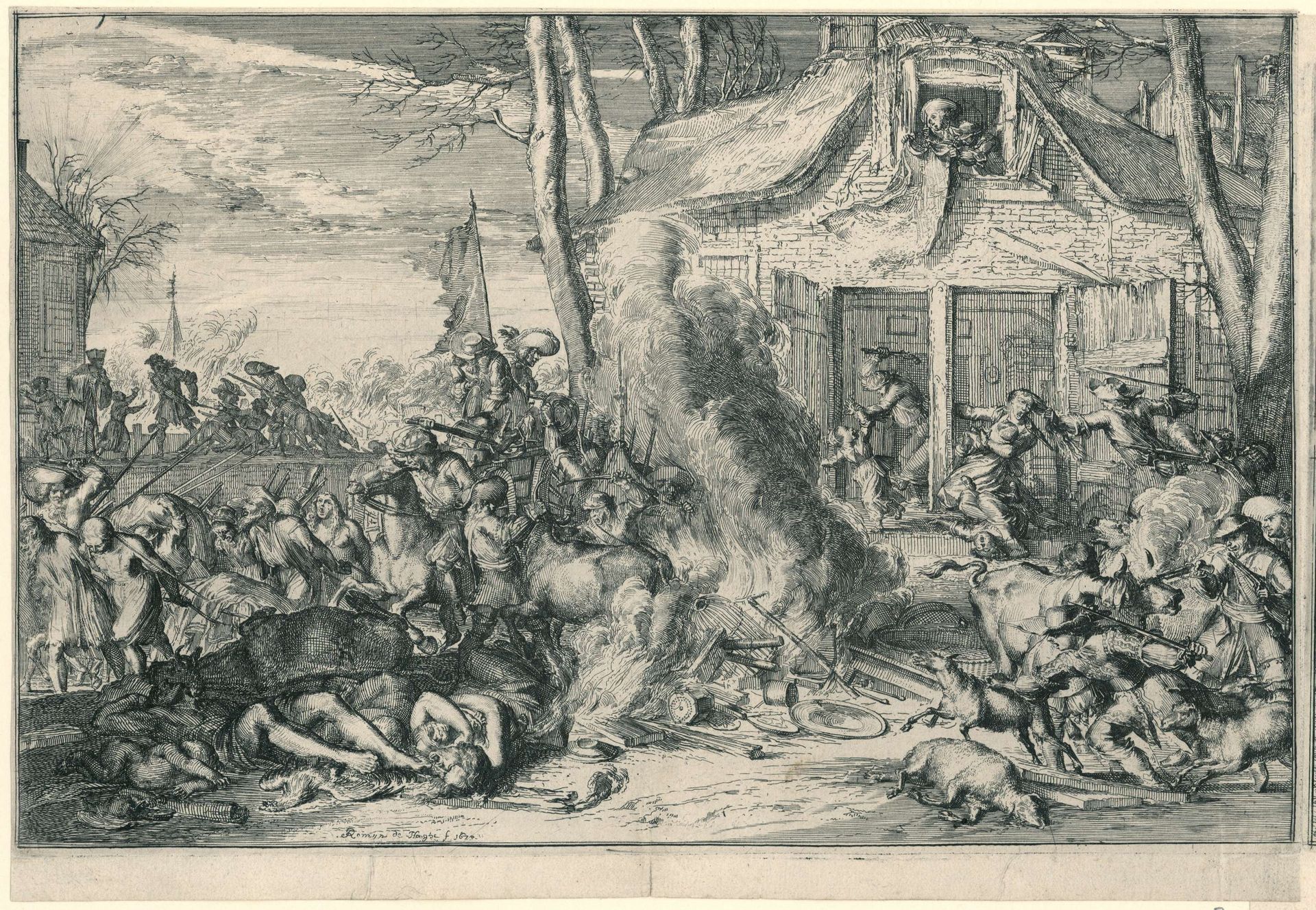
Romeyn de Hooghe created this print, "French atrocities in a village," in 1672, and it’s a window into a dark chapter of European history. De Hooghe didn't just create an image; he constructed a narrative deeply rooted in the political and cultural tensions of his time. This work reflects the anxieties and trauma of the Dutch Republic during the Franco-Dutch War, revealing how national identity is often forged in the crucible of conflict. Notice how the artist portrays the French soldiers. What cultural assumptions are embedded in their depiction? How does this image reinforce or challenge existing stereotypes? The burning village becomes a stage for exploring themes of power, victimhood, and cultural difference. The chaos suggests an emotional landscape of fear, anger, and a desperate longing for peace. Ultimately, this print invites us to consider how images shape our understanding of history and influence our perceptions of national identity.

Artwork details
- Medium
- drawing, print, ink, pen, engraving
- Dimensions
- height 214 mm, width 310 mm
- Location
- Rijksmuseum
- Copyright
- Rijks Museum: Open Domain
Tags
Comments
Share your thoughts
About this artwork
Romeyn de Hooghe created this print, "French atrocities in a village," in 1672, and it’s a window into a dark chapter of European history. De Hooghe didn't just create an image; he constructed a narrative deeply rooted in the political and cultural tensions of his time. This work reflects the anxieties and trauma of the Dutch Republic during the Franco-Dutch War, revealing how national identity is often forged in the crucible of conflict. Notice how the artist portrays the French soldiers. What cultural assumptions are embedded in their depiction? How does this image reinforce or challenge existing stereotypes? The burning village becomes a stage for exploring themes of power, victimhood, and cultural difference. The chaos suggests an emotional landscape of fear, anger, and a desperate longing for peace. Ultimately, this print invites us to consider how images shape our understanding of history and influence our perceptions of national identity.
Comments
Share your thoughts