photography, gelatin-silver-print
#
black and white photography
#
pictorialism
#
photography
#
gelatin-silver-print
#
monochrome photography
#
cityscape
#
monochrome
#
modernism
#
monochrome
Dimensions: image (visible): 24.1 × 19.1 cm (9 1/2 × 7 1/2 in.) mat: 52.1 × 40.2 cm (20 1/2 × 15 13/16 in.)
Copyright: National Gallery of Art: CC0 1.0
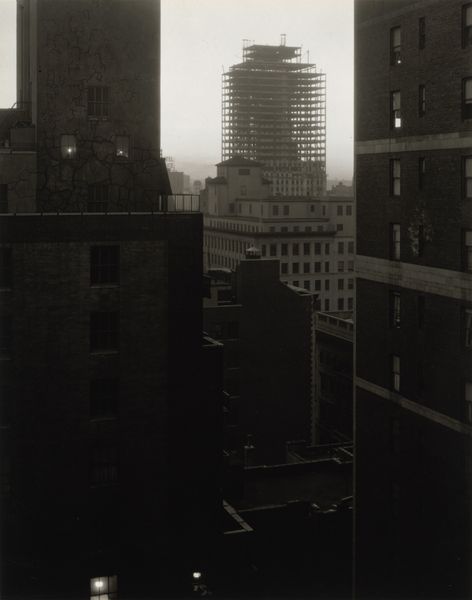
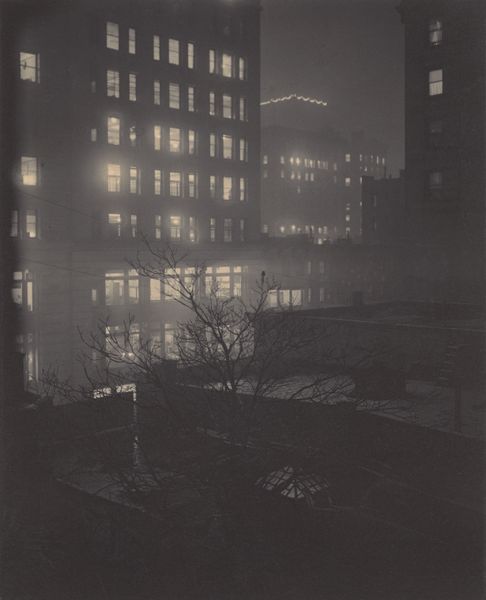
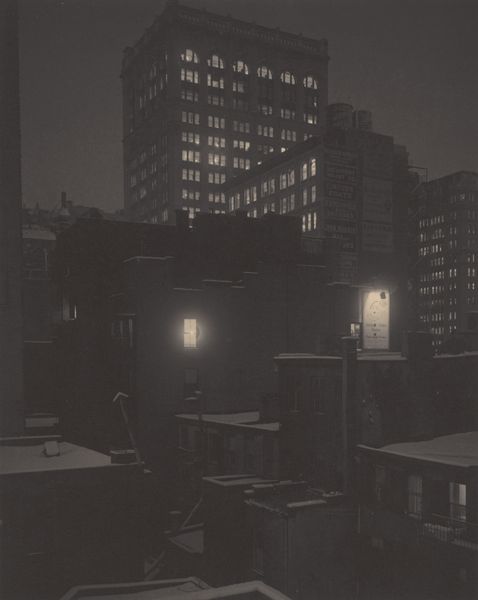
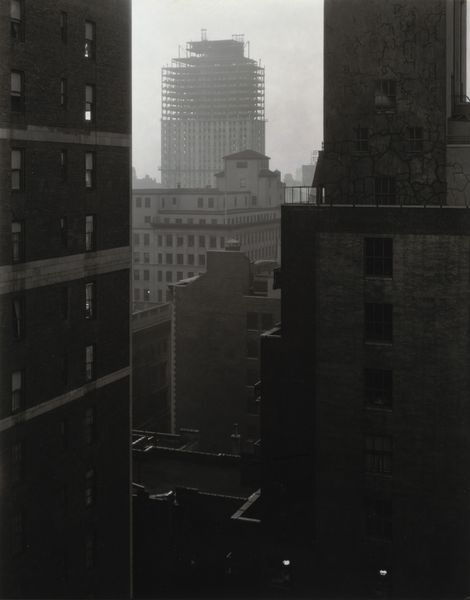
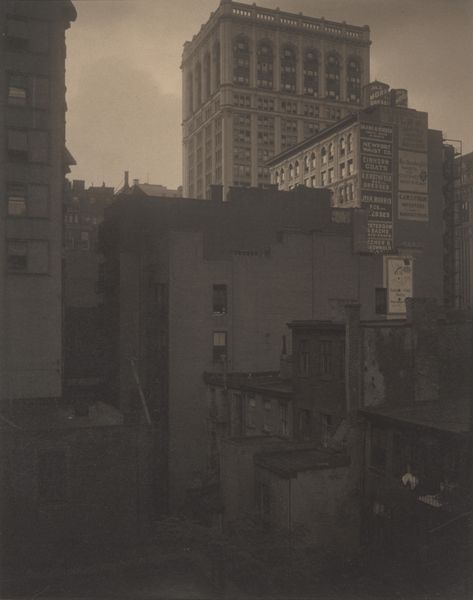
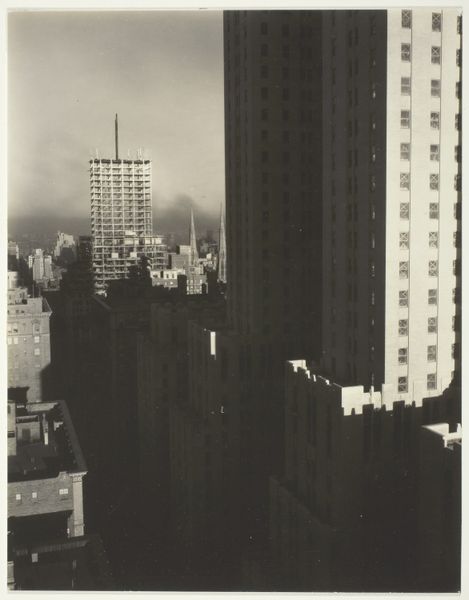
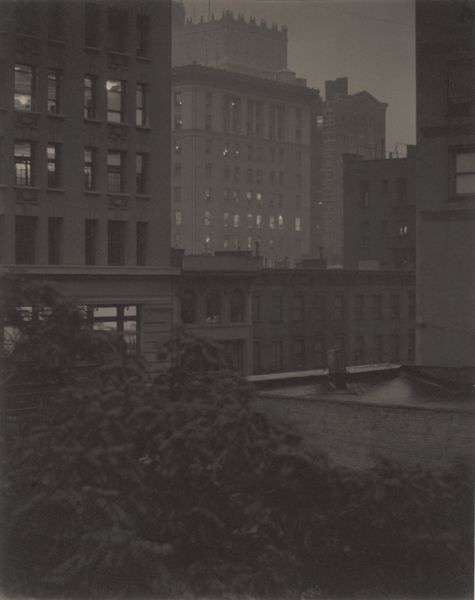
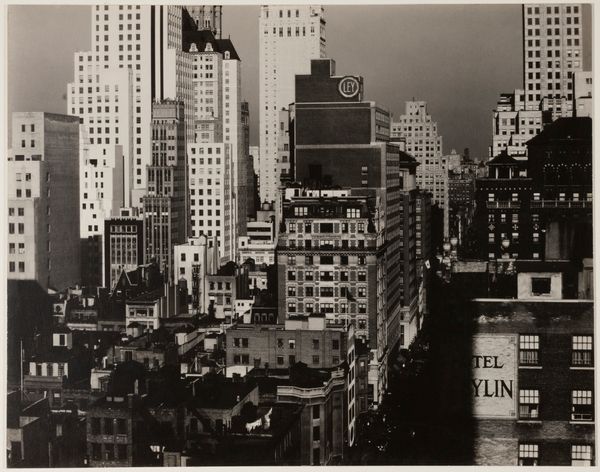
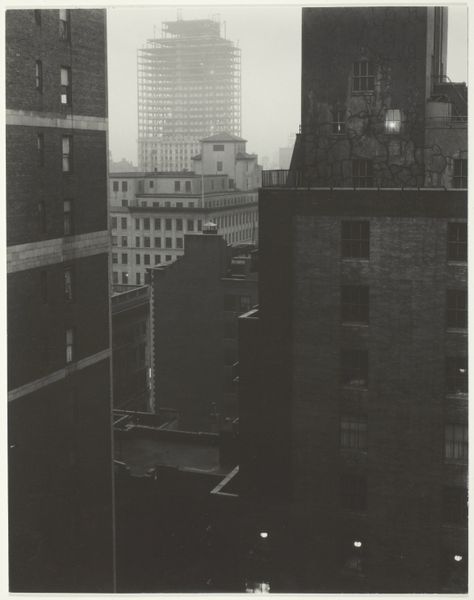
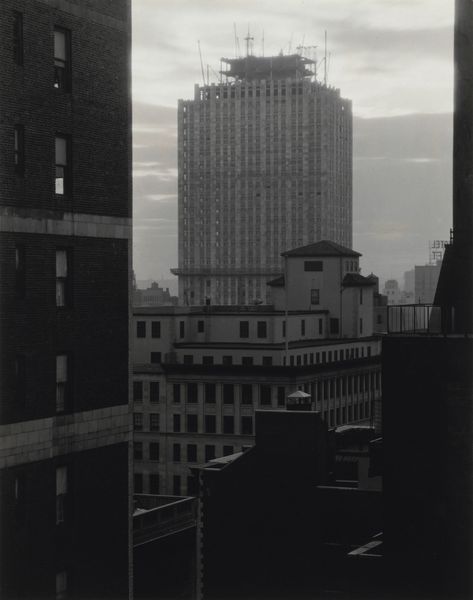
Editor: So here we have Alfred Stieglitz's gelatin-silver print, "From the Back-Window—291," created in 1915. The urban scene almost fades into the night; it's pretty gloomy but has a stark beauty. What do you see when you look at it? Curator: I'm drawn to the physicality of the photograph, specifically the gelatin-silver process. Look how that material contributes to the hazy, almost ethereal quality, blurring the lines between industry and domesticity. Notice the hanging laundry—mundane, working-class life draped against the backdrop of rising skyscrapers, emblems of capital. How does Stieglitz treat these two aspects of urban life? Editor: That’s an interesting contrast. The laundry is almost like a fragile, human element against the massive, dark buildings. It highlights the labor and everyday realities supporting that architecture. Curator: Exactly! Stieglitz, through his careful crafting of this gelatin print, calls attention to those processes and labor practices. It makes me consider: what are the social and economic conditions allowing this kind of artistic production? How does photography, as a rapidly evolving technology, reshape those relationships? Is it democratizing art, or further entrenching class divisions? Editor: I hadn’t considered how the medium itself—photography—fits into the economic context. It’s not just a representation, but part of the production. Curator: Right, consider how this photograph challenges traditional hierarchies between art and the working class, all while depending on both to exist. Editor: That definitely gives me a lot to think about. It's not just about the scene; it’s about how the photo came to be and its role in that society. Curator: Absolutely, seeing the process as integral is vital. Hopefully, it sparked that interest and made you think about how this type of lens informs your view on it now.
Comments
No comments
Be the first to comment and join the conversation on the ultimate creative platform.
 Collect
 React
React Comment
More like this