bronze, sculpture
#
allegory
#
sculpture
#
bronze
#
mannerism
#
sculpture
#
italian-renaissance
#
nude
Copyright: Public domain
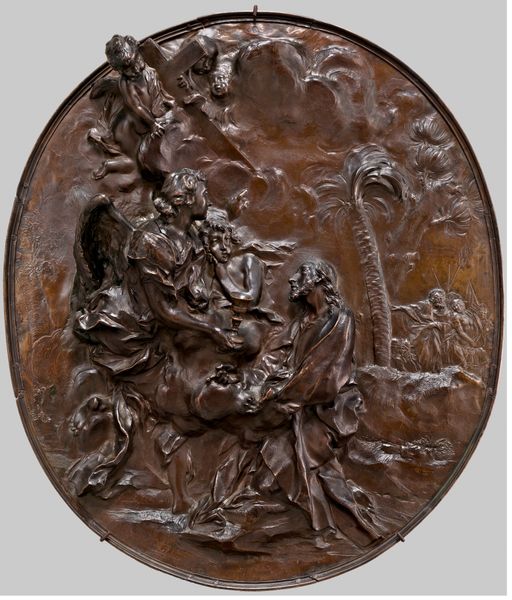
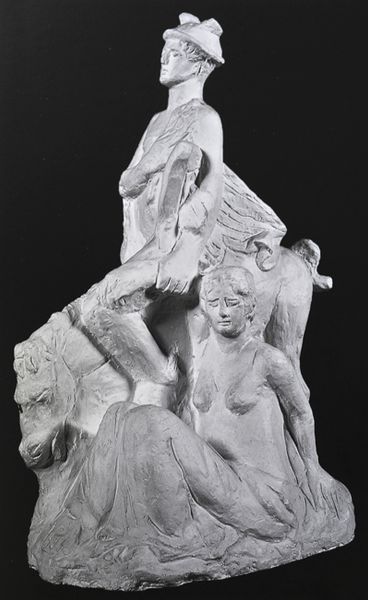
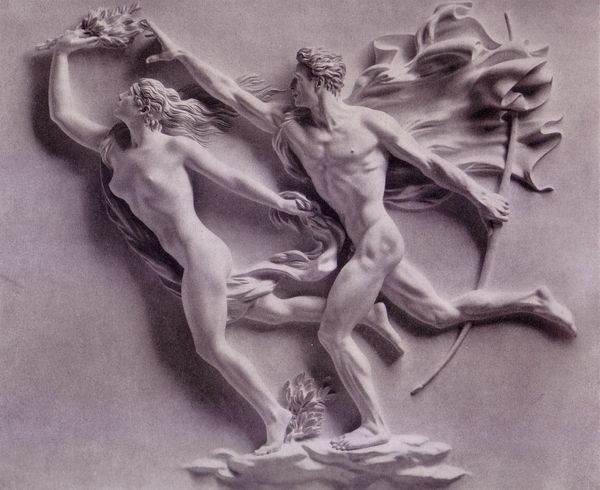
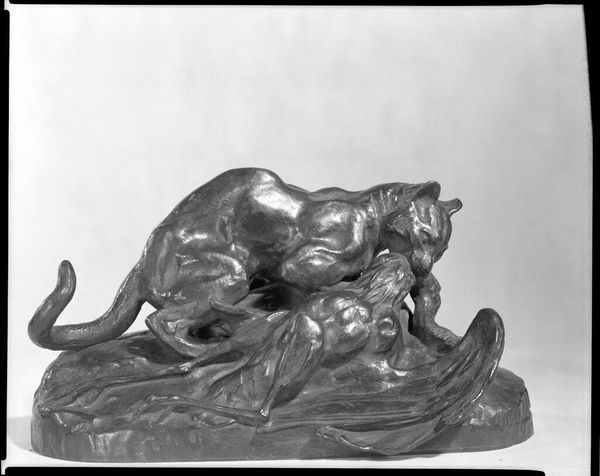
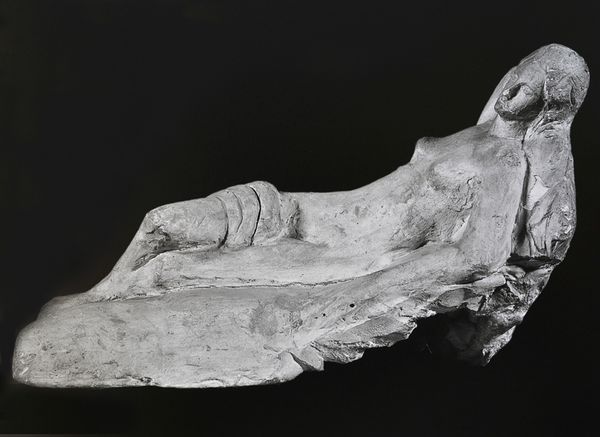
Benvenuto Cellini's bronze relief, "Nymph of Fontainebleau," dating from the mid-16th century, presents an intriguing study in form and composition. The sculpture is dominated by a reclining nude figure, positioned asymmetrically to draw the eye across the entire work. The curve of her body is echoed by the semi-circular boundary, creating a cohesive visual rhythm. The surrounding elements—the stag's head, the cascading drapery, and the rippling water—are rendered with deep undercuts that amplify the play of light and shadow. This heightens the overall sense of movement and drama within the static medium of bronze. Cellini masterfully balances the sensuousness of the nymph with the raw, untamed nature of the forest. The contrasting textures—smooth skin against rough fur, flowing fabric against solid antlers—highlight the sculpture's thematic tension between civilization and wilderness. This formal contrast mirrors the broader philosophical debates of the Renaissance, particularly concerning humanity's relationship with the natural world. Ultimately, Cellini's work is a compelling example of how formal elements can embody complex cultural and intellectual currents.
Comments
No comments
Be the first to comment and join the conversation on the ultimate creative platform.
 Collect
 React
React Comment
More like this