About this artwork
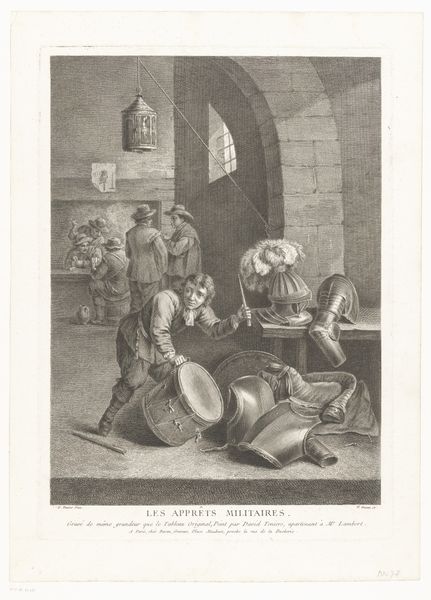
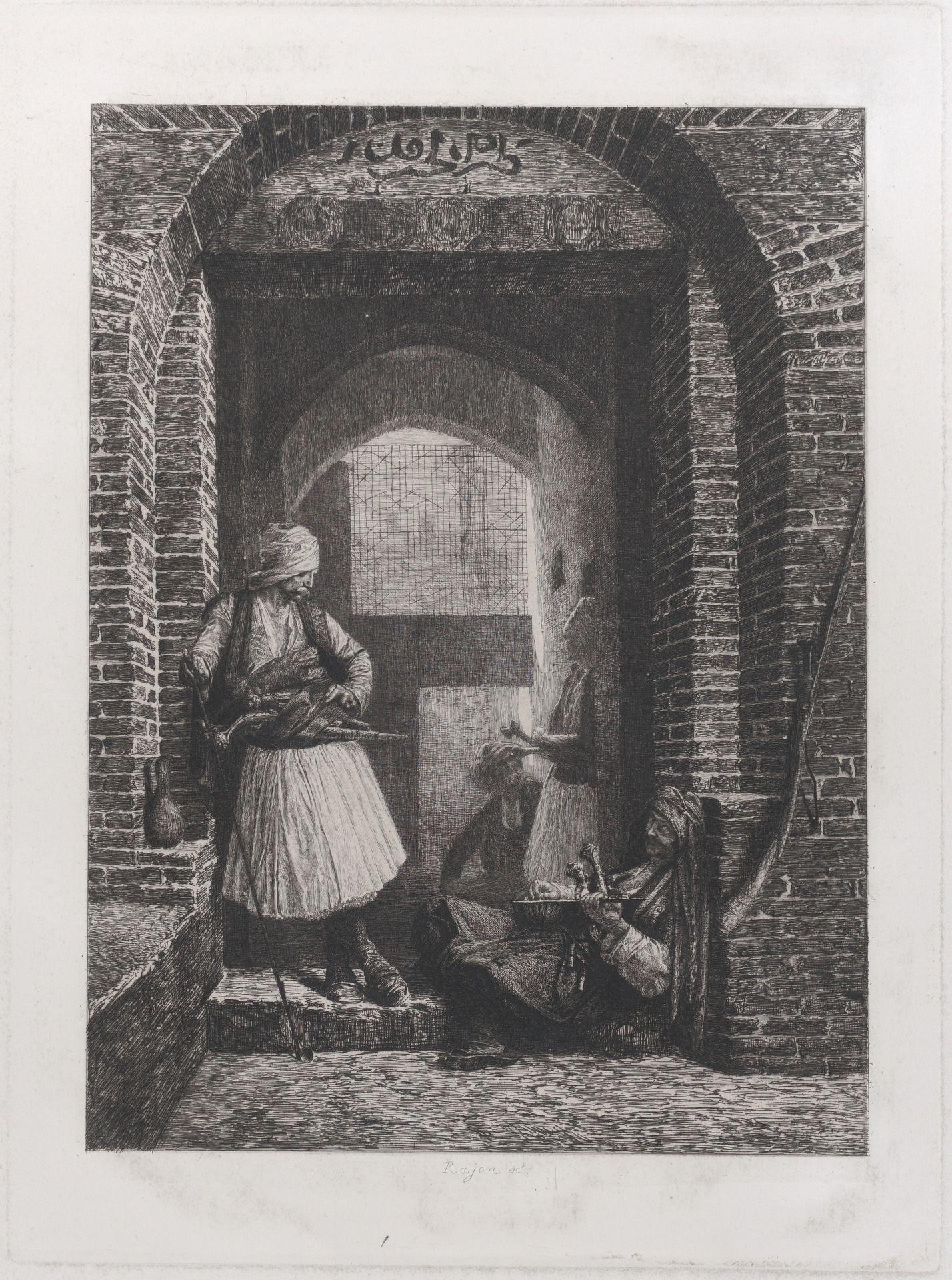
Paul Adolphe Rajon created this print, "Arnaut Guardhouse in Cairo," using etching techniques. It depicts a slice of life in Ottoman-controlled Egypt. The image offers insights into the social hierarchy and power dynamics of the period. Note the depiction of armed guards, likely of Albanian origin, which reflects the significant role of Albanians in the Ottoman military and administration. Consider the North African setting, a region of immense strategic importance in global trade networks. The architecture with the inscription in Arabic script suggests a fusion of local traditions and Ottoman influence. Rajon created this image during a period when Orientalism was a dominant trend in European art. So it's important to consider how Rajon's work might reflect or challenge these prevailing attitudes. To understand this etching better, we can explore the history of Ottoman Egypt, the role of the Arnauts, and the development of Orientalist art through extensive research of historical documents, art criticism, and cultural studies. This enables us to interpret art as contingent on social and institutional contexts.
Arnaut Guardhouse in Cairo
1868


Artwork details
- Medium
- drawing, print, etching, engraving
- Dimensions
- sheet: 17 13/16 x 12 in. (45.2 x 30.5 cm) plate: 11 x 8 1/4 in. (28 x 21 cm)
- Location
- Metropolitan Museum of Art, New York, NY
- Copyright
- Public Domain
Tags
Comments
Share your thoughts
About this artwork
Paul Adolphe Rajon created this print, "Arnaut Guardhouse in Cairo," using etching techniques. It depicts a slice of life in Ottoman-controlled Egypt. The image offers insights into the social hierarchy and power dynamics of the period. Note the depiction of armed guards, likely of Albanian origin, which reflects the significant role of Albanians in the Ottoman military and administration. Consider the North African setting, a region of immense strategic importance in global trade networks. The architecture with the inscription in Arabic script suggests a fusion of local traditions and Ottoman influence. Rajon created this image during a period when Orientalism was a dominant trend in European art. So it's important to consider how Rajon's work might reflect or challenge these prevailing attitudes. To understand this etching better, we can explore the history of Ottoman Egypt, the role of the Arnauts, and the development of Orientalist art through extensive research of historical documents, art criticism, and cultural studies. This enables us to interpret art as contingent on social and institutional contexts.
Comments
Share your thoughts