1503
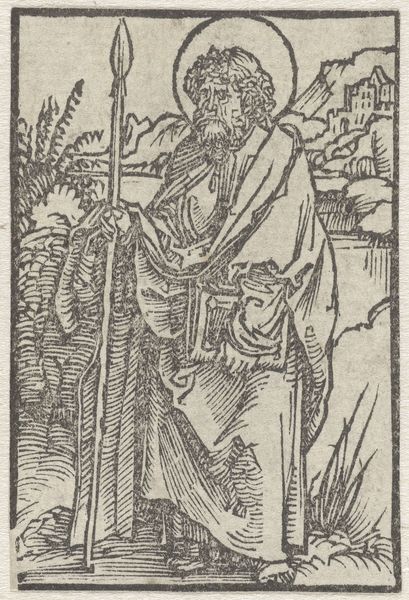
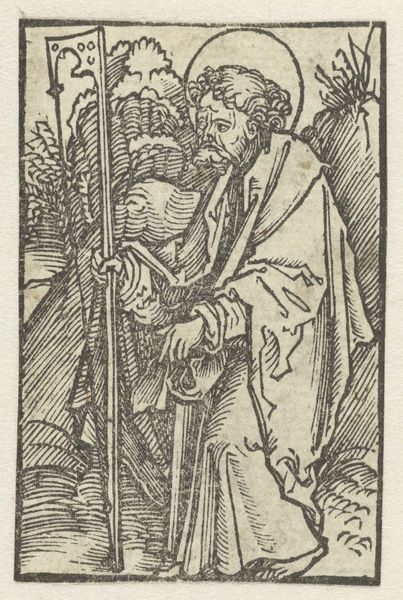
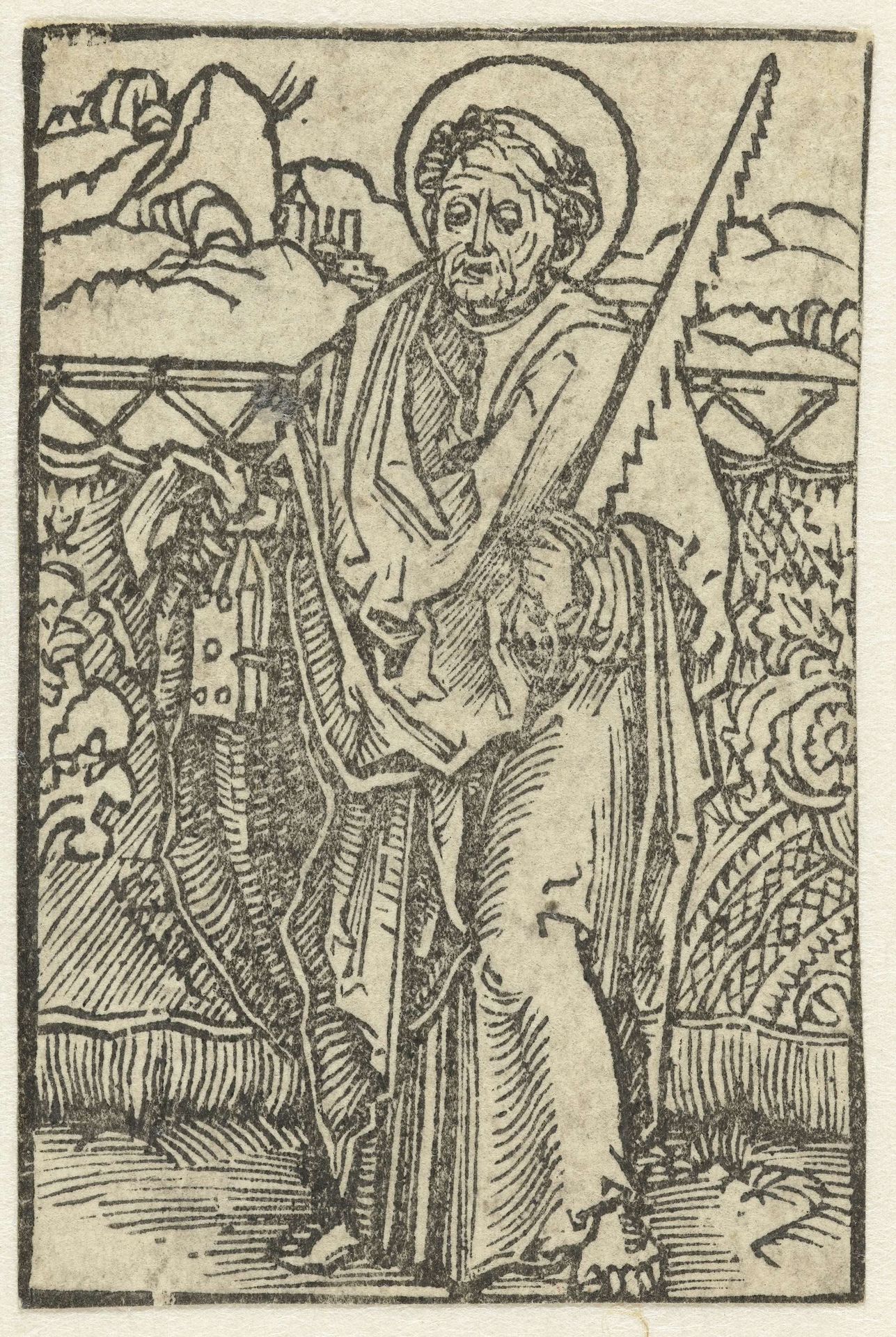
Apostel Simon

Albrecht Durer
1471 - 1528Location
RijksmuseumListen to curator's interpretation
Curatorial notes
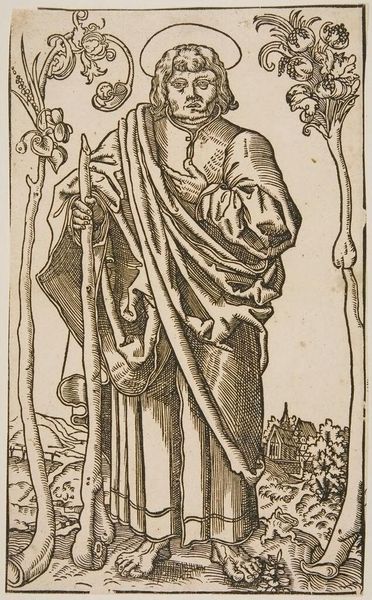
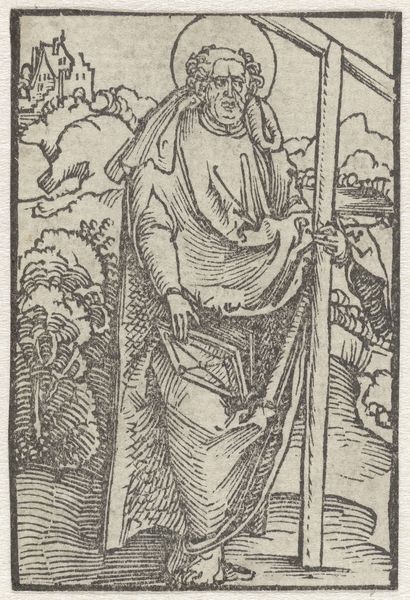
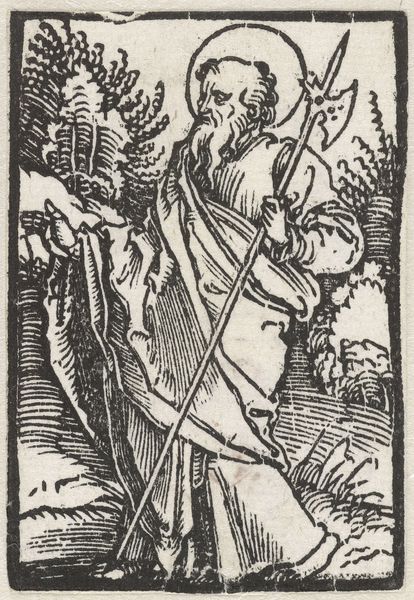
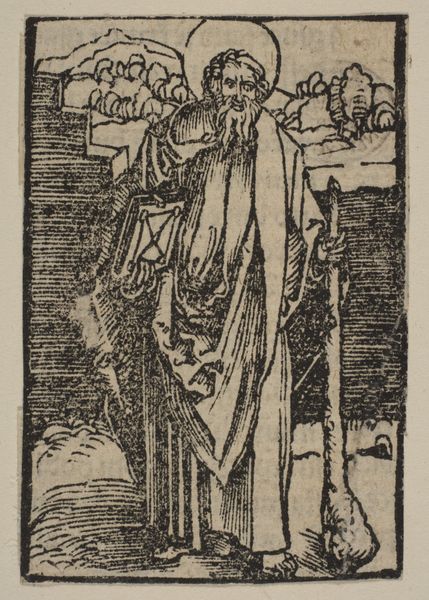
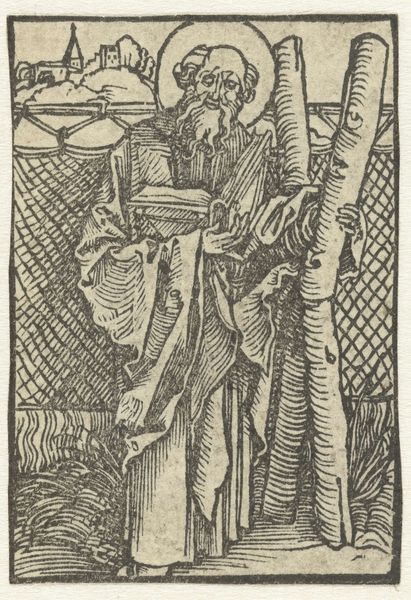
Albrecht Dürer rendered this woodcut of Apostle Simon, a testament to faith and martyrdom. Simon, identified by the saw he carries, wasn’t a carpenter but met a gruesome end, sawn in half, becoming a symbol of sacrifice. The saw is more than a tool; it's an emblem of suffering, echoing in depictions of other martyred saints across diverse eras, each carrying their instrument of torture. These symbols evoke a visceral response; they connect us to the primal fear of pain and death, yet also to the spiritual transcendence achieved through unwavering belief. The halo, another key symbol, contrasts with the brutal saw, representing holiness and divinity. Consider the evolution of the halo, from ancient sun-discs symbolizing power to its adoption in Christian iconography. It has been a constant, a beacon of the sacred, yet its rendering changes—reflecting shifts in cultural and theological perspectives. Here, the halo is a reminder of the divine promise, a symbol of hope amidst despair. These images engage us because they tap into shared cultural memories, reminding us of humanity’s enduring quest for meaning and redemption.